



Behind Roumieh’s walls, a growing crisis is unfolding as hundreds of prisoners refuse food and medication in protest over Lebanon’s suspended general amnesty law.
Inside Roumieh’s general amnesty protest
Inside Roumieh’s general amnesty protest
By Anthony Chamoun - Nathalie Durham | September 22, 2026

Reading time: 5 min
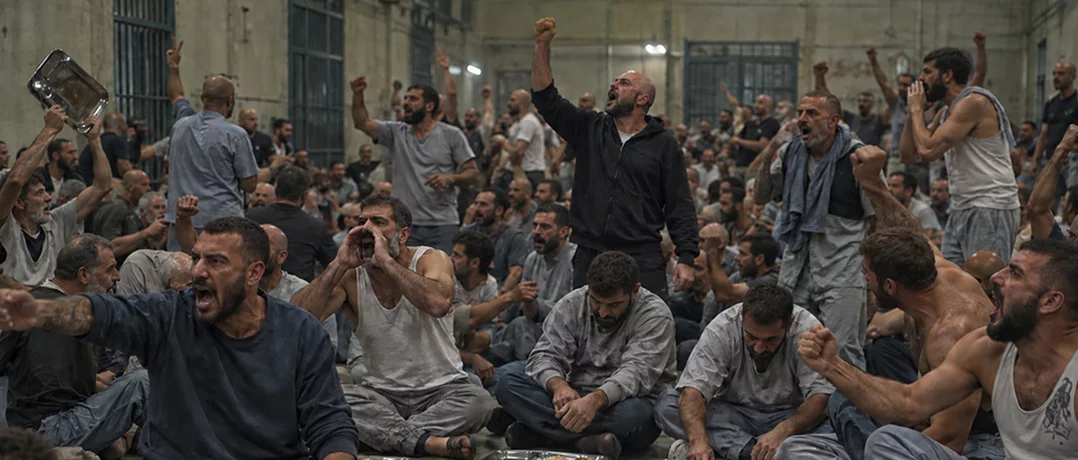
Prisons are facing catastrophic humanitarian conditions.
That is how Youssef, an inmate at Roumieh Prison, described to The Beiruter the situation as hundreds of prisoners continue an open-ended hunger strike over the suspension of Lebanon’s general amnesty law.
The law had already been approved by Parliament, signed by President Joseph Aoun, and even published, before the Constitutional Council froze its implementation on 10 September 2026 while it considers an appeal.
For prisoners, along with their relatives and concerned political and religious figures, who had expected sentence reductions or release, the decision abruptly returned the file to uncertainty.
A law on hold, a strike without an end
More than 400 inmates in Roumieh’s Building B have been refusing food and medication, with the protest now reaching its 10th day. The strike followed the Constitutional Council’s suspension of Law 70/2026 after Members of Parliament (MPs) from the Free Patriotic Movement’s Strong Lebanon bloc challenged the law. Since then, the law has remained on hold, and concerns over the condition of participating prisoners have continued to grow.
For Youssef, however, the protest reflects frustrations that go beyond the legal challenge itself. He said the suspension came on top of years of overcrowding, inadequate healthcare, poor sanitation and long judicial delays. Some detainees, he noted, have remained behind bars for as long as 17 years without standing trial. The suspension, he added, has “pushed prisoners and their families into a dark tunnel with no clear end in sight.”
His message from inside Roumieh was direct:
The open-ended hunger strike will continue until the appeal is lifted and the general amnesty law can be implemented.
He said the prisoners’ main demand is for implementation to resume so that eligible inmates can benefit from the law, particularly detainees who have spent years in custody without trial and prisoners whose sentences would be reduced.
As the strike continues, inmates have also sent messages from inside Roumieh calling on the Constitutional Council to consider the humanitarian situation in prisons while reviewing the appeal. According to information shared with The Beiruter, prisoners described the amnesty law as a “correction to the course of justice” and appealed for a decision on the suspended law.
The protest has also moved beyond the prison walls. Families and supporters gathered in Tripoli’s Al-Nour Square on Sunday to oppose the suspension and call for a swift decision on the appeal. The gathering brought together prisoners’ relatives as well as political, religious, and civil figures from Tripoli as well as other northern districts, extending the pressure already building inside Roumieh to the streets outside.

A picture from inside Roumieh prison, received from the Prisoners' Families Committee.
Health conditions are worsening
As the strike continues, attention inside Roumieh has increasingly shifted from the law itself to the health of the prisoners taking part. By the 7th day, more than 11 prisoners were reported to be in critical condition, including elderly inmates and prisoners with chronic illnesses. In the latest information sent to The Beiruter by a representative of the prisoners, that number had risen to more than 23 inmates showing signs of severe exhaustion.
Repeated medical crises were being recorded among prisoners with neurological conditions who had stopped taking their medication. The Lebanese Observatory for Prisoners’ Rights said at least 10 tuberculosis infections had been identified in Roumieh after one case was detected during a medical examination. Some of the prisoners concerned were subsequently transferred for isolation.
The broader conditions described by Youssef are also reflected in the overcrowding figures raised by MP General Ashraf Rifi. In a separate interview with The Beiruter, Rifi said Lebanese prisons designed for around 3,500 to 4,000 inmates are currently holding approximately 8,600 people, a situation he stressed has been further aggravated by the transfer of detainees from southern detention facilities following the recent Hezbollah-Israel armed conflict since March 2026. He stated that overcrowding, long periods of pretrial detention, and the limited capacity of the judicial system have combined to create a crisis that cannot be addressed through normal procedures alone.
“We do not even know whether they are innocent or guilty because their cases have not been heard,” Rifi said of detainees who have spent long periods awaiting judicial proceedings. He thus argued that the issue goes beyond any one political or sectarian constituency, describing it as a response to a wider prison and judicial crisis.
The general amnesty law is a national necessity.
What happens now?
The Constitutional Council’s 10 September decision did not cancel the general amnesty law. It temporarily stopped its implementation until the appeal is decided, meaning releases or sentence reductions provided for under the law cannot proceed for now.
For the prisoners, the legal process has a more immediate implication. Youssef called on the Council to consider the conditions inside Lebanon’s prisons alongside the constitutional questions before it. “We call on the Constitutional Council to approach this case from a humanitarian perspective because the scale of suffering is beyond description,” he pleaded.
Rifi also stressed the urgency of finding a solution, while saying he hoped any legal shortcomings could be corrected by the Constitutional Council rather than suspending the law and blocking its implementation altogether. “This crisis can no longer be resolved through ordinary measures. It requires exceptional solutions,” he asserted. Rifi also warned that continued inaction could increase tensions both inside prisons and outside them.
If the situation inside prisons is not addressed, it risks turning into an explosion.
For now, the general amnesty remains frozen while the strike persists. The final ruling rests with the Constitutional Council. Inside Roumieh, meanwhile, hundreds of prisoners are making clear that they do not intend to end their protest while the law they had expected to benefit from remains on hold.
-
-

-
Anthony ChamounResearcher/WriterFocusing on Political Science and International Affairs.
-
-
-

-
Nathalie DurhamResearcher/Writer
Junior research writer focusing on politics, public policy and international affairs.
-
