



Every Friday and Saturday, the Old Jounieh Souks will go fully pedestrian to boost local businesses and revive the historic streets.
Jounieh’s historic streets go car-free

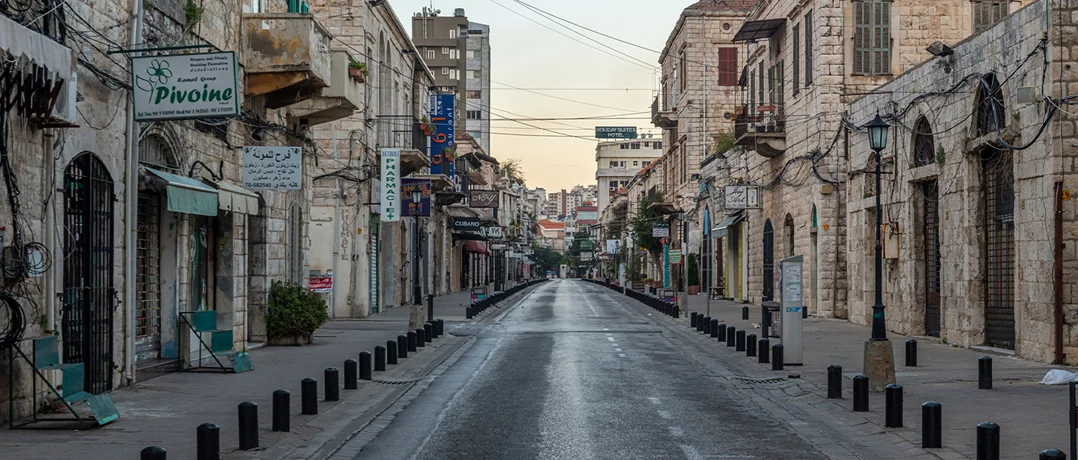
When dusk descends on the Old Jounieh Souks, normally cars and scooters would flood the streets, causing traffic to build up throughout the narrow roads with pedestrians crisscrossing the sidewalks, darting between the moving vehicles. But from this month (November) on, the municipality will be making a major change: every Friday and Saturday, the historic road will be totally closed to all vehicles and will be completely pedestrian, with Jounieh Mayor Faysal Frem describing the move as the beginning of a wider strategy that intends to expand throughout its mandate.
How the decision was made
The shift didn’t begin with an international study or expert consultancy. Surprisingly, it grew out of a simple municipal experiment.
“We did it on a trial-and-error basis for now,” Frem explained.
But we’re launching a full-fledged traffic study for the city to see which streets could eventually become pedestrian-only without affecting circulation.
He said the goals behind the initiative are environmental, economic, and linked to public health. “So basically it has two objectives: First, an environmental and sustainable objective. And the second one is economic. And, of course, health. Because, you know, when people walk, I mean, you're supporting healthy lives,” he added. The municipality sees this weekend transformation as the first step in a broader urban vision that prioritizes people over vehicles.
During his campaign, Frem championed the idea of a more walkable city, safe sidewalks, brighter streets, and spaces designed for strolling rather than navigating traffic.
“That is integral to the overall plan,” he said.
We want to refurbish all the sidewalks. We're going to add sidewalks. We're going to make sure that all the streets are lit, properly lit, that we can encourage people to do the stuff using their legs rather than their wheels.
For a moment, he chuckled at his own rhyme, and then he pointed out that the pedestrian scheme aligns with a city's aim in the long run to convert streets into daily public life.
Community first, conflict avoided
When asked whether the plan faced any resistance, Frem shook his head.
“Actually, no,” he said. “We discussed this plan ahead of time with all the stakeholders so we could guarantee their buy-in. It became a collective objective. Residents, shop owners, and the public all supported it.”
For the municipality, success depends on how the residents of the city respond, and on recreating the intimacy the souks once offered before car culture overwhelmed their narrow lanes.
As for the business owners, the street is their marketplace, where on the weekend, pedestrianization is also a deliberate economic strategy. “When you see people walking through the street, something we didn’t have before, the marketplace itself grows,” Frem said. “You have more potential customers. That alone is an incentive.”
The municipality believes that slowing the street down will accelerate the souks’ revival, offering shop owners foot traffic rather than congestion.
In most Lebanese cities, closing a street triggers immediate anxiety about parking. But Frem insisted Jounieh is different.
“Jounieh is blessed with plenty of parking space,” he said. “People can park right behind the street. Some spots are free if you’re lucky. Others are privately owned. But paying $3 is not a show-stopper.” To him, the inconvenience is small compared to what the city gains: walkability, safety and the return of shared public space.
As for the culture and movement itself, the pedestrian street, Frem emphasized, is not just about removing cars, it’s about adding life.
He noted that the municipality plans to integrate events like “Fête de la Musique” into the pedestrian zone, invite sporadic musicians to perform in different corners, and collaborate with organizations such as the Beirut Marathon Association, which is already organizing a women’s race in the area. He said more initiatives are expected to follow, explaining that “we created momentum, and momentum attracts good things.”
What next?
The pedestrian area at the moment reaches from Café Abi Nasser, located opposite to the Fouad Chehab Stadium, to the municipal building. But that is not the end of their plans.
“We’re going to extend it further down the street to the main square,” Frem said. “And although it’s pedestrian only from Friday through Sunday morning, our hope is for it to become permanent.”
He added that bicycles, scooters, as well as children’s bicycles are allowed in the pedestrian area. “We have banned all kinds of vehicles,” he added, “but bicycles and small kids with their scooters are more than welcome.” Currently, Jounieh is learning to exhale in a new way, allowing for a little bit of peace on the weekends.
-
-

-
Rayanne TawilCultural writer
-
