

The
Lebanese Ministry of Agriculture and citizens who saw the farmers’ pain and
decided to do something about it.
Lebanese agriculture reclaimed by its people
Lebanese agriculture reclaimed by its people
By Grace Massoud | February 15, 2026

Reading time: 3 min
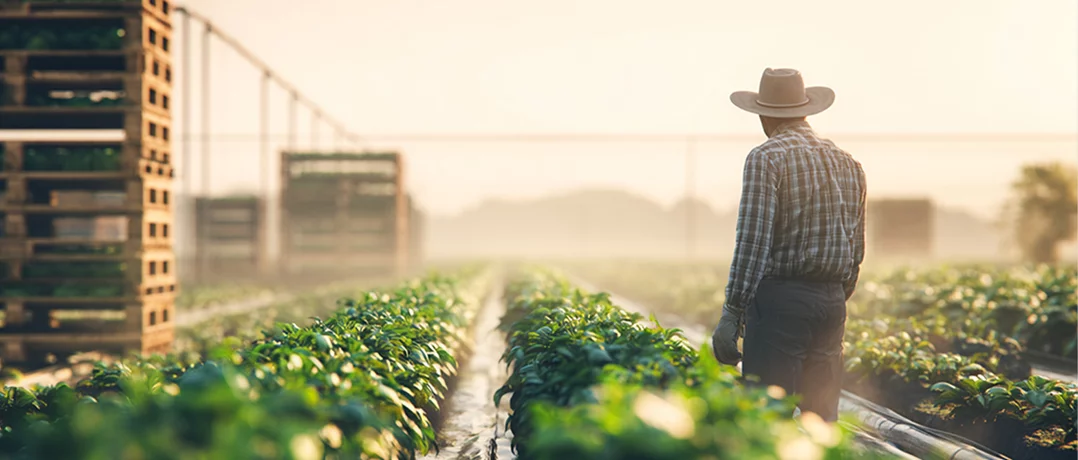
Lebanon’s
agricultural sector, long battered by economic collapse and regional isolation,
is edging into a cautious and optimistic phase of reconstruction. After years
of paralysis, policymakers are attempting to reposition farming with strategic
moves.
The Minister of
Agriculture Nizar Hani recently oversaw the signing of three memorandums of
understanding with local and international partners.
The Lebanese German
Cooperation in Akkar with the RET Germany / GATE Lebanon coalition aims to
advocate for sustainable agricultural development, empowering women and
susceptible groups, and creating more opportunities in Akkar.
The high-value crops
partnership with Bioland S.A.R.L. is a second memorandum, aimed at developing
aromatic herb cultivation and ecological essential oil production. Minister
Hani has devised schemes for a sectoral committee and emphasized growth and
export prospectives.
The third and final memorandum
is in enhancing advisory services with the Lebanese Organization for Studies
and Training (LOST). Its goal is to enhance farmers’ capabilities, back the
food industry, and evolve advisory services. The focus will be on Bekaa and
Baalbek–Hermel.
Bolstering endeavors
The investment in pumping
new blood into the Agricultural sector and solidifying its defenses against
turmoil and economic fluctuations is evident. In 2026, the Ministry of
Agriculture moved to establish a High Agriculture Council in a bid to plan for
the long haul. Proper execution remains the only indicator of structural
change.
International
agencies such as the Food
and Agriculture Organization are involved. The International Labor
Organization is giving farmers much-needed aid by
partnering them up with agri-food SMEs.
Talks
are underway to reopen agricultural trade with Saudi Arabia
after a multi-year suspension, reviving a crucial Gulf outlet for Lebanese
fruits and vegetables. Egypt
persists in being a substantial buyer of Lebanese apples, emphasizing the
enduring appeal of high-quality crops in the region. Evidently, export
possibilities are fluctuating.
Two
players who had a major say in reviving the industry of late are Amer Nahouli and
Omar El Maadarani. They made it to the Forbes 30 under 30 list for co-founding
Liban Fresh in 2020. “It
was a dream come true”, says Amer.
We spoke with Amer Nahouli, currently located in London, on
the heels of this prestigious honor, and what he had to say brought to light
the journey of young Lebanese entrepreneurs who saw a searing pain and were
compelled to heal it.
A searing pain
Amer was raised in agriculture, their family business
Agrinahouli dating back to his great grandfather in 1948, in Msayleh
Jnoub. The 90s generation grew up in a time when agriculture was in a deplorable
state. Most families abandoned this sector, selling off their lands, and erecting
residential and commercial spaces.
He studied business in AUB and continued his master’s in
business
entrepreneurship at the University of Reading, London. “When you leave the country, you get a
hankering for Lebanese fruits and veggies. Lebanese small cucumbers, Janerek,
sour green plums, in their season, almonds”, admits Amer affectionately. “The
community was feeling the same, especially in Spring when the items like Akkidene,
as in Loquat, are in season”. Hence, he saw the need and the will to pay
premium prices.
When Covid hit, he came back to Lebanon and noticed that the
produce was thrown away since export was nixed and prices were higher. The farmers
were going through a difficult time, working all year to harvest and not
selling. “I used to go to work every day with my dad and witness the struggle”.
At the time, his partner Omar had planted his land with
cabbage. The cost of the harvest was higher than what it was selling for in the
market. Amer suggested they sell to people directly. He got three pick-up
trucks, filled them up and went to the Cola area where they sold two cabbages
for 1,000 LBP, 70 cents at the time. They sold the lot.
Virgin territory
Having a good product, they faced a problem with marketing.
Having been in England for two years, he understood the market and its
requirements, the people and how to price it. He thought to link the Lebanese
farmer with the British market.
“We have helped over 1,000 farmers to export their produce
to Europe. Fifty exporters in Lebanon to trade in Europe. We opened a market
that wasn’t there and promoted the Lebanese produce in wholesale markets across
Europe, UK, France, and the Netherlands being the main hubs”, says Amer.
In increasing export, the price of products improved in
Lebanon and farmers were motivated to keep working.
A bumpy road
At the start of their journey to success, there was nothing clear
seeing as they were doing something that wasn’t done before. They didn’t know
the requirements and were told by export brokers that the Lebanese couldn’t
export to England. There was no such law banning Lebanon from export.
Adding insult to injury, “being twenty-one or twenty-two, when we
spoke to distributors no one took us seriously”, admitted Amer. What pushed
them forward was their passion, determination, and a cause, finding a solution
to their pain, their generation’s pain, and the farmer’s.
The power duo has one conviction in mind. “Success is not an
individual endeavor. It’s teamwork, whether it’s the partner, or the people
working with you”. They each had an imprint. Amer’s lane was marketing the products
in the UK, Omar dealt with farmers in Lebanon, which was a challenge,
convincing them to harvest in different ways, or in other forms of packaging.
“We changed the way the farmer thinks, plant well to get a better
deal and have continuity in your work”. They each stayed in their lane and
were aligned on the vision, making the partnership a success.
The catalyst: a single step
For young entrepreneurs watching Liban Fresh’s rise, especially in
Lebanon, Amer advises them to simply take the first step.
“Dream big. Remember when you were a kid and got asked at school
what do you want to do when you grow up? You had big dreams, actor, singer,
company owner, as a kid you didn’t have anything putting limitations on your
thinking”. In the system, the dreamer
stops dreaming. “You will never be fully ready, especially here in Lebanon,
where circumstances don’t help anyone”, adds Amer.
With that first step, the
barrier of fear is broken. According to the successful entrepreneur, failure is
the best teacher, parlaying things you don’t get from school or university.
When they first introduced their fruits and veggies in Britain, the
people’s reaction motivated them. They raved about the products and the
influencer marketing efforts such as the Toufiluk Janerek post. “People need us
in the UK and farmers need us in Lebanon”, says Amer. Their first shipment,
packaged randomly, was 500 kilos and it sold out in the UK wholesale market in
30 minutes. It snowballed from there.
A misconception about success is it comes quick. As seen on social
media nowadays, people want fast and easy success. “It took us a while to get
to this stage”. They’d been working on daily shipments behind the scenes for
five years.
They learned patience from agriculture. “You plant an avocado tree;
you take care of it for four to five years till it yields fruit. It’s not a
quick flip. It needs consistency, patience, and hard work”. It’s a formula, if
applied, success will come for sure.
On Friday January the 29th 2026, five hundred people
attended a ceremony where the ministry of agriculture honored Amer and Omar.
Hosted by the Sayda municipality, and in attendance of the ministers of Saida,
Jezzine and men of religion, the ceremony, where they were presented with
shields, only reinforced the magnitude of their endeavors.
-
-

-
Grace MassoudWriter and Head of PRFocusing on general entertainment.
-
