



Amid conflict, Lebanese monasteries are sheltering displaced families, revealing a powerful example of unity and coexistence beyond sectarian lines.
Lebanese churches, where humanity lives

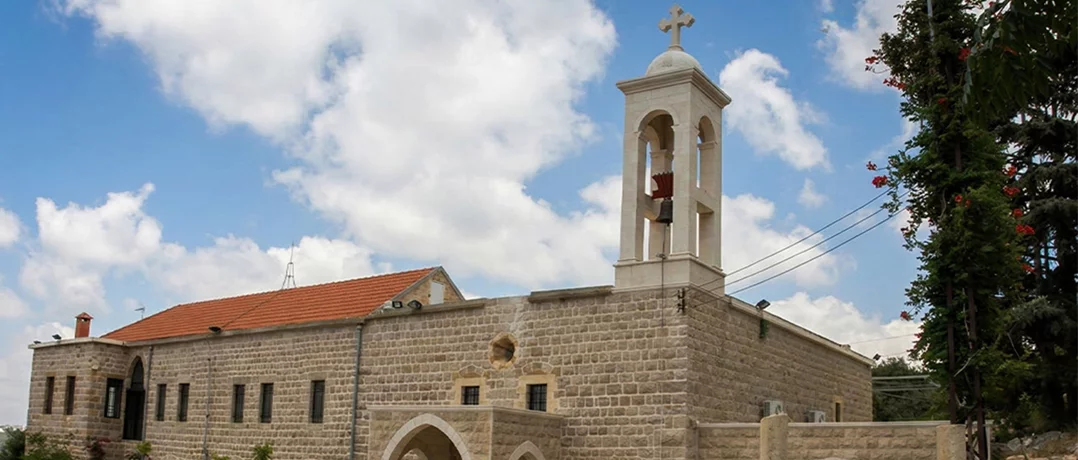
In a country where communal solidarity is both a necessity and a tradition, Lebanon’s religious communities have responded to the ongoing conflict with immediacy and remarkable resolve. Monasteries have been transformed into shelters, their cloistered calm now punctuated by the presence of children and the elderly seeking refuge from the violence in the south.
The Beiruter visited the Saints Peter and Paul Monastery in the village of Qattine, where families displaced by the conflict are being housed, fed, and cared for within a space that has become, for many, an unlikely second home.
“This is the real Lebanon we should live in”
Father Phelimon Silwan has been at the center of the monastery’s relief efforts since the first displaced families arrived. He speaks of those sheltering there with precision, accounting for each individual as though they are already part of the community. “Yes, we have 36 people safely. They've been here since the start of the war, those who fled from the south, and spent the first night sleeping by the sea and then finally arrived here.”
The range of those seeking refuge reflects the indiscriminate nature of displacement. “And there are many mothers and several children; we have about six children, teenagers and young adults, and we also have mothers and elderly people.”
He adds, “the monastic order contacted us and told us they are ready to help in any way. And we are receiving some aid from many generous people. We guide and assist them because we are private housing, not a public shelter.”
Yet for Father Silwan, logistics remain secondary to meaning. In the sight of Shiite families sheltering alongside Maronite monks, he sees a country that still holds the capacity for cohesion.
“May God bring peace to the world. And us, in this community that we live with, who are like our brothers, the Shiites. Truly living as one family, which is the real Lebanon we should live in. Unity among each other, love for each other, and living together. And coexistence between all of us together. This is a miniature Lebanon we are living in.”
“Before I am Maronite, I am Lebanese”
Alongside Father Silwan, Father Boutros frames the monastery’s response as rooted in a shared sense of belonging. He is direct about the limits of organized action in the face of widespread suffering.
“In the end, no one organized what happened. Regardless of politics, or the influence of political agendas, these are our people, our families. These are the people of the south, of Lebanon, who fled their homes. They have their homes and their men, but their shelters were damaged. Some are Maronites, some are others, but all have been affected.”
His message to Lebanon’s religious and civic leaders is unequivocal: sectarian identity must give way to a broader sense of unity.
“Our message today as clergy is to put aside religion and sect and simply live together. God says to care for the stranger, so this is our foundation. We pray for stability, that people may return to their homes and we may all live as Lebanese citizens. I always say, before I am a monk, before I am a priest, before I am Maronite, I am Lebanese. I hope all Lebanese understand that our patriotism and humanity transcend religion and sect.”
A miniature Lebanon
In a country that has long been fractured by politics and confession, monasteries like the Saints Peter and Paul Monastery in the village of Qattine offer a glimpse of Lebanon as it could be. What makes such churches remarkable is their instinct. No ministry directed the monasteries to open. No political faction claimed credit. People arrived, and the doors were opened.
In that simplicity lies both the beauty and the tragedy of the moment: that it takes catastrophe to reveal how naturally Lebanese people can live alongside one another when the structures that divide them are stripped away. The utmost kindness of the churches of Lebanon may be our nation’s truest expression. Through their doors, the displaced find not only shelter but a version of their country where humanity lives.
-
-

-
Jenna GeageaReporter/Writer
-
