



How the early 2000s transformed Lebanese cinema into a globally acclaimed industry, as filmmakers moved beyond war narratives to redefine the country's modern cinematic identity.
Lebanese cinema reborn

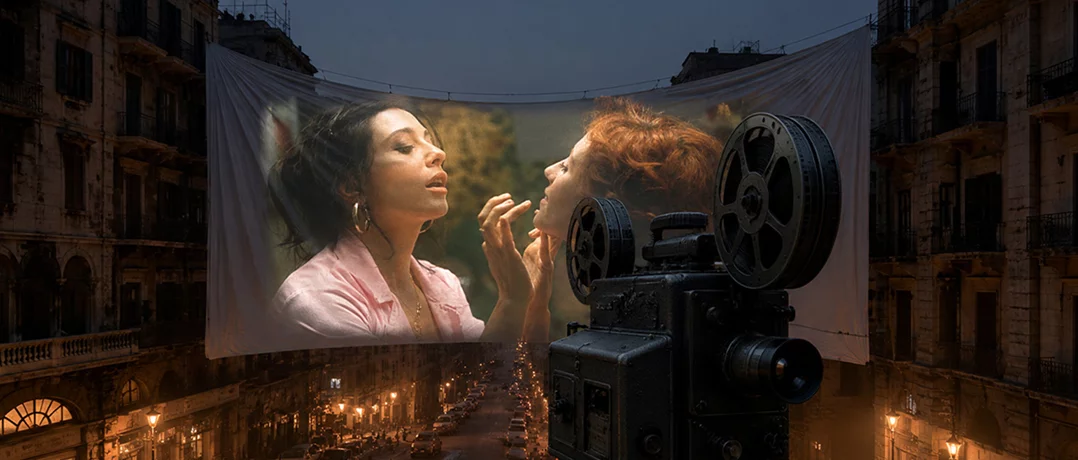
The early 2000s became the era when Lebanese cinema found its modern voice. The civil war had officially ended more than a decade earlier, but its absences, unanswered questions, and fractured memories continued to shape the country's cultural imagination. Yet this was also a time when a new generation of filmmakers began insisting that Lebanon could be filmed as more than a battlefield. Their stories moved between memory and reinvention, grief and joy, silence and spectacle, creating a body of work that neither erased the past nor allowed it to define every frame. Together, these films marked the beginning of a modern Lebanese cinema that looked beyond the wounds it inherited, asking what kind of country could emerge afterward.
Memory without a thesis
The decade opened with filmmakers still working through what the war had left behind, but doing so obliquely, through atmosphere and silence rather than direct depiction. Ghassan Salhab's 2002 film "Terra Incognita" examined the slow, uncertain rebuilding of the nation, using long takes and a disoriented sense of place to suggest a country that had not yet figured out what came after survival. His films were less interested in plot than in mood, and the unresolved, wandering quality became something of a signature for the era's work.
Randa Chahal Sabag pushed the same anxieties into more direct emotional territory. Her 2003 film "The Kite" follows a fifteen-year-old Druze girl in a village split by the Lebanese-Israeli border, who falls in love with an Israeli soldier stationed across the boundary fence. Using barbed wire as its central image, the film turned a national fracture into an intimate love story and won the Special Jury Prize at Venice, giving Lebanese cinema one of its first major festival showcases of the time.
Khalil Joreige and Joana Hadjithomas carried that same instinct for indirection into their 2005 film "A Perfect Day," a quiet drama about a mother trying to move forward in Beirut after her husband disappeared during the war, her private grief set against the noise of a city that had mostly moved on without her.
Turning toward the audience
A few years later, a second, more outward-facing strand of Lebanese cinema emerged, less interested in mourning the war than in imagining life past it. Philippe Aractingi's 2005 musical road movie "Bosta" followed a group of estranged childhood friends reuniting to tour Lebanon performing an electronic, modernized version of the traditional dabkeh dance, a film whose confidence in looking forward rather than back made it a genuine local hit.
Aractingi returned to war material two years later with Under the Bombs (2007), set during the 2006 Lebanon War, a 34-day conflict between Israel and Hezbollah that devastated large parts of southern Lebanon and Beirut's southern suburbs, killing more than 1,000 people in Lebanon and displacing nearly a million others. The film follows a wealthy Shiite mother returning from Dubai to find her young son and sister in the midst of the fighting. Filmed during and immediately after the conflict, often amid real destruction and with non-professional actors, the film represented Lebanon at the Academy Awards and showed that the same director could move fluidly between celebration and reckoning.
Josef Fares's 2005 film "Zozo" told a more sober coming-of-age story, following a young boy separated from his family during the civil war and forced to rebuild a life in Sweden. Made by a Lebanese-Swedish director working largely outside the country, it was a reminder of how far the war's displacement had scattered Lebanese storytelling itself, with directors of Lebanese origin now working from Paris, Stockholm, and beyond to tell stories that couldn't always be told from Beirut.
That audience-facing turn reached its fullest expression in Nadine Labaki's 2007 debut "Caramel," a comedy-drama following five women at a Beirut beauty salon as they navigate love, repressed sexuality, and the weight of tradition. It premiered at Cannes' Directors' Fortnight, became a genuine commercial success at home and abroad, and made Lebanon legible to an international audience without leaning on war, trauma, or tragedy.
From war memory to a new cinematic identity
By the end of the decade, Lebanese cinema had undergone a profound transformation. Its filmmakers had proven they could speak to the world without abandoning the complexities of home, shifting effortlessly between intimate political dramas, road movies, comedies, romances, and stories of exile. They refused to reduce Lebanon to either a war story or a postcard, instead revealing it as a place of contradictions, resilience, longing, humor, and loss. In doing so, the early 2000s established a cinematic language that continues to define Lebanese filmmaking today, acknowledging that while memory is inescapable, the future deserves to be imagined with equal conviction.
-
-

-
Jenna GeageaReporter/Writer
-
