



Lebanese Cinema Week brings the country’s cinematic heritage back to the big screen, preserving films that document its history, conflicts and collective memory through free screenings across nine venues.
Lebanese Cinema Week… the memory of a nation
Lebanese Cinema Week… the memory of a nation
By Jenna Geagea | November 02, 2026

Reading time: 4 min
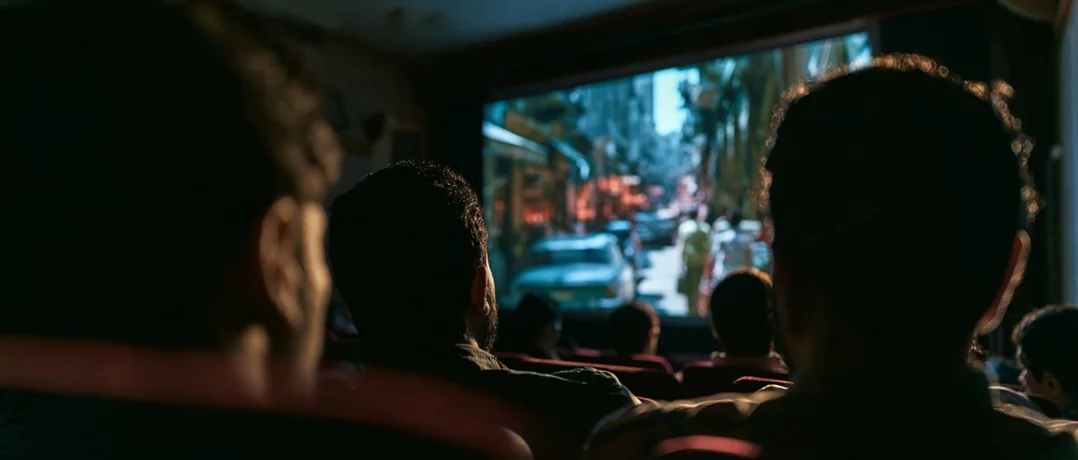
Lebanese cinema has always been an art of survival. It was shot within wars, financed against the odds, censored, shelved, and in too many cases left to decay in storerooms while the country that produced it moved on to its next crisis. Yet the films endured, stubbornly through damage and reconstruction, holding up a mirror to our nation. Lebanese Cinema Week returned that memory to the public in cities and villages across the country.
The Ministry of Culture and the Lebanese Cinematheque launched the second edition of Lebanese Cinema Week, staging free screenings at nine venues in Beirut, Metn, Chouf, South Lebanon and North Lebanon. The program set out to revive local cinematic memory and to reintroduce audiences to films that mark turning points in the history of Lebanese filmmaking, with the aim of taking them to the big screen well beyond the capital.
Three pillars behind the initiative
The ministry of Culture welcomed audiences in Beirut and those gathered in Saida, Tripoli, Fraykeh and elsewhere, before outlining the principles guiding the ministry’s approach.
The first is permanence. “Our hope is that Lebanese Cinema Week becomes an annual tradition, a lasting fixture of our cultural life,” the Ministry of Culture told The Beiruter. The ambition is balanced with perspective, Lebanese audiences’ appreciation of international cinema is natural and welcome, the Ministry noted, but “it should not come at the expense of the films we produce here.” Lebanese cinema continues to fight for international recognition, and the ministry remains committed to backing the industry.
The second is access. With 40 percent of the population now living below the poverty line, the ministry has pledged to keep its cultural activities free. “Economic hardship must not deprive people of the chance to take part in cultural life,” the Ministry stated. Every screening is free, continuing a pattern set by the organized events of the year. The Ministry of Culture also revealed that a free visual arts education program is due to launch the week after.
The third is proximity. Culture should not wait for people behind the doors of institutions. “Culture should not remain confined to venues people must travel to,” they explained. “It should reach audiences wherever they live.” Last year’s edition traveled to eight cities; this year’s program reaches seven, among them Beirut, Tripoli, Saida and Fraykeh.
Different lenses on a fractured country
The lineup brought together five works, feature films and documentaries alike, that trace Lebanon’s social and political transformations across different periods.
Jocelyne Saab’s Le Rasoir (1985) screened at the National Library in Sanayeh on opening night, attended by those involved in its restoration. Ghassan Salhab’s Beirut Ghosts (1998) revisited the capital in the aftermath of war, while Joana Hadjithomas and Khalil Joreige’s documentary The Lebanese Rocket Society (2012) recovered an ambitious scientific project from the 1960s that the country had all but forgotten.
Two more recent works completed the program. Ahmad Ghossein’s All This Victory (2019) unfolded during the July 2006 war, and Ely Dagher’s The Sea Ahead (2021) turned to return, displacement and the changing face of Beirut.
The venues themselves tell a story of decentralization: Metropolis Cinema, the National Library and the Sursock Museum in Beirut; Okura in Fraykeh; Farmville in Barouk; Ishbilia Theatre and the Maarouf Saad Cultural Center in Saida; the CLAC Center in Amioun; and Marsa in Tripoli.
The edition also arrived amid persistent concern over the fate of the country’s audiovisual archives. Restored and digitized works occupy a central place in the program, a reminder that preservation is as urgent as production.
Born of Minister Salameh’s initiative as a national cultural event, Lebanese Cinema Week is still young, but significantly poignant. Cinema is the memory of a nation, as much a civic inheritance as a museum or a library. For younger Lebanese, many of whom have never seen these films, the week offered a record of how their country looked, argued, grieved and imagined itself.
-
-

-
Jenna GeageaReporter/Writer
-
