



US-mediated military talks between Lebanon and Israel in Florida ended without progress on Israeli withdrawal, continued attacks or the implementation of the ceasefire framework.
Lebanon-Israel talks stall while ceasefire hangs in balance
Lebanon-Israel talks stall while ceasefire hangs in balance
By Michael Al Andary | October 27, 2026

Reading time: 4 min
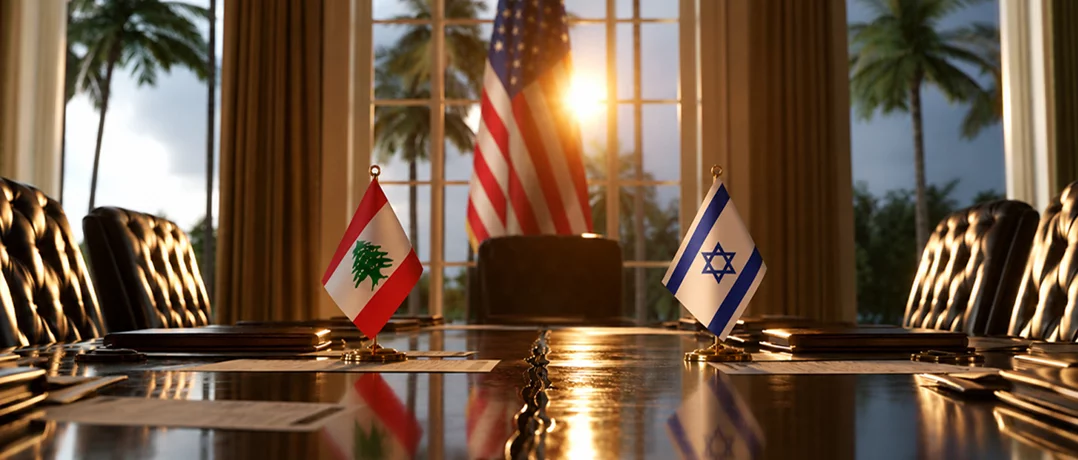
The last round of US-mediated negotiations between Lebanon and Israel concluded with no breakthrough penetrating the “ice-wall”, leaving key security matters unresolved and planting further doubts on a solid-lasting ceasefire.
The talks, which were held in Tampa-Florida, on October 20-22, were the 8th round of negotiations that followed an earlier gathering in Rome last August. Unlike previous rounds, the Florida talks tackled military and technical affairs, including the implementation of the existing ceasefire framework.
The negotiations took place against a backdrop of continued Israeli army activity in Lebanon especially in the south. The ceasefire, which was announced last June 3, followed months of airstrikes which caused extensive destruction and rising casualties in southern Lebanon, the Bekaa and Beirut’ southern suburbs. As the Lebanese state has sought to strengthen state authority and advance the disarmament of the pro-Iranian militia Hezbollah, it has also called for a halt of Israeli attacks accompanied by the withdrawal of Israeli troops from Lebanese soil.
Those competing demands remain at the heart of the impasse.
In an interview with The Beiruter, informed sources closed to the Lebanese Army (LAF) stated that “no further negotiation session had been yet scheduled.”
The source also made clear that discussions between Lebanese officials and the US Central Command (CENTCOM) “could still take place.”
The same sources argued that the Lebanese side could not be expected to fulfil its commitments while Israel continues to carry out attacks, demolitions and incursions south of the country.
With no progress on the mentioned issues, the next round of talks, whenever it takes place, is unlikely to resolve the central disagreements.
The absence and lack of a clear diplomatic path forward have also increased concerns about a possible return to war between Israel and Hezbollah, at a time when tensions between Washington and Tehran are adding to regional uncertainty.
This month, officials in Israel have also threatened to expand the so-called yellow zone, a buffer area in southern Lebanon, towards Nabatieh, south Lebanon’s second largest city, in the event of an attack by Hezbollah. Such an expansion would place additional communities at risk and could further complicate efforts to stabilize areas already affected by the fighting.
Previous ceasefire arrangements have done little to decrease those concerns. A previous agreement reached between Israel and Lebanon on November 27, 2024, was intended to halt hostilities and provide for the implementation of UN Security Council Resolution 1701. The agreement however failed to prevent a subsequent escalation that led to other devastating rounds of fighting especially after February 28, 2026 when the US eliminated former Iranian Supreme Leader Ali Khaminae in an airstrike on Iran and Hezbollah retaliated by attacking Israeli lands.
In 2026, a separate 10-day ceasefire announced by US President Donald Trump on April 16 was followed by a 45-day extension on May 15. Israeli airstrikes and demolitions nevertheless continued, including controlled detonations in parts of southern Lebanon.
For the Lebanon and its government, the challenge is not simply to secure another agreement, but to ensure that any commitments made during negotiations are implemented.
It is worthy to note that Resolution 1701 provides for the deployment of the LAF in southern Lebanon, alongside the role of the United Nations Interim Force in Lebanon (UNIFIL). The initial 60-day implementation period following the November 2024 agreement was extended after the agreed measures were not completed within the original deadline.
The LAF was expected to deploy troops, inspect sites and extend state authority, while coordinating with international monitors. Shortages of equipment and personnel have complicated those efforts, limiting the army’s ability to implement the arrangements as planned.
Florida’s meetings were working-level military discussions, rather than full-fledged peace negotiations. They focused on implementing the June 2026 framework, which included two designated pilot zones and arrangements for a gradual Israeli withdrawal alongside the deployment of Lebanese army units.
This leaves difficult questions unanswered, Lebanon wants Israeli forces to withdraw and attacks to stop, while also facing pressure to establish state control over weapons and security throughout the country. Progress on one front remains closely tied to developments, especially political, on the other.
For now, there is no confirmed date for another round of talks, and the main disagreements remain unresolved. Unless the negotiations produce concrete steps towards an Israeli withdrawal, a halt to attacks and the strengthening of Lebanese state authority, the ceasefire will remain vulnerable and fragile.
For Lebanon, the situation extends beyond the fate of the negotiations. The Lebanese state must demonstrate that diplomacy can deliver tangible security achievements, while preventing another confrontation that would place already battered communities at risk.
