



Lebanon launches the Global Archive of Lebanese Identity, inviting people at home and abroad to preserve the country’s collective memory through personal photographs, documents and recordings while retaining control over their contributions.
Lebanon opens a global archive of intimate history
Lebanon opens a global archive of intimate history
By Jenna Geagea | October 19, 2026

Reading time: 4 min
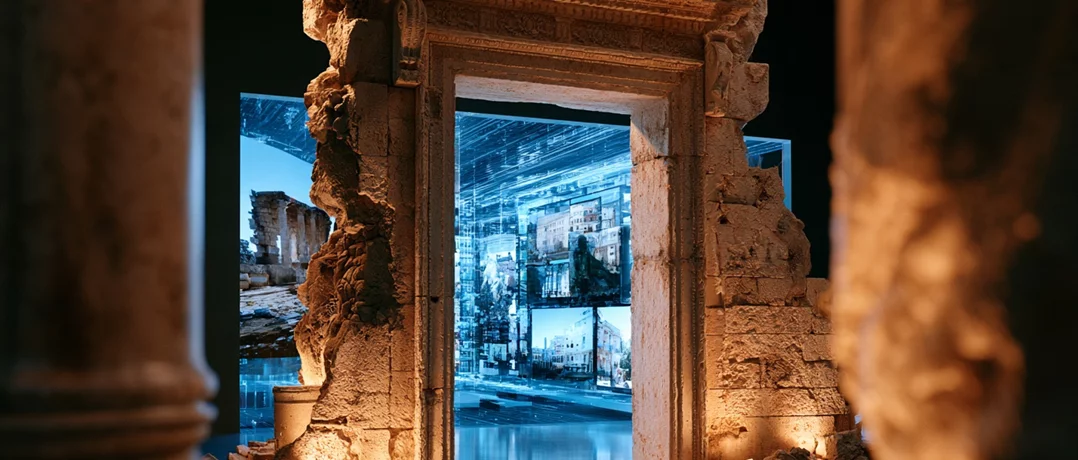
The Ministry of Culture’s Directorate General of Antiquities, in partnership with Italy’s Heritage International Institute and with the support of the Italian Embassy, launched the online platform of the Global Archive of Lebanese Identity at a ceremony held at the National Library.
The event brought together Minister of Culture Ghassan Salamé, Italian Ambassador Fabrizio Marcelli, Director General of Antiquities Sarkis Khoury, Heritage International Institute President Sergio Iovino, and Dr. Tania Zavin, Director of Archaeological Sites in North Mount Lebanon and Byblos. Zavin worked alongside Director Gianluigi Mastandrea Bonaviri to conceive the project and carry it through to implementation.
The first global archive dedicated to preserving Lebanese identity invites individuals, families, communities and institutions, at home and abroad, to share photographs, recordings and documents. Contributors keep their ownership rights and decide who may view their material.
Lebanon's Minister of Culture: Remembering is the mission
Minister Ghassan Salamé told The Beiruter that the project “lies at the heart of the mission the ministry has undertaken, namely to serve as the custodian of national memory.” He anticipated a skeptic’s question, why a country burdened with urgent affairs should devote itself to remembrance, and answered it with a triad. Societies remember to learn, to enjoy and to reflect.
Learning means writing history more accurately, and he voiced his ambition to help establish a Lebanese school of historiography, one that requires a complete archive within every new historian’s reach. Enjoyment arrives through faded portraits of grandparents and images of buildings before aggression destroyed them. Reflection draws on the past to shape the future, as the exhibition on the centenary of the Constitution invites visitors to do.
He explained a qualification: “remembering is our duty, while forgetting is our right.” He also championed what he called intimate history, which he considered as legitimate as the official narrative in school textbooks. Contributors, he promised, “retain full intellectual property rights,” including the right of withdrawal.
Italian Ambassador Marcelli on preserving Lebanon’s personal histories
Italian Ambassador Fabrizio Marcelli described the initiative as “a particularly valuable approach” to preserving Lebanese cultural heritage, recalling Italy’s cooperation with Lebanon on the preservation of Baalbek, the National Museum of Beirut, the restoration of the Sursock Museum after the 2020 Beirut port explosion, and the rehabilitation of the historic Mar Mikhael railway station with UNESCO.
“The initiative presented today by the Ministry of Culture takes us from the history of monuments and institutions to the history of individuals, families and communities,” Marcelli told The Beiruter.
He highlighted the concept of microhistory, an approach that emerged in Italy in the 1970s through historians Carlo Ginzburg and Giovanni Levi. Rather than focusing on major political developments, microhistory explores the experiences of individuals and small communities through sources often overlooked by traditional historical accounts.
“A family photograph, a letter from Brazil or Argentina, a merchant’s account book, or personal memoirs may appear insignificant, yet they can tell us things that official documents fail to capture,” he explained.
Marcelli described Lebanon as particularly suited to the initiative, citing its history of geographical mobility, the coexistence of different communities and a diaspora spread across continents that holds an enormous amount of privately preserved historical material. Bringing these materials together in a digital archive, he noted, “will significantly expand the sources available for studying Lebanese history.”
He also stressed the urgency of preserving these records, warning that Lebanon’s successive crises have caused not only physical destruction and displacement, but also the dispersal or disappearance of personal documents and archives. “Every year, valuable testimonies are lost as older generations pass away,” he expressed. “Digitization cannot prevent every loss, but a systematic archival effort can significantly reduce this risk.”
“The purpose of the archive is not to establish a single narrative of the past, but to preserve the evidence that allows us to study, question and better understand it,” Marcelli concluded.
Director General of Antiquities: Protecting rights and preserving memory
Director General of Antiquities Sarkis Khoury thanked Culture Minister Ghassan Salamé for his support of cultural and heritage initiatives, explaining that the project builds on longstanding cooperation between Lebanon and Italy. “We have maintained relations with our Italian colleagues for a long time. Five archaeological missions are currently working with us in Lebanon, alongside numerous joint programs in this field,” he explained.
Khoury described the platform as an initiative to document Lebanon’s tangible and intangible memory while protecting the rights of all contributors. “Their rights will be protected, and they will determine the level of access permitted to their materials and the conditions under which they may be published, while the rights of the Lebanese state will also be preserved,” he said.
He expressed hope that the initiative would contribute to the country’s future, stressing the importance of safeguarding its cultural heritage.
“A people without memory has no future, particularly because ours is a country distinguished by its heritage, archaeology and culture.”
“Culture is our only refuge,” he added.
Lebanon’s story has too often been told through its presidents and politicians, while the lived record of the lives within it has languished in drawers, albums and suitcases across continents. The platform turns the people’s private memorabilia into public sources without stripping their owners of control.
It also answers a race against time. War, displacement and the passing of elders have already dispersed irreplaceable material, and each year of delay compounds the loss. A trusted repository offers families a reason to entrust what they hold. The archive provides a place where that image counts as part of a collective inheritance.
-
-

-
Jenna GeageaReporter/Writer
-
