



Following repeated food safety violations in Lebanon, authorities have announced stricter inspections and new measures. But with the Lebanese Food Safety Commission still facing major challenges, questions remain over whether these promises will lead to real change.
Lebanon's food safety problem goes beyond inspections
Lebanon's food safety problem goes beyond inspections
By Natalie Durham | November 03, 2026

Reading time : 5 min
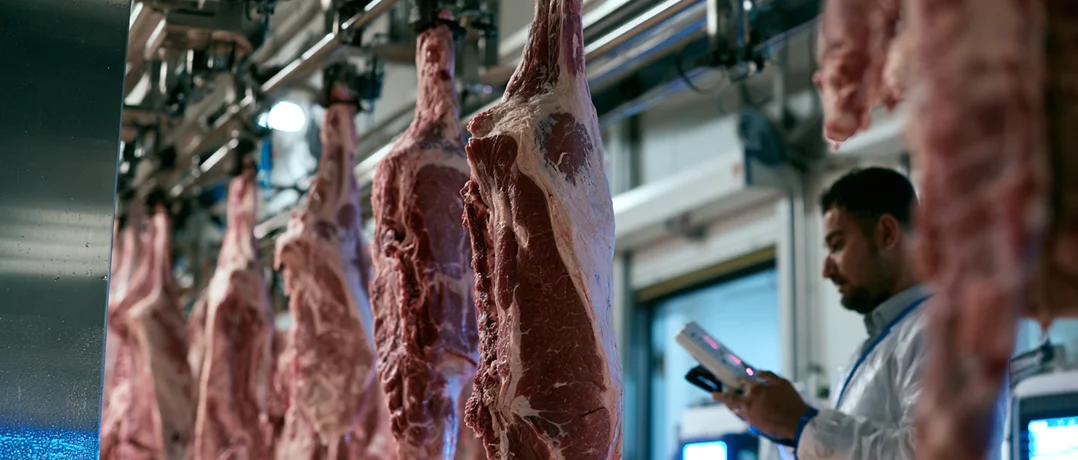
Recent food safety violations in Lebanon have once again raised concerns about the effectiveness of inspections and the authorities' ability to protect consumers.
Following violations uncovered at meat facilities in Sabra and Shatila in October and the recent contamination incident at Nadini restaurant, Prime Minister Nawaf Salam held an emergency meeting on November 2 to discuss stricter inspections and measures to prevent similar cases.
But why do these incidents keep happening, and will the new measures make a difference?
Why do food safety violations keep happening?
Professor Doctor Elie Awad, President of the Food Safety Lebanese Commission, told The Beiruter that the problem extends beyond individual restaurants or meat suppliers.
What we are witnessing today is not simply a series of isolated food safety incidents. It is an indication of structural weaknesses within Lebanon's food safety control system
He identified four main problems: responsibilities divided between different authorities, insufficient preventive inspections, difficulty tracing food products to their sources, and weak enforcement of existing regulations.
Currently, several ministries, municipalities and government bodies are responsible for monitoring food safety. However, their work is not coordinated through a fully operational national system, he believes.
Awad also stressed that inspections often take place after complaints or food poisoning cases have already been reported, rather than preventing contaminated products from reaching consumers.
An inspection that is not followed by traceability, accountability and corrective action remains a measure of limited impact
Another major concern is the inability to trace meat throughout the supply chain. According to Awad, authorities must know where an animal originated, where it was slaughtered, how its meat was transported and stored, and which businesses eventually received it. Without this information, identifying the source of contamination and preventing further distribution becomes difficult.
Lebanon does not lack scientific expertise or legislation. What it needs is effective institutional implementation, coordinated efforts and the resources required to enforce the law
What measures will be taken following Salam's meeting?
Following the emergency meeting, the Lebanese Food Safety Commission was tasked with preparing an immediate inspection plan in cooperation with the relevant ministries.
According to Awad, priority will be given to slaughterhouses, meat warehouses, importers, distributors, meat-processing facilities and restaurants handling raw or undercooked meat. These inspections are expected to examine the origins of meat, slaughtering procedures, storage conditions, transportation methods and compliance with health regulations.
However, Awad emphasized that the objective is not simply to increase the number of inspections. “What is needed is not a media-driven inspection campaign or a temporary measure," he said, stressing the importance of establishing a permanent regulatory system.
One of the main proposed measures is a national traceability system that would allow authorities to follow meat products from their original source to the consumer. If contamination is detected, inspectors should be able to identify the affected shipment, determine which establishments received it and withdraw the products from circulation.
The Commission also plans to strengthen laboratory testing, particularly for products that cannot be assessed through visual inspections alone. Awad explained that the parasite detected in the Nadini meat sample cannot necessarily be identified through appearance or smell, making specialized testing essential.
Stricter action against establishments violating food safety regulations is also being considered, including closures, product seizures and referrals to judicial authorities.
"Our direction is to begin implementing the necessary operational measures immediately," Awad said.
Nevertheless, he acknowledged that inspection teams, resources and operational arrangements have not yet been finalized.
A commission still waiting for the resources to operate
Although Lebanon adopted Food Safety Law No. 35 in 2015, establishing the Lebanese Food Safety Commission, the institution has yet to become fully operational.
According to Awad, it has not yet developed its full inspection apparatus or secured the necessary personnel, equipment and logistical support. This raises questions about its ability to oversee food safety nationwide, particularly as the government prepares to introduce stricter controls.
"We cannot expect nationwide regulatory results from an institution whose basic operational requirements have not yet been fully established," he said.
Awad explained that the Commission has requested additional human, technical and logistical resources, along with security support, to carry out its responsibilities. He also stressed that effective food safety oversight requires cooperation between the ministries of Public Health, Agriculture, Economy, Industry and Interior, as well as laboratories and judicial authorities.
Beyond the current incidents, Awad believes Lebanon needs a permanent system that prioritizes prevention rather than responding only after consumers become ill. This would require regular inspections based on the risks presented by each establishment, better laboratory testing, a reliable system for tracking food products and consistent enforcement of regulations.
We do not want to discover violations only after contaminated food has reached consumers. We want to prevent it from reaching them in the first place
He also warned against treating all food establishments equally, noting that some comply with safety standards while others fail to meet basic requirements.
The purpose of stronger oversight, he explained, should be to protect consumers while ensuring that businesses following the rules are not disadvantaged by competitors violating them.
"Every Lebanese citizen has the right to know what they are eating, where their food comes from, and how it has been produced, stored and transported," Awad said.
For now, the government has announced new inspections, stronger monitoring and tougher action against violations. Yet the Commission responsible for coordinating these efforts is still waiting for the resources needed to carry them out, because:
Safe food is not a privilege granted to citizens; it is a fundamental right. Food safety is neither an administrative option nor a media slogan. It is a legal, scientific and national responsibility that cannot be compromised
Lebanon has introduced food safety measures before, often following incidents that raised public concern. The latest promises come after another case in which contaminated food reached consumers.
The measures have been promised. What remains to be seen is when, and how effectively, they will be implemented.
-
-

-
Natalie DurhamResearcher/Writer
Junior research writer focusing on politics, public policy and international affairs.
-
