



As Lebanon’s summer festivals are called off, an entire seasonal economy tied to tourism, nightlife, and local livelihoods is being shaken. The Beiruter spoke with festival organizers and tourism officials about the country’s fragile economic cycle.
Lebanon’s summer has been cancelled

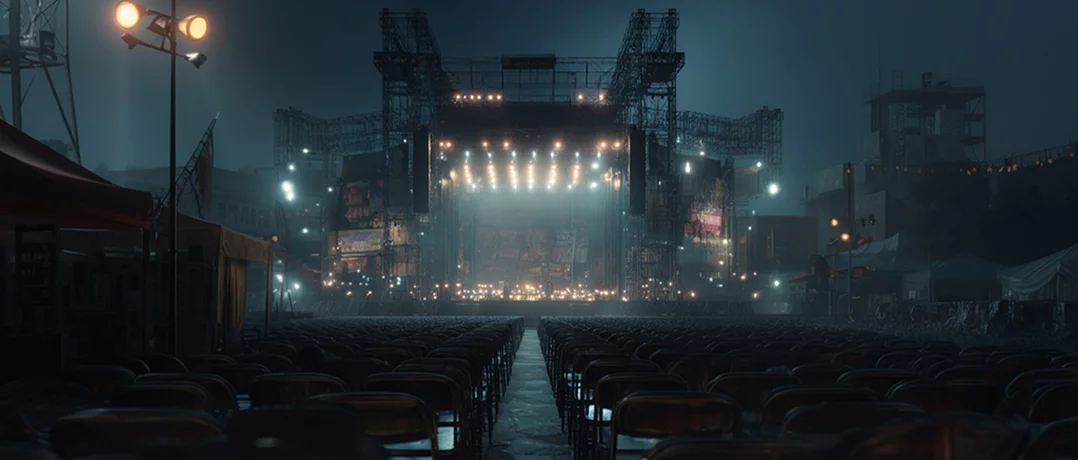
For decades, Lebanon’s summer festivals were never simply concerts. They were economic engines, tourism magnets, and cultural rituals that transformed entire regions every year. From the Roman columns of Baalbeck to the mountains of Arz and the courtyards of Beiteddine, festival season activated hotels, restaurants, guesthouses, transportation networks, cafés, and local businesses across the country.
This year, many of those stages are expected to remain dark.
“Everything froze within one week”
What initially appeared to be one of the strongest post-crisis summers for Lebanon’s events sector quickly unraveled under the pressure of regional escalation, financial uncertainty, and deepening security fears.
According to Abdo Housseiny, General Manager of Virgin Ticketing Box Office, the season had started unusually strong, with no real “dead season” after the holidays as is typically the case. “We had many events lined up, with more coming for Eid al-Fitr and Easter,” he told The Beiruter.
At the same time, organizers were already preparing major summer productions. Then, within days, the entire calendar collapsed. “Everything froze within one week,” Housseiny said. “All events from March through April and May were cancelled.”
Preparations for summer festivals were already well advanced. Ticket sales for the Cedars Festival had opened, and according to Housseiny, nearly 60% of tickets had already been sold.
No Beiteddine, no Cedars, no festivals at all.
The shutdown immediately triggered a financial and operational crisis for ticketing companies. Virgin Ticketing alone refunded between $5 million and $6 million in tickets. “We essentially did the work twice,” Housseiny said. “First selling the tickets, then refunding them.”
Without insurance coverage for producers, full refunds became unavoidable. Customers who had spent anywhere between $100 and $2,000 received complete reimbursements, often in cash, creating additional logistical pressure across branches.
“And refunds are not simple,” he explained. “You need daily petty cash distribution across branches, drivers on standby, cash transfers between offices, and you never know how many refunds will happen on any given day.”
Lebanon disappeared from the touring map
The collapse of the festival season is not only about local instability. It is also about timing.
Large-scale festivals require months of negotiations, contracts, logistics, and international coordination. Once uncertainty dominates the calendar, Lebanon effectively disappears from global touring schedules.
“Major artists always book their dates far in advance,” Housseiny explained, adding that even smaller category B or C performers no longer want to come to Beirut due to embassy restrictions, travel advisories, and security concerns.
Amin Abi Yaghi, CEO of Star System and producer of Beirut Holidays Festival and Jounieh International Festival, described this season as “arguably the worst on record.”
“The international artistic presence is almost entirely absent,” he said.
No foreign artists or DJs are expected this year, even though previous plans included international performers.
Because global artists finalize summer schedules months in advance, Lebanon was simply removed from this year’s touring circuits.
A similar reality unfolded in the Cedars. According to Paula Yammine, Media and Communications Officer for the Cedars International Festival, organizers had already begun discussions with international artists before plans collapsed.
“Last year we hosted Black Coffee,” she said. “And this year there were ongoing preparations and negotiations with international artists of a similarly global caliber.”
But without visibility on the security situation, negotiations became impossible to sustain.
“The issue was not simply postponement,” Yammine explained. “No one knew whether the war would continue or stop. And festivals require six to eight months of preparation.”
Even basic logistics became impossible to guarantee. Last year, the Cedars Festival expanded its venue capacity from around six or seven thousand attendees to nearly thirteen thousand, requiring extensive infrastructure work.
“Installing the stage alone takes around a month and a half,” Yammine said.
Despite the uncertainty, demand had remained exceptionally strong. Ticket sales for Wael Kfoury’s concert sold out within days, even before all seats had been publicly released. Still, organizers suspended preparations early enough to avoid deeper financial losses.
Festivals were carrying entire regional economies
For organizers and tourism officials alike, the disappearance of festivals represents far more than the cancellation of concerts.
“These festivals are what regions depend on,” Housseiny said. “People book weekends in Ehden, the Cedars, or Beiteddine. They stay in hotels, go to restaurants, bring their families, spend days in the area.”
“It’s not only our sector that stopped, but internal tourism as a whole also came to a halt.”
In this matter, The Beiruter reached out to sources at the Lebanese Ministry of Tourism, who revealed that Lebanon welcomed around 1.5 million visitors last year, including approximately 900,000 expatriates and tourists, compared to roughly one million visitors in 2024. Under normal conditions, the tourism sector contributes between 20% and 25% of Lebanon’s total income. Yet officials acknowledge that this year is witnessing a sharp decline, particularly for international festivals.
For Yammine, the Cedars Festival became a clear example of how entire regional economies are activated through festival season. Last year, hotels and guesthouses in Bsharri reached full capacity, forcing visitors to stay in nearby areas including Ehden, Koura, and Zgharta.
“The festival created a complete economic cycle for the region,” she added. Restaurants, cafés, archaeological sites, tourism facilities, and local businesses all benefited from the influx of visitors.
The diaspora presence was particularly strong, especially from Australia, Europe, and Arab countries. “The Lebanese diaspora needs a reason to return to Lebanon,” Yammine said. “The festival provided that.”
The festival sector supports far more than entertainment. It provides direct income to thousands of families. From production crews and technicians to sound and lighting companies, restaurants, hotels, and service sectors, it supports an entire economic ecosystem.
A private industry carrying public tourism
The current crisis has also exposed how dependent Lebanon’s tourism sector remains on private initiative.
According to ministry sources, the Ministry of Tourism does not directly finance festivals. Most events are organized by municipalities, associations, or private organizers, while the ministry’s role remains largely administrative: facilitating procedures, coordination, and visibility.
“There is simply no budget for funding,” the sources said, noting that Lebanon’s tourism ecosystem relies almost entirely on private initiative.
Housseiny argues that this model has become increasingly unsustainable, adding that the Ministry of Culture could still support organizers through tax reductions or exemptions.
According to him, every event faces multiple layers of taxation, including VAT, Ministry of Culture fees, contributions to the artists’ syndicate fund, and non-resident taxes imposed on foreign performers.
If the government really wanted to encourage tourism and international artists, it could ease these costs.
At the same time, sponsors have become increasingly reluctant to invest, while producers fear losing everything if a concert is announced and then disrupted by protests or security developments days later.
The problem is no longer logistics. It’s mood.
Beyond the financial losses and operational paralysis, organizers describe something harder to quantify: the disappearance of public readiness itself.
“Every week or two, there is a new incident,” Housseiny said. “People are constantly waiting to see whether things will calm down or escalate again.”
For Yammine, the issue goes beyond whether the war formally ends before summer.
“When a country emerges from war, you cannot predict how people will react. Even if the war had ended before summer, you still cannot know what the public mood will be like.
At the same time, organizers are aware of the political sensitivity surrounding public celebrations during periods of national crisis.
“You cannot announce a concert while the country is going through political and social turmoil,” Housseiny said. “People will ask how you can celebrate while others are suffering.”
Today, even discussions about alternative or smaller-scale events remain uncertain.
“We still do not know whether the public is emotionally or financially ready,” Yammine said.
What remains clear, however, is that Lebanon’s festivals were never simply cultural events. They became one of the country’s last functioning intersections between tourism, diaspora engagement, local economies, and the idea of normal life itself.
This summer, the silence of empty stages may ultimately reveal something larger than the collapse of a festival season: a country that is no longer only struggling to organize celebrations, but struggling to imagine stability in the first place.
-
-

-
Michella RizkContent Manager/WriterFocusing on social affairs.
-
