



An Exclusive interview with Edward Gabriel, president of the American Task Force on Lebanon (ATFL) and former US ambassador discussing the path forward, the main obstacles to ending the current cycle of hostilities, Washington’s willingness to engage directly with Hezbollah, and the state’s sovereignty.
Lookout for the future Lebanon, an exclusive interview with ATFL president Ed Gabriel
Lookout for the future Lebanon, an exclusive interview with ATFL president Ed Gabriel
By Joanne Naoum | August 26, 2026

Reading time: 6 min
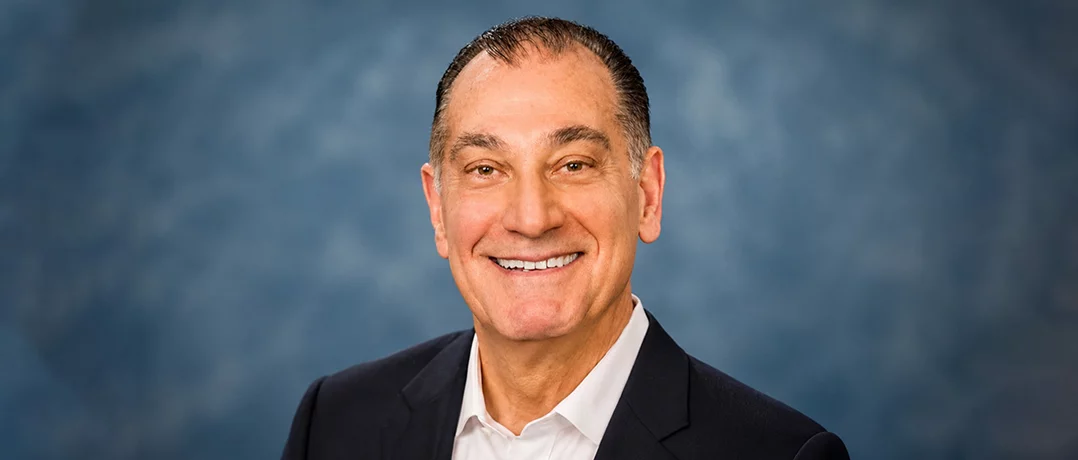
Lebanon stands at a critical crossroads: whether the current U.S.-backed diplomatic framework can transform a cycle of war and occupation into a durable security arrangement, or whether the country will remain trapped between Hezbollah’s armed presence, Iran’s regional ambitions and Israel’s military operations on Lebanese territory.
In an exclusive interview with The Beiruter, Edward Gabriel, president of the American Task Force on Lebanon (ATFL) and a former U.S. ambassador, argued that the path forward rests on a fundamental principle: the Lebanese state must regain full sovereignty over its territory and the exclusive authority to decide matters of war and peace.
Gabriel said direct Lebanese-Israeli negotiations, backed strongly by Washington, offer the most realistic route toward a lasting ceasefire, Israeli withdrawal and the gradual restoration of state control. But he insisted that the framework cannot be limited to southern Lebanon or the area south of the Litani River.
At the heart of his assessment is the future of Hezbollah’s weapons and the role of Iran’s Islamic Revolutionary Guard Corps (IRGC), which he identifies as the underlying driver of the current confrontation.
“The root cause of the present hostilities is the IRGC presence in Lebanon and Iran’s insistence on maintaining an open Iranian front against Israel in Lebanon".
He also said that Lebanon has made significant political progress, but that the state must now demonstrate the determination and capacity to translate those declarations into control on the ground.
The parallel objectives
For Gabriel, the U.S.-backed framework offers a best route out of the current confrontation if it moves from diplomacy into measurable implementation. He pointed out that direct negotiations between Lebanon and Israel, backed strongly by Washington, should pursue these parallel objectives: achieving a lasting ceasefire and implementing a series of pilot zones where the Lebanese state expands its authority as Israel carries out a phased withdrawal. The framework should also secure U.S. support to strengthen the Lebanese state, particularly the LAF (The Lebanese Armed Forces) so it can eventually take control of the entire country and all its borders, and to ensure the state’s monopoly of arms, including over Hezbollah, and its control of the decision of war and peace.
It is important that the framework be applied to the whole of the country, not just south of Litani, in order to achieve complete monopoly of arms
The former US ambassador said the tripartite process has already produced the first pilot zone but is now focused on preventing a major escalation in the Ali Taher area. The ATFL position is that the LAF should take control there.
The concept of pilot zones could provide a practical mechanism for simultaneously reducing the risk of escalation and testing whether the framework can work on the ground.
He noted discussions are also underway over which country or group of countries could serve as an independent force to verify compliance in each zone.
It is important that the implementation of the framework in the first pilot zones is successful, before others are considered
The ATFL president argued that successful implementation would create the political momentum needed to demonstrate that the model can work.
Hezbollah, Iran and the obstacle to a settlement
Gabriel highlighted that “had Hezbollah not entered the confrontation on March 2, the current situation may not have reached this level of destruction”. At the same time, he says Israel’s subsequent military presence and destruction in southern Lebanon have created a new humanitarian and political reality. “The Israeli occupation that this situation triggered and the continued demolishing of entire towns and villages by Israel in the south has now introduced an additional layer of humanitarian suffering and political challenge”.
According to him, Hezbollah and the IRGC are not party to the tripartite talks.
But a decision by Hezbollah to accept the authority of the Lebanese state and move toward disarmament would provide an obvious key to undoing the current conflict and occupation.
Absent such a decision, Gabriel said, the Lebanese state and its armed forces must demonstrate greater determination to reclaim territory, not only in the south but elsewhere in the country.
At the same time, Israel should stop destroying occupied towns and villages and agree to a series of pilot zones in which the Lebanese state moves in as Israel withdraws from occupied territory.
Engaging with Hezbollah
Asked whether Washington’s willingness to engage directly with Hezbollah could undermine the U.S. position that the Lebanese government is the country’s sole legitimate authority, Gabriel was unequivocal: “There is no doubt that the state is the only legitimate authority and the US will always uphold that position.” But he stressed that Lebanon itself must do more to assert that authority.
The Lebanese state needs to do more on its end to strengthen its territorial and financial authority and cannot wait for others to solve its internal problems for it. Only the US and Lebanon will determine if and when it’s useful to talk to Hezbollah.
ATFL’s role in Washington
Gabriel says ATFL has positioned itself behind the broader diplomatic effort to establish a sustainable security arrangement between Lebanon and Israel.
“As the voice of the most prominent diaspora in the United States, ATFL welcomed President Joseph Aoun’s call for direct negotiations and the Framework Agreement reached in late June.
Gabriel says the ATFL is now waiting for the designation of an independent verifier for the framework.
The ATFL president reiterated their commitment to using their presence in Washington and offices to advance the tripartite process. The desired endpoint is clearly defined:
“To move from the situation of conflict and occupation that we are in now, to a situation in which the Lebanese state is sovereign and has disarmed all non-state actors in the country, and Israel, as well as the IRGC, has withdrawn from the country.”
Lebanon has made progress, more is required
A bipartisan delegation of US Congressional staffers arrived in Beirut mid-August for a multi-day visit organized by the ATFL and held direct meetings with key Lebanese figures in government, security, finance, academia, civil society, and humanitarian affairs. Based on their discussions, Gabriel stated that Beirut has taken several important steps toward restoring state authority following years in which decision-making was dominated by the Assad regime and Hezbollah.
He pointed to the government's declaration that it seeks a monopoly of arms across Lebanese territory, and its assertion of exclusive authority over decisions of war and peace.
He also highlights the government's declaration that the IRGC, as well as Hezbollah's military and security wings, are illegal in Lebanon.
Economically, the former US ambassador noted that Lebanon has completed two of three key legal reforms required by the International Monetary Fund to reform the collapsed banking sector.
He also pointed to the launch of direct negotiations with Israel under American auspices, improved relations with Syria's new leadership and a series of appointments across the public administration.
In his view, these steps have helped restore some of Lebanon's credibility regionally and internationally.
But the progress, he argued, remains incomplete. “There is still more to be done. The state and army must do more to reclaim more territory and fiscal space for the state, and to constrain and marginalize Hezbollah throughout the country”.
That includes dozens of further key appointments in the public administration and security forces, which Gabriel says are necessary to reduce Hezbollah's influence within the “deep state” and address corruption. Gabriel also connects Lebanon's political sovereignty to its ability to restore control over its finances. The remaining Gap Law, he insisted, should be completed as soon as possible and in coordination with IMF guidelines.
“The state should not allow this process to drag out and must come together quickly in support of a unified national interest”.
For Edward Gabriel, president of the American Task Force on Lebanon (ATFL) and former US ambassador, the state should continue to work with the US and within the trilateral framework to bring an end to the current conflict, work towards Israeli withdrawal, alongside the full disarmament of Hezbollah.
-
-
-
Joanne NaoumHead of Political Desk
-
