



Mounia Akl reflects on her journey to directing Kate Winslet in her upcoming Netflix series, while staying rooted in the stories and places that shaped her.
Mounia Akl and the making of a global career
Mounia Akl and the making of a global career
By Jenna Geagea | September 04, 2026

Reading time 4 min
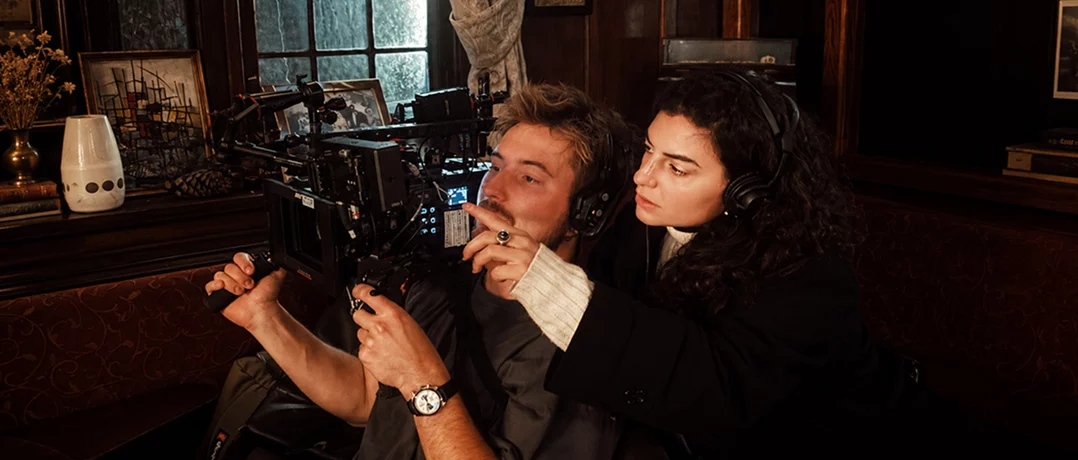
A Lebanese director is about to direct an Oscar winner in a major Netflix series. That version isn't wrong. But Mounia Akl's own account of her career, is a simpler, perhaps more interesting story, one about a filmmaker who has always insisted on staying close to what is true to her, even as the scale of her work grows around her.
An accidental beginning
Akl did not set out to become a director so much as fall into the role through sustained obsession. "It really came to me by accident," she told The Beiruter. "My parents loved films, so films were part of our home, and we went to the cinema every Sunday." As a child, watching films felt like "eavesdropping on a world I wasn't part of." What pulled her toward the craft itself, rather than simple cinephilia, was a friendship. Alongside Cyril Aris, she began making films as a side project while studying architecture. "One became a web series, and suddenly we were, somewhat accidentally, actually working." The two eventually left their jobs, applied to film school, and committed to the path in earnest.
Building a career from a country with no established industry, she said, demanded faith. "There was no real path, so you had to have a certain amount of faith, and probably be a little obsessed." At Columbia, she expanded her creative circle and returned to Lebanon to shoot her thesis film, Submarine, the seed of what would become her feature debut. The lesson she took from those years has stayed with her since: "The more specific you are, the more universal something can become."
Costa Brava and the weight of family
That instinct crystallized in Costa Brava, Lebanon, Akl's Venice-premiered feature about a family confronting the country's garbage crisis from their mountain home. She chose the family as her lens deliberately. "Families are made up of different generations, opposing opinions, contradictions, and people who are constantly trying to coexist," she said. "It was through my family, through what we went through, that I understood how my society functioned." The crisis itself became secondary to what it revealed. "The garbage crisis became less about the garbage itself and more about what this garbage crisis represented for Lebanon... what we inherit, and what we're leaving behind."
Crossing to the other side of the camera
Akl's brief turn as an actress, in Cyril Aris's A Sad and Beautiful World, gave her an unexpected education in directing. "I really wanted to learn how to say yes to discomfort more," she said of accepting the role. The experience recalibrated her sense of what she asks of performers. "It made me realize how vulnerable acting can be, and how much trust an actor has to place in a director." Once she stopped feeling exposed in front of the lens, she said, "it was powerful and cathartic", made easier by the presence of close friends on set, and by shooting in the city she knows best. "Shooting in Beirut is the best feeling."
Television, then a global stage
Projects like The Responder, Boiling Point, and House of Guinness pushed Akl toward a looser, faster instinct than independent filmmaking allows. "Television made me much more open to experimenting and much less precious about the things I have in mind when I first start conceptualizing something," she said. It's a discipline, she notes, that filming in Lebanon taught her even more directly, trusting her gut, improvising in the moment, without becoming precious about a single vision.
That flexibility now meets its biggest test yet. Akl is set to direct Kate Winslet and Maxine Peake in The Unheard, a five-episode Netflix limited series written by Jack Thorne, the Emmy-winning writer behind Adolescence. The story follows two sisters on the run after a revenge plot collapses, pursued as the series asks what pushed them to such an extreme act, a premise trade press has compared to Thelma & Louise. Filming is expected to begin in 2027, backed by a production team spanning Warp Films, Brad Pitt's Plan B, and Stephen Graham's Matriarch Productions.
True to form, Akl resists inflating the moment into something larger than the work itself. "Reflecting on what things mean doesn't come very naturally to me," she said. "If I do it too much, I can get anxious, so I'd rather just focus on the work." Still, she allows herself the honesty of the stakes. "I'm aware that this project is a culmination of so many things I've dreamed of doing, and I feel very grateful for that, and nervous, because I care about what this story is trying to say on a larger level than just entertaining."
Still coming home
Whatever the scale of what comes next, Akl is already looking back toward Beirut. "I want to keep moving between projects like this and stories set in Beirut," she said, floating the idea of shooting her second feature film at home, after The Unheard. It's a fitting instinct for a director whose global ascent has never required leaving her own specificity behind, only carrying it further than before.
-
-

-
Jenna GeageaReporter/Writer
-
