



Long hours in front of a screen can leave your eyes tired, dry and strained. Here are some tips to protect them.
Myopia and eye strain: The screen time effect on our eyes
Myopia and eye strain: The screen time effect on our eyes
By Nada Merhi | August 22, 2026

Reading time: 5 min
Imagine an athlete who spends several hours each day training and lifting heavy weights. The more their muscles are pushed, the more fatigued they become. Without enough time to recover, performance declines, aches and pains set in, and the risk of injury increases.
The same principle applies to the eyes. When we spend hours scrolling, gaming, studying or working on a computer, smartphone, or tablet, the muscles responsible for focusing are constantly working to keep images clear. Over time, this sustained focusing effort can strain the eyes, causing headaches, dry eyes, and occasional blurred vision.
In the long term, excessive near work, combined with too little time spent outdoors, can contribute to the development and progression of myopia – a condition that is becoming increasingly common worldwide.
According to the International Myopia Institute, in 2000, nearly 23% of the global population was myopic. That figure has now risen to around 30%, representing approximately 2.6 billion people. If this trend continues, nearly half of the world’s population – around 5 billion people – could be myopic by 2050.
Among children and adolescents, the study Global prevalence, trend and projection of myopia in children and adolescents from 1990 to 2050, published in the British Journal of Ophthalmology, reports that the global prevalence of myopia increased from 24% in 1990 to nearly 36% in 2023 and is projected to reach 39% by 2050.
So, are hours spent on screens actually changing our eyes – or are they simply leaving them exhausted? The answer is more complicated.
Two different phenomena
Contrary to a common misconception, not all cases of myopia in young people reflect a permanent change in the eye. “There are two distinct conditions,” explains Dr. Corinne Lahoud, an ophthalmologist specializing in glaucoma and cataract surgery. “In children, excessive screen time can contribute to the development of true myopia. In adolescents and young adults, a strong accommodative response can instead lead to what we call pseudomyopia or false myopia.”
“In these cases, the muscles responsible for focusing remain excessively contracted, temporarily making the eye appear more myopic than it really is and causing headaches and blurred vision. This can make the initial diagnosis misleading,” Lahoud explains.
“That is why it is important to use eye drops that relax the muscles of accommodation before determining the patient’s true refractive error. Otherwise, relying solely on an initial examination may result in glasses being prescribed for someone with false myopia.”
Changes in the eye during childhood
In children, however, true myopia involves a genuine anatomical change in the eye. Lahoud explains: “When children spend a lot of time focusing on objects at close range, this may contribute to changes in eye growth and gradual elongation of the eyeball. In fact, myopia occurs when the eye becomes too long relative to its focusing power.”
To help counter this tendency, she stresses the importance of not only limiting children’s screen time, but also encouraging them to spend more time outdoors.
Studies have shown that exposure to natural light may help protect against myopia, possibly by stimulating the release of dopamine, a neurotransmitter that appears to play a role in regulating eye growth and limiting excessive elongation.
Dry eye
Dry eye is another common consequence of spending long hours in front of screens. “When we are highly focused, we tend to blink less,” Lahoud points out. “Yet blinking is what keeps the surface of the eye moist.”
Dry eye can cause stinging, a gritty or sandy sensation, burning, blurred vision, and excessive tearing.
“It is a common misconception that watery eyes mean the eyes are well hydrated. In fact, when the eye is dry, it can produce an excess of poor-quality tears in an attempt to compensate,” Lahoud notes. “Artificial tears help by replacing some of the components that are missing from natural tears.”
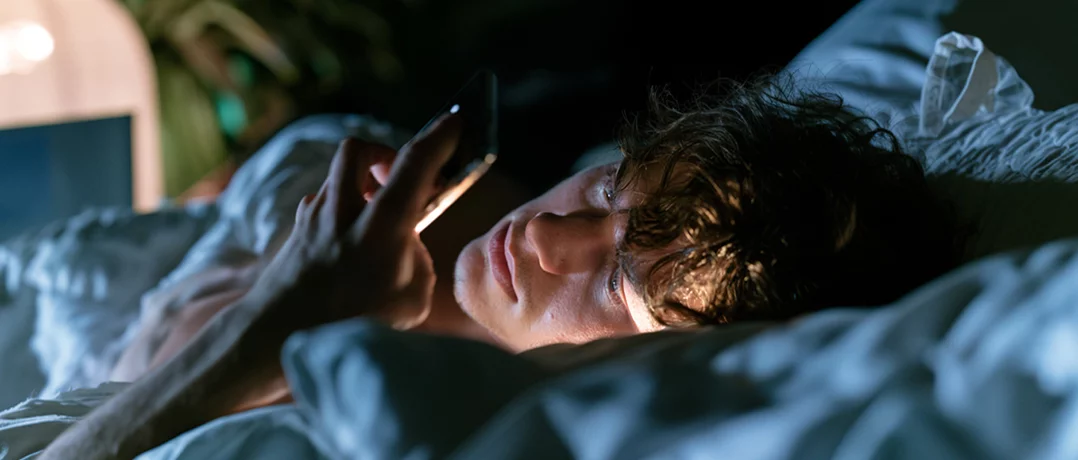
She also warns against spending long periods in the dark looking at a phone or tablet screen. “Using a phone in the dark can place additional strain on the eyes, potentially leading to eye fatigue, headaches, and temporary blurred vision. But it does not damage the eye itself.”
The 20-20-20 rule
To reduce eye strain, ophthalmologists recommend a simple approach known as the 20-20-20 rule: every 20 minutes, look at something about 20 feet (six meters) away for at least 20 seconds.
“This gives the focusing muscles a chance to relax,” Lahoud explains. “Of course, it is not always possible to interrupt a class or an exam every 20 minutes. But it is important to keep the rule in mind and follow it whenever possible.”
She also recommends using artificial tears during prolonged screen use, staying well hydrated, and avoiding direct exposure to air-conditioning vents, particularly in the car.
Taken together, these simple habits can help reduce eye strain and protect eye health. After all, caring for our eyes is not simply about spending less time in front of screens, but also about spending more time in natural daylight.
