



Lebanon’s NSSF is advancing its recovery through faster hospital payments, expanded healthcare coverage, and new reforms aimed at reducing medical costs for insured citizens.
NSSF recovery: what changes for patients?

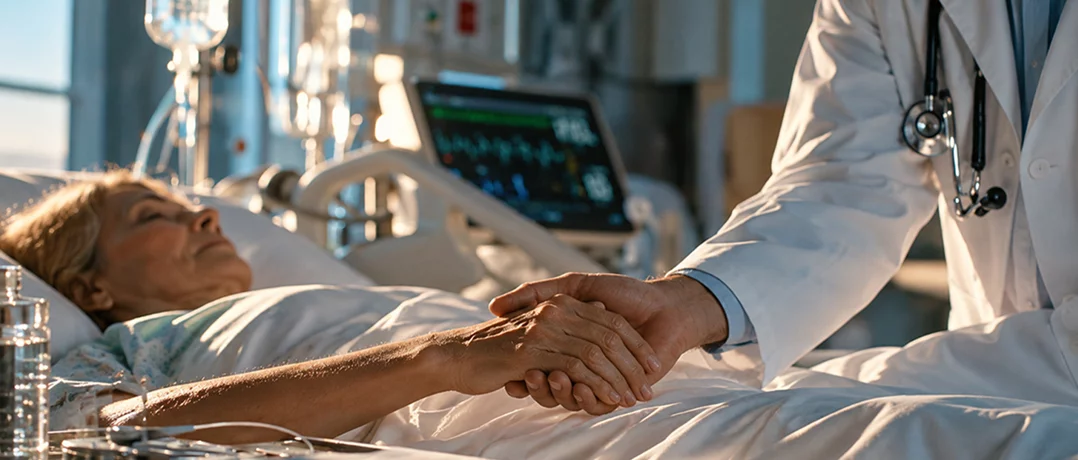
After years of disruption that severely affected healthcare coverage and hospital payments, Dr. Mohammad Karaki, Director-General of Lebanon’s National Social Security Fund (NSSF), told The Beiruter that they “used the crisis as an opportunity to introduce certain reforms,” pointing to changes that he believes could leave the institution in a stronger position than before Lebanon’s financial collapse.
He estimates that the NSSF has completed between 80% and 90% of its recovery, with further reforms expected by the end of 2026 or early 2027.
The changes include more frequent payments to hospitals, higher reimbursement rates, expanded medical benefits and stricter monitoring of additional charges imposed on patients.
More than $80 million paid to hospitals
According to Karaki, the NSSF has paid more than $80 million to healthcare institutions, including hospital advances and kidney dialysis payments, with further payments made through direct invoice settlements.
He explained that the Fund has accelerated its hospital advance-payment system, originally introduced in 2011, moving from monthly payments to payments approximately every 15 days.
“The importance of this is that these payments ensure a steady and continuous flow of funds to hospital,” Karaki said, explaining that regular payments allow hospitals to purchase medications, secure medical supplies and pay staff salaries.
The NSSF has also increased the percentage of hospital bills covered through advances. For medical treatment that does not require surgery, hospitals receive advances equivalent to 85% of the claim's value, while fixed-rate surgical procedures are covered at 90%.
Karaki also challenged concerns about the Fund's accumulated debts to hospitals, saying preliminary estimates place the total at approximately $100 million, while payments made during 2026 are expected to exceed that amount.
If you compare us with insurance companies and the other government institutions that provide coverage, the NSSF is probably the institution that pays hospitals the fastest in Lebanon
Hospitals face stricter monitoring over additional charges
While faster payments are intended to support hospitals, Karaki stressed that the Fund's priority is also to protect patients from unjustified expenses.
Our primary goal is to limit unjustified additional charges as much as possible
He acknowledged that hospitals may legitimately request additional payments when certain procedures are not covered or when NSSF reimbursement rates remain insufficient. However, he insisted that patients should not bear unjustified costs.
To address this, he explained that the NSSF relies on two monitoring bodies: medical inspectors who examine services provided to insured patients and administrative inspectors who verify patient eligibility and investigate financial charges.
Karaki said the Fund has been assessing hospitals across Lebanon, issuing warnings to several major institutions and terminating contracts with others over compliance concerns.
“Whenever we receive a complaint, we take action to verify its seriousness,” he said, adding that the NSSF seeks to ensure hospitals refund patients who have paid unjustified charges.
The two sides, however, still disagree on what care actually costs. Karaki maintains that NSSF reimbursements have returned to approximately 70% to 80% of pre-crisis coverage levels for many services. Hospitals, meanwhile, argue that rising electricity, generator and operating costs require higher payments.
To resolve the dispute, a committee involving the International Labour Organization (ILO), World Health Organization (WHO), Ministry of Public Health, NSSF, hospital representatives and physicians is reviewing actual medical costs.
We believe that in some cases we may even be paying more than we should, while hospitals argue that we are paying too little. To put an end to this debate, we are waiting for the committee to present practical recommendations before the end of the year, so that we can settle these issues
New medical coverage and reforms expected by early 2027
Beyond hospital payments, Karaki outlined several reforms intended to improve healthcare coverage for insured Lebanese.
One proposal would change how the NSSF reimburses medications. Currently, reimbursements are calculated using the price of the cheapest generic alternative, but the Board of Directors is considering shifting to an average-price system. “This would increase the benefits available to insured members,” he explained.
The Fund has also expanded its list of covered medications and introduced fixed reimbursement rates for numerous surgical procedures, including appendectomies and gallbladder operations, to reduce billing irregularities. The Fund has also added new procedures to its coverage, Karaki said, among them robotic surgery and transcatheter aortic valve implantation (TAVI), a procedure that replaces a heart valve without opening the chest.He also pointed to improvements in family allowances and end-of-service indemnities, with further increases expected.
Karaki did acknoledge that hospital advances became irregular in 2022 and 2023 and eventually stopped. He dates the start of the NSSF's recovery to mid-2024.
With further adjustments to hospital tariffs, medication reimbursements and medical supplies under review, the director-general of NSSF expects the remaining reforms to be completed by January 2027 at the latest.
-
-

-
Natalie DurhamResearcher/Writer
Junior research writer focusing on politics, public policy and international affairs.
-
