



The Cannes-winning filmmaker arrives at Metropolis, bringing his cinema of landscapes, faith and survival to a packed Metropolis audience, while Lebanese and Arab films reclaimed the screen through stories rooted in the region.
Oliver Laxe arrives at South Screens Metropolis
Oliver Laxe arrives at South Screens Metropolis
By Rayanne Tawil | June 07, 2026

Reading time: 5 min
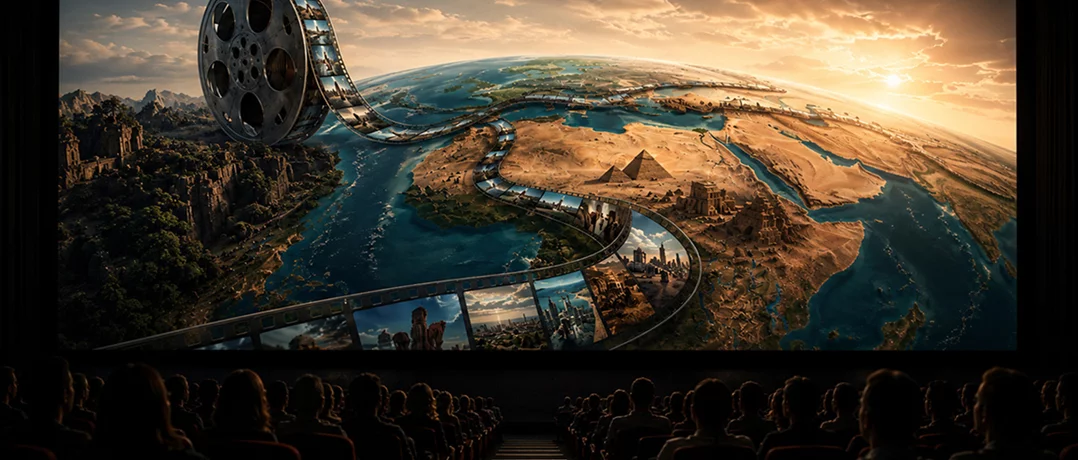
The lights dimmed inside Metropolis Cinema and the audience settled into their seats. On the giant screen behind the stage, the words “South Screens - Oliver Laxe: A Filmmaker of Images” stretched across a landscape of shifting sand and water. Two orange chairs stood beneath it, waiting.
For more than an hour, acclaimed Spanish-French filmmaker Oliver Laxe sat opposite film programmer Rabih El Khoury, reflecting on images, faith, sound, mortality and the strange paths that bring a filmmaker from the mountains of Morocco and Galicia to a cinema in Beirut.
The masterclass formed one of the highlights of the second edition of South Screens, Metropolis Cinema’s festival dedicated to films from the Global South, running from May 28 to June 6.
A festival rooted in the present
This year’s edition arrives after months of uncertainty. Originally scheduled for April, the festival was postponed due to the situation in Lebanon before finally finding its moment this spring.
“Filmmakers are often the first people to feel what is happening around them,” Zeina Sfeir, president of Metropolis cinema, told The Beiruter. “Automatically, the films coming from them reflect what people are living through.”
That sensitivity runs throughout the program. The festival opened with Lebanese filmmaker Dima El-Horr’s “And the Fish Fly Above Our Heads,” which recently won the Zonta Award at Vision du Réel in France. Sfeir described the documentary as deeply representative of contemporary Lebanon, following three men whose relationship with the sea becomes a reflection of endurance, memory and everyday survival.
The festival closes with Palestinian-American director Cherien Dabis’ “All That’s Left of You,” a multigenerational story that traces Palestinian history from 1948 to the present. Between those two screenings, there’s a lineup that slides across Iraq, Saudi Arabia, South Korea, India, Iran, Algeria and even beyond, it brings internationally recognized films to Beirut audiences.
For Metropolis, the goal remains simple: creating encounters that many people would otherwise never have access to.
“When you are a cultural institution, your job is to bring things to people that they may not always be able to travel and discover themselves,” Sfeir said.
Why Beirut matters to Oliver Laxe
Laxe’s presence carried particular significance.
The director has maintained a long relationship with Metropolis, which screened his earlier films “Mimosas” and “Fire Will Come.” His latest feature, “Sirât,” arrives with even greater acclaim on Sunday, June 7. The film won the Jury Prize at Cannes in 2025 and then went on to represent Spain in the Academy Awards race
Yet his connection to Lebanon extends beyond cinema.
Speaking to The Beiruter, Laxe said he was excited to be participating in South Screens and happy to finally spend time in Lebanon.
“What better place to show your movie?” he said. “I’m very excited to be here.”
Despite ongoing tensions in the region, he never hesitated about the trip. Part of that familiarity comes from family ties — his brother is married to a Lebanese woman, though he admitted there was still one local experience waiting for him.
“I still haven’t tried the shawarma,” he laughed. “I’m looking forward to that.”
He also made it clear this visit would not be his last.
“I’m looking forward to coming back many more times.”
Cinema as a search
Throughout the masterclass, Laxe spoke less like a director promoting a film and more like someone trying to understand why images matter in the first place.
Born in Paris to Galician immigrants and later spending a decade in Morocco, he described filmmaking as a lifelong attempt to build alternate realities.
“I like images,” he told the audience. “It’s tasty for me to imagine images, to write images, to shoot images.”
Morocco, where he shot several of his films, became central to that search. There he found what he described as a culture of acceptance and humility, shaped by people living close to the land.
His reflections repeatedly returned to ideas of transformation, limits and mortality. Discussing “Sirât,” whose title references the bridge crossed on the Day of Resurrection in Islamic tradition, Laxe explained that the project grew from a fascination with spiritual journeys hidden inside physical adventures.
“The real jihad is to look at yourself,” he said. “To control yourself. To become an adult.”
The audience listened in near silence as he described cinema as an experience capable of confronting viewers with their own fears and vulnerabilities. For Laxe, films should do more than tell stories. They should penetrate.
“If one image doesn’t enter the body of the spectator,” he said, “then you are using another language.”
The sound of the desert
Much of the evening focused on “Sirât,” particularly its acclaimed sound design.
The film follows a father searching for his missing daughter across the Moroccan desert alongside a community of ravers and wanderers. Music, bass frequencies and sound become narrative forces as important as dialogue.
Laxe revealed that work on the film’s sonic world began years before shooting started. Composer and sound collaborators developed its atmosphere slowly, treating sound almost as a physical material.
“We are not geniuses,” he said with a smile. “We just work a lot.”
For him, rave culture itself became an entry point into the story. The gatherings reminded him of ancient communal rituals, spaces where people dance, release emotion and reconnect with something larger than themselves.
“Every culture had these ceremonies,” he explained. “They help us transform our energy.”
Bringing the South to the screen
South Screens is ultimately about more than one filmmaker.
Alongside Laxe’s appearance, the festival showcases a wave of internationally celebrated Arab cinema. Iraqi director Hassan Hadi’s “The President’s Cake,” winner of the Caméra d’Or at Cannes, explores life under Saddam Hussein through the eyes of children. Saudi filmmaker Shahad Ameen’s “Hijra” continues the emergence of a new generation of Saudi directors reaching major international festivals. Dabis’ closing film and El-Horr’s opening documentary frame the festival with two powerful regional voices whose work has already traveled across the world.
For 10 days, Beirut becomes a meeting point between those stories and the audiences waiting to discover them.
-
-
-
Rayanne TawilCultural writer
-
