



An investigation examines Lebanon’s rising cancer burden and counterfeit drug market, citing The Lancet, and the impact of political interference on patient care in Lebanon.
Our country is killing us

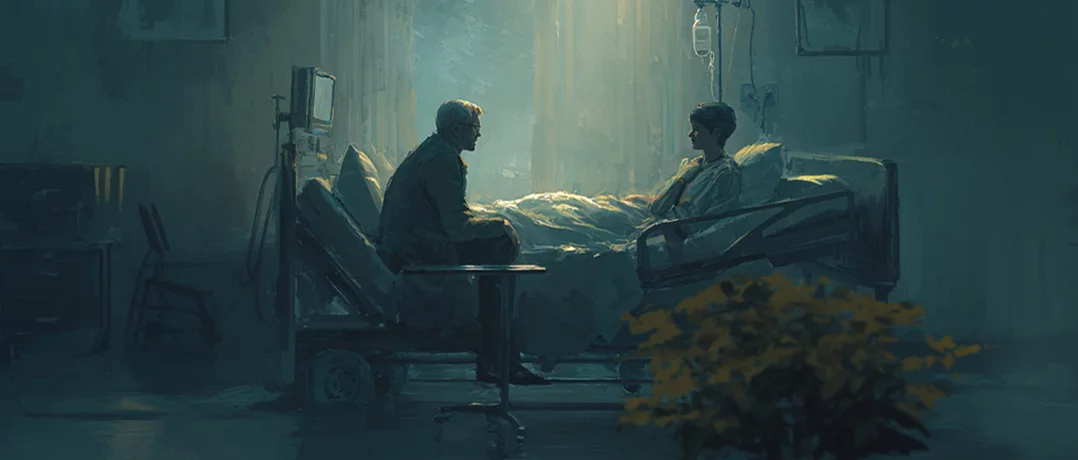
For every 100,000 people in Lebanon, 233 will receive the diagnosis that changes everything. Behind these numbers are fathers, mothers, children, friends, lives interrupted, families shaken, and hope tested.
According to the latest study published in 2025 by The Lancet, the frequency of new cancer cases in Lebanon increased by an astounding 162% from 1990 to 2023, while cancer-related deaths rose by 80% over the same period.
The gravity of the situation was underscored by a report from the British Daily Mail, which ranked Lebanon first globally in rising cancer mortality over the past three decades.
The National Institute of Health indicates that several factors are behind these alarming figures. These include environmental pollution stemming from the widespread use of private, diesel-fueled generators, smoking, the unregulated use of chemicals and pesticides in agriculture and the open dumping and burning of garbage near residential areas.
The National Cancer Registry under the Ministry of Health, which documents cancer cases in Lebanon, stopped publishing statistics after 2016. Reviewing the figures shows that in 2005, at the start of the registration mechanism, there were 7,406 cases (excluding non-melanoma skin cancers). By 2009, cases reached 8,734, then continued to rise, reaching 11,392 in 2016.
In July 2023, the Ministry of Health launched a new national cancer control plan that reactivated the registry. Updated numbers continued to show an upward trend, with 14,035 cases in 2019, dropping slightly to 13,390 in 2022 the last year reported.
The Minister of Public Health to The Beiruter: The crisis of counterfeit medications
Minister Dr. Rakan Nassereddine spoke to The Beiruter about the state of cancer treatment in Lebanon, reflecting on both the progress made and the challenges that remain.
“When we started in the ministry, drug coverage existed in a limited system,” he said. “Today, we cover more than 400% compared to before. We’ve expanded treatment protocols significantly. While we don’t cover everything yet, with strong effort and support, about 94% of patients are responding positively. Only about 6% of cases are still denied. We continue to try to expand protocols, but we remain limited by the budget.”
The minister highlighted the scale of the financial effort behind these improvements.
“Last year, our ministry budget for drugs reached almost $100 million,” he said. “Next year, we’re planning for $115 million, aiming even higher $113 million for essential medications.”
When asked about the crisis of counterfeit medications, as patients navigate a market flooded with fake drugs that threaten their treatment and survival, he responded:
“You know this is so critical, especially that we don't have yet a central public health lab. We're lucky that over the past few months, we were able to get approval from the Council of Ministers to get this central public health lab approved. Now we are at the implementation phase. We imported some equipment. Soon, hopefully in the coming few months, we'll launch it together to be our tool to detect and investigate any medication issues in the country.”
A Legacy of political medical corruption Hani Nassar
Hani Nassar, founder of the Barbara Nassar Cancer Foundation, told The Beiruter about the long struggle to secure life-saving medicine.
“During and after the crisis, we were asked to show up at hospitals at dawn just to secure a place in line,” he said. “We wait all day, and then they tell us: the medicine is not available.”
Minutes later, he said, the same medicine would be handed to someone else. “A phone call comes from a party official, and suddenly the medicine appears but not for you… for someone who belongs.”
He described what he called a parallel distribution system run by political factions. “Some parties would take the medicine from the state and distribute it to their supporters. Hezbollah did it. Amal Movement did it,” he said.
And for those without political backing? “If you had wasta, you lived,” he said bluntly. “If you didn’t, you waited. Or you died.”
The crisis turns criminal
With state-subsidized prices, smuggling cancer medication became highly profitable. Drugs that cost the Ministry of Health only a fraction of their market value sometimes as little as $200 or $300 for treatments worth $10,000 were siphoned off and sold abroad at full price.
Medicines intended for Lebanese patients vanished from hospitals and pharmacies, only to be bought back later on the black market in fresh dollars.
“Our country is killing us”
On April 26, 2021, Nassar joined dozens of patients outside the United Nations ESCWA headquarters in Beirut to protest Lebanon’s collapsing health care system.
A letter was submitted to UN officials warning: “Our Country Is Killing Us.” The following day, limited quantities of medicine began reaching hospitals again, but the shipments were strikingly small.
One case drew particular concern: the cancer drug Xtandi had recently entered Lebanon. Through his foundation’s direct links with pharmaceutical companies, Nassar said he had access to import data showing that the Health Ministry received 122 boxes enough to treat roughly 50 patients for two and a half months.
Yet after the first round of distribution, officials reported that supplies were exhausted. Some patients, he added, never received even a single dose.
Fake medicine and manufactured scandals
As medicines vanished from official channels, patients turned to alternatives: Turkey, Egypt, Dubai. “When the state abandons you, what choice do you have?” Nassar asked.
But desperation created space for fraud. “Fake medicines started coming in,” he said. “Some pharmacies in Turkey were selling counterfeit drugs. Patients were choosing $1,000 over $2,000, because they had no money.”
He recalled cases where fake drugs crystallized inside patients’ bodies. “They would have killed her if they hadn’t stopped the treatment in time,” he said.
Then came what he described as a media storm. “I was furious,” Nassar said. “We’d been screaming for four years. Where were they when people were dying?”
The shadow market of fake medicine
Oncologist Dr. Mansour Salem, who has treated numerous cancer patients over the years, described what he called a grim reality. “There are a lot of counterfeit medicines,” he said bluntly.
“Before, the Ministry delivered medication directly to patients. Today, medicines are often handed over by intermediaries who disappear afterward, leaving patients vulnerable.” For those unable to access drugs through official channels, the only alternative is often the shadow market. “Where do they buy it? In black markets,” he said.
Dr. Salem expressed particular concern about the influx of foreign drugs, including those from Iran and Turkey. “There is an invasion of Iranian drugs,” he said. “Some patients even send me pictures of these medications.”
The price discrepancies, he noted, are stark. “A drug like Keytruda is worth $6,000 officially, but patients can buy it for $500 or $600 on the street,” he said. “They’re playing with people’s health.”
Faces of the crisis
Paul, a patient living with multiple myeloma, described his treatment turning into a frightening encounter with counterfeit medication.
“My numbers were improving, until suddenly they weren’t,” he said. “When we changed the source of my medication from a local supplier, my condition stabilized again. Same drug, different outcome. That’s when I knew I had been taking a fake.”
“What was I taking? I don’t know,” Paul added. “Maybe cortisone, maybe antidepressants, enough to make me feel better for a while, until it’s too late.”
His story is a stark reminder of how fragile patients’ lives become when access to safe, genuine medication is uncertain and how systemic failures can turn hope into peril overnight. A mother, who asked to remain anonymous, recounted the devastating loss of her daughter to ovarian cancer.
After the disease returned, doctors prescribed Lynparza, a targeted therapy that could have slowed its progression. “The drug costs over $6,000,” she said. “How could we possibly afford it?” “I kept thinking, ‘How is it fair that my child’s life depends on money?’”
Every call to the Ministry of Public Health ended in despair. There was no coverage, no relief only the slow ticking of time as her daughter’s strength faded. “I watched her fight every day with so much courage, and I felt helpless,” she said, her voice breaking. “I couldn’t save her. I couldn’t even give her the medicine that might have given her more time.”
As 2026 unfolds, the burden is both medical and moral. The Ministry of Public Health stands at the center of a battle where expanding medication coverage is vital. At the same time, the crisis of counterfeit and smuggled medicines cannot remain an open wound. Fake drugs do not merely fail patients, they betray them. Without strict oversight, functioning laboratories, and accountability across the supply chain, treatment becomes a gamble rather than a guarantee.
And beyond infrastructure lies a deeper challenge: breaking the grip of political interference over life-saving medication. Health cannot be negotiated through loyalty, favors, or affiliation. Medicine must reach patients because they are sick, not because they are connected. For patients, survival now depends on whether the system can act faster than the disease.
-
-
-
Jenna GeageaReporter/Writer
-
