



Lebanon’s experience with the PLO offers a warning about how armed groups operating outside state control can weaken sovereignty, deepen divisions and risk renewed conflict.
Parallel arms, fragile state: Lebanon’s lessons from the Palestinian presence
Parallel arms, fragile state: Lebanon’s lessons from the Palestinian presence
By Michael Al Andary | November 27, 2026

Reading time: 7 min
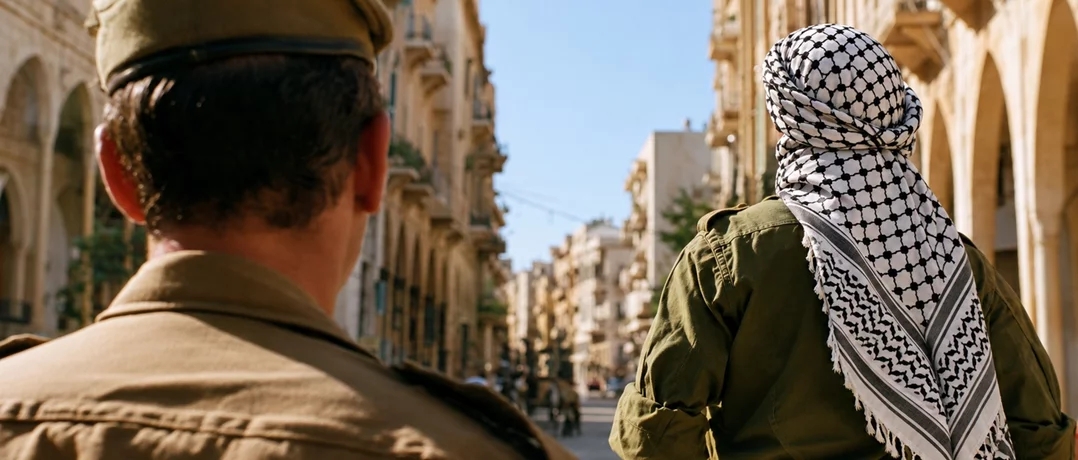
On the occasion of the International Day of Solidarity with the Palestinian People, observed every November 29, Lebanon’s history with the Palestinian armed group offers a reminder of the consequences of allowing non-state organizations to operate beyond the authority of national institutions. While the Palestinian people’s “right” to self-determination remains a legitimate political question, Lebanon's experience demonstrates how an armed struggle conducted from another country’s territory can undermine its sovereignty, deepen internal divisions and draw its population into conflicts it did not choose.
Cairo Agreement and the erosion of sovereignty
The roots of Lebanon’s experience with Palestinian armed organizations predate the outbreak of the Civil War in 1975. Following the arrival of Palestinian refugees after the 1948 Arab-Israeli war, Lebanon gradually became an important base for Palestinian political and military activity.
The turning point came in 1969, when the Cairo Agreement, signed between Lebanese Army commander, back then, General Emile Bustani and Palestine Liberation Organization (PLO) chief Yasser Arafat, formalized arrangements allowing Palestinian armed factions to operate from refugee camps and conduct military operations against Israel from Lebanese territory. Although the agreement provided for coordination with Lebanese authorities, its implementation contributed to the emergence of a security structure that increasingly operated beyond the effective control of the Lebanese state.
Ronnie Chatah, a Lebanese political analyst, told The Beiruter that the legitimization of this arrangement, particularly in southern Lebanon, fundamentally weakened the country’s sovereignty. The area became known as “Fatahland,” reflecting the extent of the Palestinian movement’s independent military and security presence.
Chatah argued that Lebanon might not have descended into civil war had Arafat and Fatah not established their presence in the country. Their ability to maintain a separate security arrangement, he said, contributed to the breakdown of what had previously been a governable state, setting in motion developments whose consequences Lebanon continues to experience.
From Jordan to Lebanon
The Palestinian armed presence expanded significantly after the PLO’s confrontation with Jordanian forces in 1970, which culminated in the organization’s relocation to Lebanon in 1971. Beirut became the movement’s political headquarters, while southern Lebanon served as a major operational base.
Palestinian factions maintained military positions, stockpiled weapons and conducted operations across the border with Israel. Israeli retaliation repeatedly exposed Lebanese villages and their residents to bombardment, destruction and displacement. Civilians increasingly found themselves caught between armed organizations operating from their territory and military responses they had little ability to prevent.
The consequences were not confined to the southern border. In May 1973, clashes between the Lebanese Army and Palestinian fighters in Beirut exposed the growing difficulty faced by the state in enforcing its authority. The confrontation demonstrated that the Palestinian armed presence had evolved into a direct challenge to the country’s institutions.
In this context, Chatah stressed that Lebanon was not the only country unable to accommodate such an arrangement. He pointed to Jordan’s decision to expel Arafat in 1970 and noted that other countries had been unwilling to host Fatah as an armed organization for an extended period.
Arafat, he said, was able to remain in Lebanon for 12 years. Such prolonged tolerance of recurring conflict and parallel security structures could tear apart any country, but Lebanon was particularly vulnerable because of its fragile system of communal power-sharing.
“Lebanon is not special. We are not able to withstand more or less than other countries,” Chatah said, warning that the country’s political structure could not withstand the sustained pressure created by competing security arrangements.
Road to 1975 civil war
By 1975, the Palestinian armed presence had become one of the most divisive issues in Lebanese politics. The Lebanese National Movement, led by Kamal Jumblatt, supported the Palestinian armed struggle and maintained alliances with several Palestinian factions. Christian political and military groups, meanwhile, increasingly viewed the PLO’s growing influence as a threat to Lebanon’s sovereignty and delicate political balance.
These divisions unfolded against a background of sectarian tensions, socioeconomic grievances and institutional weaknesses. The country’s political disagreements were increasingly being settled through armed confrontation rather than constitutional institutions.
On April 13, 1975, clashes in Ain el-Remmaneh, followed by the killing of 27 Palestinians aboard a bus heading towards the Tel al-Zaatar camp, marked the beginning of the full-scale Civil War. Palestinian factions subsequently became major participants in the fighting alongside their Lebanese allies, moving beyond their declared objective of confronting Israel.
The conflict produced some of the darkest episodes in Lebanon’s modern history, including the massacres of Karantina and Damour in 1976 and the siege and eventual fall of Tel al-Zaatar. The involvement of Palestinian armed organizations in the internal fighting also contributed to the internationalization of the conflict, drawing regional powers and foreign military interventions into Lebanon.
Israel’s 1978 invasion and its larger 1982 invasion, which culminated in the siege of Beirut and the evacuation of the PLO leadership and fighters, further devastated the country.
The Lebanese Parliament's 1987 revocation of the Cairo Agreement was an attempt to put an end to an arrangement that had severely complicated the state’s exercise of authority. However, the departure of the PLO did not resolve the broader question of armed organizations operating independently of the state.
A lesson from the Shehab era
For Chatah, one of the most important lessons from Lebanon’s modern history lies in the presidency of General Fouad Shehab. He argued that Shehab understood the importance of keeping Lebanon outside regional confrontations, particularly during a period when tensions across the Middle East threatened to draw the country into wider conflicts.
Chatah stressed that this was not simply the achievement of one president. It also required regional actors and the United States to recognize that Lebanon should not become a battlefield for regional wars.
He contrasted the relative stability of the 1960s with the destruction of the following two decades, noting that the 1958 crisis lasted only a few months rather than developing into a prolonged civil war.
Today, however, he expressed doubts that Lebanese leaders would take similarly proactive measures to distance the country from regional confrontations. Despite several rounds of conflict in recent years, armed organizations continue to operate outside state control.
He warned that the absence of widespread internal violence should not be mistaken for a lasting solution. Lebanon, he said, remains affected by developments that began more than five decades ago.
The danger of another security breakdown
Chatah also drew a distinction between the nature of Lebanese society and the circumstances that can push its members towards internal conflict. He observed that the citizens participating in political life and elections today are largely peaceful, just as previous generations had been before the Civil War.
He recalled that young Lebanese who attended the same schools, played basketball together and participated in sports clubs during the 1960s were taking up arms by the following decade. The transformation, he argued, was driven by insecurity and fear of the other rather than an inherent inclination towards violence.
“This kind of security breakdown can take anyone into armed conflict,” he said, warning that the collapse of state authority can push ordinary citizens towards forming armed groups of their own.
He further cautioned that there is no guarantee that Hezbollah’s weapons outside state control will not eventually provoke a reaction from other Lebanese groups. The emergence of armed organizations in the 1970s, including the Kataeb and Palestinian factions, demonstrated how the breakdown of security could generate successive cycles of mobilization and confrontation.
The comparison with the PLO is not an assertion that the historical circumstances are identical. However, both experiences raise the fundamental question of whether a state can maintain its sovereignty while an armed organization retains the ability to make independent military decisions.
The question of sovereignty
The debate over Hezbollah’s weapons has brought this question back to the center of Lebanese politics. Its independent military capabilities and involvement in regional confrontations have repeatedly exposed Lebanon to the consequences of decisions made outside the framework of state institutions.
In March 2026, the Lebanese government formally banned Hezbollah's military and security activities and called for its weapons to be handed over to the state, reaffirming that decisions of war and peace belong to legitimate national institutions.
Lebanon’s experience with the PLO offers a historical warning about the consequences of allowing armed organizations to establish parallel security structures. The Palestinian people’s right to self-determination does not require Lebanon to accept the existence of an independent military authority on its territory. Equally, defending the country against Israeli aggression cannot be separated from the question of who has the legitimate authority to decide when Lebanon enters a war.
For Chatah, the central lesson of 1975 is that Lebanese society is not destined to fight itself. But when state authority breaks down and communities begin to fear one another, even peaceful citizens can be drawn into armed confrontation.
The challenge facing Lebanon today is not simply to prevent another war, but to address the conditions that could make one possible. Without a state that exercises exclusive authority over weapons and security decisions, the country risks remaining vulnerable to the same cycle of instability that has repeatedly undermined its sovereignty and divided its society.
