



Rafah’s potential reopening offers Gaza’s sick a fragile lifeline amid politics, conflict, and unresolved hostages.
Rafah crossing will open for exit, not entry
Rafah crossing will open for exit, not entry
By The Beiruter | December 06, 2025

Reading time: 3 min
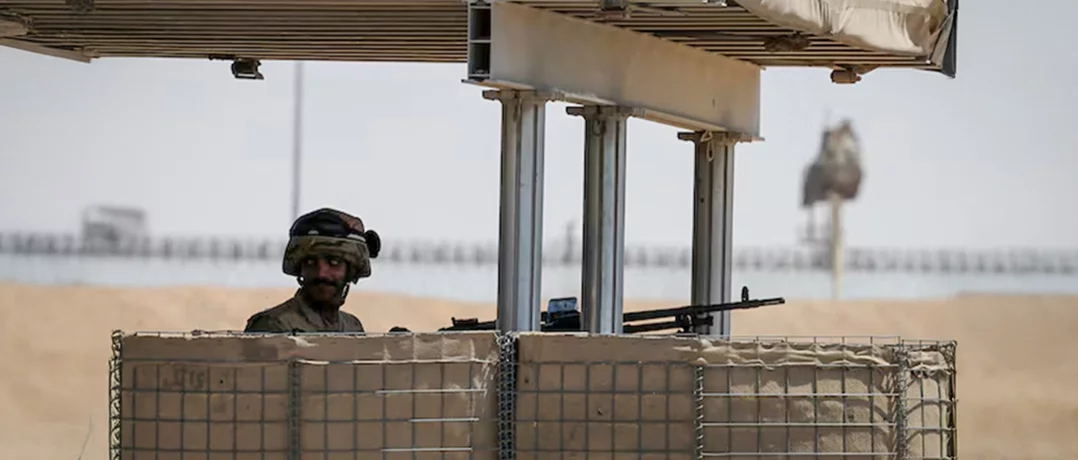
After months of near-total isolation, a fragile glimmer of movement is emerging at Gaza’s southern border. Israel announced that the Rafah crossing could reopen in the coming days, allowing Palestinians in urgent need of medical care to travel through Egypt. Despite the optimism regarding its opening, the sticking point remains in the return, as Israel has not allowed an entry back into the Strip.
A lifeline long shut
Before the war, the Rafah crossing was Gaza’s primary gateway to the outside world. It served not only as an exit for travellers and patients, but also as a key channel for humanitarian aid. Since the outbreak of war, however, it has remained largely sealed, leaving the population trapped inside a devastated territory.
According to the United Nations (UN), at least 16,500 people in Gaza require medical treatment unavailable within the enclave. For some, time is running out. The possibility of Rafah reopening has reignited hope for families who have been waiting, sometimes for more than a year, to access care abroad.
The future of the crossing is also tied to unresolved hostage issues. Hamas has already returned 20 living Israeli hostages in exchange for thousands of Palestinian detainees. However, the remains of 2 captives have yet to be recovered, further complicating the implementation of the ceasefire’s next phase.
Recent efforts by Islamic Jihad and the Red Cross to locate the body of one of the deceased hostages mark another chapter in a painful and politically charged process. Each step forward is layered with dispute, mistrust, and political calculation.
Conflicting narratives
Israeli authorities, including COGAT, confirmed that any reopening would be coordinated with Egypt and overseen by a European Union (EU) monitoring mission, following a model used during a previous ceasefire in early 2025. The move is reportedly part of a broader American-backed plan aimed at stabilizing Gaza after 2 years of devastating conflict.
Yet Cairo quickly denied these claims, with Egypt’s State Information Service declaring that no such coordination is currently taking place. This contradiction reflects both the sensitivity of the issue and the fragile nature of regional diplomacy, where public statements and private negotiations often follow different tracks.
What is most interesting is the fact that the permission would only be granted for the Palestinians exist from the Gaza Strip, not the entry. This means that anyone intending to leave the devastated Strip might not be able to return once again or could face certain hurdles and barriers. This is a particularly contentious and sensitive dilemma that has long plagued Palestinians, as many fear expulsion (either but force, incentives or creating facts on the ground). Such a scenario would revive past wounds from the 1948 Nakba.
In conclusion, the Rafah crossing stands today as more than just a border gate, it is a powerful symbol of survival, politics, and uncertainty. For Gaza’s sick and wounded, it represents a chance at life. For regional actors, it is a bargaining chip in a broader struggle over power and the future of the enclave. Whether it truly opens or remains closed in limbo will depend not only on logistics, but on the fragile will of leaders navigating one of the world’s most volatile conflicts.
-
-

-
The Beiruter
-
