



Investigations into Lebanon’s Russian fuel imports from 2023 to 2025 raise questions about procurement transparency, alleged financial losses, sanctions and accountability in the energy sector.
Russian fuel imports put Lebanon under scrutiny
Russian fuel imports put Lebanon under scrutiny
By Michael Al Andary | November 13, 2026

Reading time: 5 min
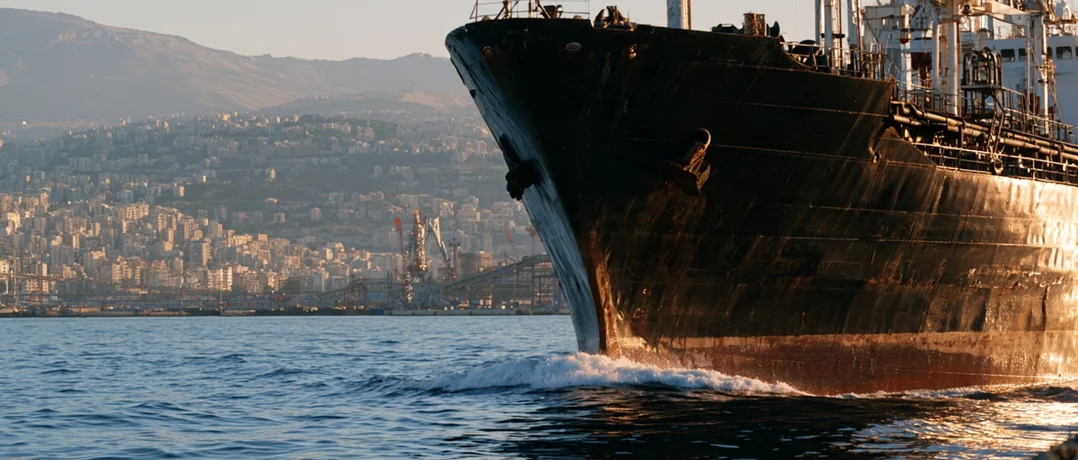
Lebanese imports of Russian fuel between 2023 and 2025 have come under renewed scrutiny following revelations that several companies and vessels involved in supplying the country were subsequently placed under Western sanctions. The affair has raised questions over how fuel purchases were arranged, the transparency of the procurement process and whether intermediaries benefited financially from transactions at the expense of an already cash-strapped state.
Economic expert Walid Bou Sleiman revealed to The Beiruter that Lebanon continued importing Russian-origin petroleum products throughout the three-year period, with a significant share of the tankers supplying the country carrying Russian oil.
“According to Ministry of Energy figures, 13 out of 15 tankers recorded in 2023 and seven out of 18 in 2024 carried Russian-origin oil. Further shipments were recorded in 2025, including a cargo of approximately 36,000 tons,” he said.
Bou Sleiman noted, however, that a consolidated figure for the total volume imported between 2023 and 2025 was not publicly available. He said the economic implications extended beyond the quantities involved, pointing to the cost of imports, the transparency of procurement arrangements, pricing efficiency and the potential burden on public finances.
He also highlighted concerns over connections between Lebanon’s fuel procurement chain and international Russian oil-trading networks, particularly regarding the declared origin of shipments and the reliability of accompanying documentation.
Lebanese authorities, he said, responded by reviewing procurement procedures, examining transactions, freezing certain financial guarantees, intercepting a fuel tanker and stepping up parliamentary and administrative scrutiny of petroleum imports.
“From a financial standpoint, the case highlights significant weaknesses in procurement governance, financial oversight and supply-chain transparency,” Bou Sleiman said, adding that stronger controls were necessary to secure competitive prices, protect public funds and improve accountability in the energy sector.
However, obtaining a clearer picture of the alleged scheme from the Russian side remains difficult, according to Russian affairs expert Raed Jaber, who spoke to The Beiruter.
“In Russia, there is total secrecy and a gap in information about agreements and exports during the war. Information is limited, and there are no discussions about corruption,” Jaber said.
He added that Russian involvement in Lebanon’s energy sector had traditionally been associated more with investment opportunities than direct fuel exports. “Lebanese-Russian relations were not based on exports, but on Russian companies investing in the Lebanese oil sector. That is the Russian participation in oil extraction. These are the main details available,” he said.
The allegations gained further attention following an investigation published in September 2026, which identified at least eight companies and 15 vessels involved in Lebanon’s Russian fuel supply chain between 2023 and 2025 that had subsequently been subjected to Western sanctions. The findings shed light on the network of suppliers, intermediaries and shipping companies involved in delivering petroleum products to Lebanon.
According to the investigation, the companies were linked to the 2Rivers Group, while several vessels were associated with Russia’s so-called shadow fleet, a network of tankers used to transport Russian oil through complex ownership structures and shipping arrangements.
The investigation also raised questions over the alleged manipulation of certificates of origin. Shipping documents reportedly identified certain shipments as originating from countries such as Egypt and Turkey, despite evidence suggesting that the cargo had been loaded in Russia. If established, such practices could have enabled suppliers to conceal the actual origin of the fuel and circumvent restrictions linked to the Western price-cap mechanism.
The potential financial losses are also significant. A report published in September 2025 estimated that Lebanon had lost tens of millions of dollars through the alleged scheme, with some shipments reportedly costing the country between $5 million and $7 million above their estimated value.
At the center of the controversy is the price-cap mechanism introduced by the G7 and its partners following Russia’s invasion of Ukraine. The system does not impose a blanket ban on third countries purchasing Russian oil. Instead, it restricts companies operating under participating countries’ jurisdictions from providing shipping, insurance and financial services for Russian petroleum sold above the established price ceilings.
The issue carries particular weight for Lebanon, which remains heavily dependent on imported fuel to operate its electricity-generating plants. Electricité du Liban (EDL), the state electricity utility, has long struggled with financial and operational problems, making the cost and reliability of fuel supplies particularly important.
Lebanese authorities have since pursued several investigations into suspicious shipments. One of the most prominent cases concerns the tanker Hawk III, which delivered a Russian fuel shipment to Lebanon in August 2025. Investigators examined discrepancies in shipping documentation and suspected attempts to disguise the cargo's Russian origin.
In October 2025, the Financial Public Prosecution reportedly filed charges against six companies and four individuals over alleged forgery of official documents, corruption and illicit enrichment in connection with the shipment. Subsequent judicial inquiries widened the scope of the investigation to examine the possible involvement of other companies across the supply chain.
The Ministry of Energy and Water has also maintained that suspected violations were referred to the judiciary. In September 2026, the ministry said Energy Minister Joe Saddi had submitted a complaint on September 23, 2025, requesting an investigation into vessels arriving in Lebanon following the imposition of US and European sanctions on Russia.
The ministry had previously acknowledged the scale of Russian fuel imports. In June 2025, it disclosed that 13 of the 15 tankers carrying fuel to Lebanon in 2023 had transported Russian oil, while seven of the 18 tankers recorded in 2024 had done the same.
Despite the investigations and the subsequent sanctions imposed on companies and vessels linked to the supply chain, key questions remain unanswered. These include who approved the purchases, how suppliers were selected and whether Lebanese officials or intermediaries benefited from the transactions.
Beyond the alleged financial losses, the affair has exposed longstanding weaknesses in the oversight of a strategic sector where opaque procurement arrangements can have direct consequences for public finances. Establishing accountability will depend on tracing the transactions, determining who was responsible for any falsified documentation and establishing whether public officials facilitated or profited from the arrangements.
For a country struggling to sustain its electricity sector, the Russian fuel affair has become another test of whether Lebanon's institutions can move beyond investigations and allegations and deliver concrete judicial accountability.
