



Janerek topped with salt, mughlai scoops, zaatar gelato and matteh-inspired desserts are turning childhood flavors into Lebanon's latest food obsession.
Scoops of Lebanon: Turning tradition into ice cream
Scoops of Lebanon: Turning tradition into ice cream
By Rayanne Tawil | July 19, 2026

Reading time: 5 min
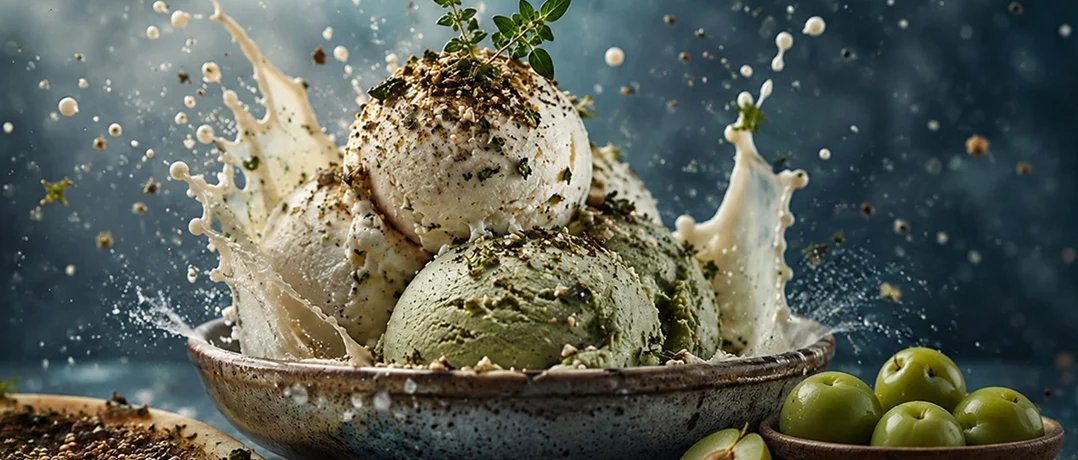
A scoop of janerek ice cream sprinkled with salt sounds like the kind of food experiment designed to rack up views online. So did the koussa (zucchini)-flavored ice cream that flooded Lebanese social media months ago. Even matteh-inspired desserts and nostalgic Lebanese sweets are finding their way into frozen creations.
What started as this internet novelty thing has slowly turned into a much bigger deal. Across Lebanon, ice cream makers are rummaging through pantry basics, mouneh racks and those childhood recollections, then turning flavors that used to belong only to morning table moments or family gatherings, into artisan desserts.
Places like Em Sherif have been fiddling with matteh-inspired creations, and SeaSweet keeps finding that blurry little line between traditional Lebanese sweets and frozen desserts, using seasonal and nostalgic infusions. Still, long before these flavors started acting like a “trend,” smaller artisanal makers were already circling around one simple question: why should pistachio and vanilla have all the fun?
For Jean-Charles Schneider, founder of Booza Society and ice cream maker, the answer arrived over breakfast.
“I was eating a simple manoushe b zaatar and I said, 'This has to become an ice cream,'” he recalled. “Everyone was making Italian flavors. Nobody was working with Lebanese flavors.”
That moment became the beginning of a menu built around zaatar, Arabic coffee, halawa, dibs el kharroub, mughlai, mafrouket foustok and dozens of other ingredients more familiar inside Lebanese homes than ice cream parlors.
Turning nostalgia into a scoop
Many of these ingredients already carry emotional weight. Janerek instantly recalls spring afternoons, salt packets tucked into pockets. Mughlai belongs to celebrations welcoming newborns. Zaatar evokes breakfast with family. Coffee, halawa and sahlab are woven into everyday routines.
Schneider's approach has always been to preserve those memories rather than overpower them. “The game is balance,” he said after offering a spoonful of his signature zaatar gelato. “I want you to have a hint of zaatar, not something overwhelming. The milk shouldn't dominate, the zaatar shouldn't dominate and the sugar shouldn't dominate either.”
Finding that balance can take months of trial and error. Each flavor is basically made from scratch after examining each ingredient one by one, from its sugar read to its fat profile too, and it helps so those recognizable notes stay there, even when the overall form looks a little unfamiliar.
The result has earned an audience willing to drive across the country for flavors they cannot find elsewhere. “I had people coming from Tripoli, Nabatieh and everywhere,” Schneider said. “Some call me before arriving so I prepare four or five kilos for them.”
Among all his creations, one continues to define both his shop and, in his eyes, Lebanon itself.
“If I had to represent Lebanon with one ice cream,” he said without hesitation, “it would be zaatar.”
Curiosity sells the first scoop
Further north, at Boozaria Sweets, experimentation follows a similar philosophy.
Manager Khodor Shaleesh said the shop constantly searches for flavors customers have never imagined frozen before.
One of the earliest was Mughlai ice cream, a dessert traditionally served warm after childbirth. “It’s usually served hot,” he said. “We made it into an ice cream and added all the toppings people normally eat with it.”
That opened the door to more Lebanese-inspired flavors, including may wared (Rose water), peppermint chocolate and seasonal specialties, with new recipes introduced regularly.
For Shaleesh, the growing popularity comes from offering customers something familiar presented unexpectedly.
“People always want to try something new,” he said. “When they see a flavor they've never seen before, they have to taste it to know what it actually tastes like.”
Social media certainly helps amplify that curiosity. Videos of janerek scoops, colorful displays and unusual combinations spread quickly across Lebanese feeds, attracting visitors who first arrive to film and often leave surprised by the taste.
“Social media helped us a lot,” Shaleesh said. “People come because they've seen the flavors online, then they discover they're actually authentic.”
More than shock value
The success of these flavors also mirrors a broader shift in how Lebanese food businesses approach tradition. Instead of copying recipes as they have been for generations, chefs and dessert makers are translating them into styles that feel more compatible with younger audiences that are already used to chasing the next viral bite and it’s not just nostalgia anymore. The goal is rarely to replace the original dish. Rather, it offers another way of experiencing it.
That explains why janerek works. The fruit remains tart. The salt stays. Only the temperature changes.
The same thinking has inspired matteh desserts, rose loukoum gelato, maamoul-infused scoops and coffee-based frozen treats that feel instantly recognizable even before the first bite.
Schneider resists chasing trends for their own sake. While matcha continues dominating cafés worldwide, he prefers looking inside Lebanese kitchens for inspiration. “I don't follow trends,” he said. “I want to create.”
Perhaps that is why many of these flavors have outlived their viral moment. Customers return for kilos of zaatar ice cream rather than a single Instagram photo. Families introduce visiting relatives to Arabic coffee gelato. Seasonal janerek keeps reappearing every spring.
The novelty sparks attention. The familiarity keeps people coming back.
One salted spoonful of janerek is now enough to taste a Lebanese summer.
-
-

-
Rayanne TawilCultural writer
-
