



Lebanese social media feeds mix tragedy, humor and solidarity as the war unfolds online.
Scrolling through the crisis

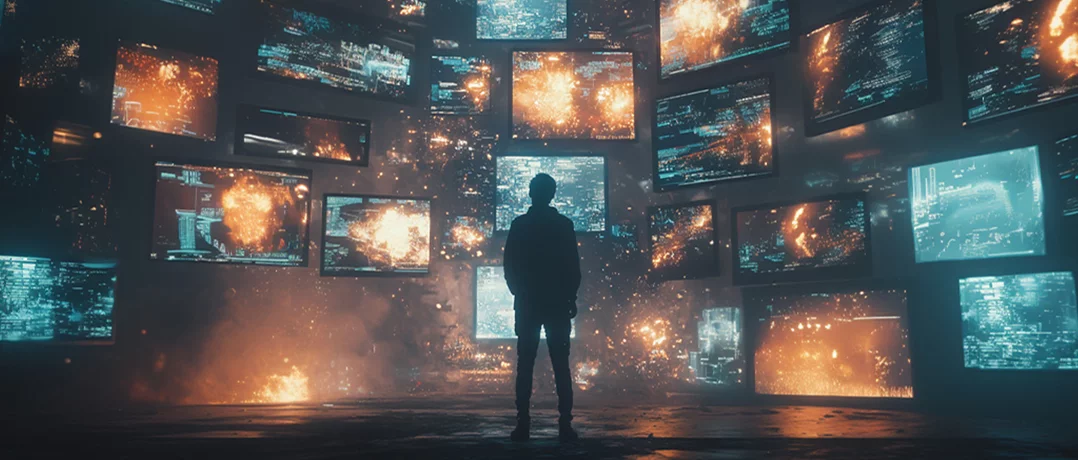
Scroll through a Lebanese social media feed during wartime and the emotional whiplash is immediate. A video of an airstrike might be followed by a meme about electricity cuts, then a sarcastic tweet about politicians, then a digital illustration mourning a child killed in Lebanon.
War unfolds in fragments on the screen: tragedy, irony, outrage, humor, all within the same minute of scrolling.
Lebanon's ongoing crisis has established itself as a permanent situation which has created a new emotional universe through digital culture. People use memes, online art, satire accounts and quick social media reactions to understand events and cope with their anxiety and build relationships during times of shared public anxiety.
The jokes serve two functions because they can bring people comfort while also producing emotional detachment from their feelings. The process creates solidarity since it distorts actual events that people experience at the same time.
A digital language of crisis
For Dr. Nabil Melki, professor of journalism and communication and director of the Institute of Media Research and Training at LAU, the instinct to respond creatively to crisis is far from new.
“The new thing is the ease of creating those and the ease of distributing them,” he explains.
Even before the internet, people expressed reactions through graffiti, songs, slogans, or drawings. It’s simply a human reaction to events.
The current speed and reach of social media platforms have undergone a complete transformation. People can create memes in seconds, which can be shared to multiple platforms at the same time. The combination of editing applications and AI generators enables users to create visual content from their political commentary and emotional responses more easily than before.
The result creates a digital expression that evolves quickly through the combination of mourning and humorous elements with ongoing public discussions
Humor as a coping mechanism
From a psychological perspective, humor often acts as a defense mechanism during moments of collective trauma. “In psychology, humor is considered a coping mechanism,” says licensed CBT psychotherapist Yara Kassar. “When people face something extremely painful, they sometimes turn to jokes or sarcasm to make the situation feel less overwhelming.”
The brain, in a sense, is protecting itself. “If you experience the pain directly, it can be too much,” she explains.
Humor allows the mind to process it in a slightly less heavy way.
The common practice of creating memes starts when major events occur because that practice has become conventional. The jokes may seem abrupt but they reflect an instinctive effort to release tension. Kassar maintains that people should use humor as a tool that needs to be kept at a specific level for optimal effects. “Humor can be healthy to a certain extent,” she says. “Although if someone spends all their time in sarcasm or jokes, it might mean they are hiding emotions that haven’t been processed.”
Digital culture also creates a powerful sense of shared experience during a crisis. “When people interact online during difficult moments, it creates social bonding,” Kassar says. “You see that many people are sharing the same thoughts or the same jokes. It gives you the feeling that someone else understands what you are going through.”
The acknowledgment holds particular significance in Lebanon since the country has endured multiple simultaneous crises since its economic collapse and subsequent displacement of people and ongoing regional conflicts.
When does humor go too far?
According to Melki, the online humor circulating during war tends to fall into two broad categories. “There is dismissive humor that mocks suffering,” he says. “And frankly, that can be very problematic.”
In a country where many families have lost relatives to violence, jokes targeting tragedy can feel deeply insensitive. “We have people who lost sons, daughters, parents,” Melki notes.
It becomes very difficult to make fun of that kind of pain.
Yet another form of humor, political satire, can serve a more constructive role.
“There is intelligent comedy that informs people and makes them think critically,” he explains, pointing to well-researched satire that challenges propaganda or exposes contradictions in political narratives.
While social media can offer connection and momentary relief, constant exposure to war content can also take a toll on mental health. “What happens psychologically is that the nervous system stays on edge,” Kassar explains. “People become constantly alert, constantly checking for updates.”
The cycle creates a continuous pattern that results in increasing anxiety levels and emotional burnout. People may find themselves unable to stop refreshing news feeds, opening messaging apps, or scrolling through updates.
“You might notice someone cannot sit for five or 10 minutes without checking the news,” she says. “That can be a sign of overwhelm.”
Algorithms and information overload
Social media platforms use algorithms to deliver content to users, which creates an intensified experience of their platform. Melki warns that many people believe they are shaping their online feeds, when in reality the algorithms are shaping them. “We cannot train the algorithm,” he says. “The algorithm trains us.”
The more someone interacts with war-related content, the more those platforms deliver similar material. The feedback loop results in two effects: increasing the emotional stress and spreading misinformation. People need to stop using screens when they want to break that particular pattern. Melki recommends people should stop scrolling because he believes they should spend their time on “real-world action, volunteering, helping displaced families, or simply reconnecting with everyday routines.”
The speed at which digital humor appears in Lebanon reflects something deeper about the country’s social reality. “We process events faster because we are used to them,” Kassar says.
When people expect something bad might happen, their reaction is different than when it is a complete shock.
-
-

-
Rayanne TawilCultural writer
-
