



The Lebanese Canadian Film Festival marks its 10th edition, celebrating a decade of bringing Lebanese cinema and stories to audiences across Canada.
Ten years of the Lebanese Canadian Film Festival

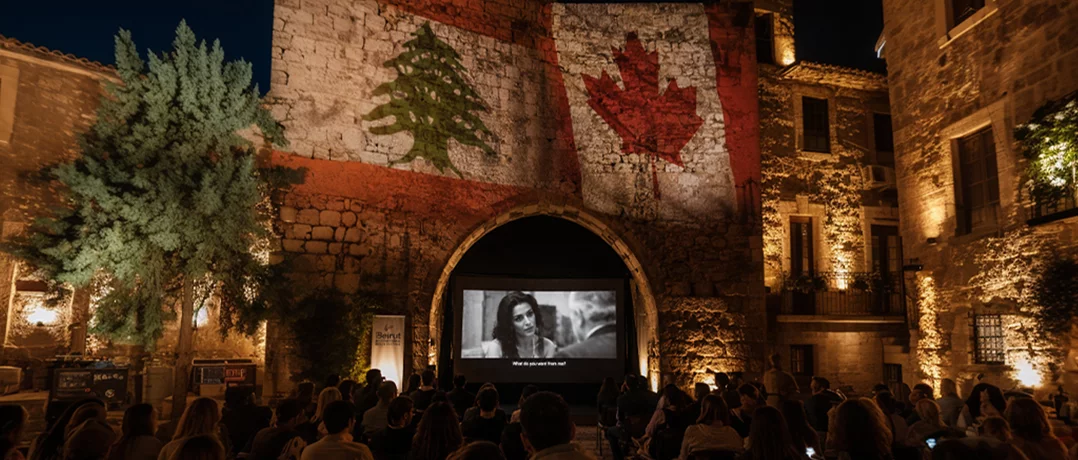
What began in 2017 as a labor of love driven by a small Canadian-Lebanese team and sustained by community goodwill more than institutional backing has quietly grown into something rare: a film festival that endures. A decade of programming is not merely a calendar achievement. It is evidence that Lebanese cinema commands a devoted audience well beyond the Mediterranean world that gave it life, and that Canada with its storied Lebanese diaspora and commitment to multicultural identity has proven to be among the most fitting stages it could have found.
The numbers behind the dream
The raw figures tell a compelling story. Over ten editions, the LFFC has received 1,400 film submissions, hosted 210 industry guests, delivered 95 Canadian premieres, and attracted 136,000 website users. Events span five major Canadian cities, and the festival runs annually under the patronage of the Consul General of Lebanon in Canada, a detail that underscores its significance as a vehicle not just for art, but for cultural diplomacy.
The vision behind the screen
Speaking exclusively to The Beiruter, Hay-Love Hadchiti the festival's Founder and Executive Director described it best: "A decade of art and cultural magic, where Lebanese stories meet Canadian horizons. Ten years. Two countries. One silver screen."
Hadchiti frames the festival as a living act of purpose, a platform "dedicated to showcasing Lebanese cinema and voices from its diaspora," developed over ten years by a Lebanese-Canadian team committed to creating "a space where creators and audiences meet, at the crossroads of cultures."
What makes her vision particularly resonant is how she positions cinema itself.
In a world where images become collective memory, cinema remains an act of cultural resistance, dialogue, and humanity.
And yet the 10th edition, in Hadchiti's own words, is not simply a moment of looking back. She describes it as "a pivotal moment between memory and renewal", a reckoning with where Lebanese cinema has been, and an honest confrontation with the paths "that still remain to be explored." That duality, honoring the archive while demanding a future, is what separates a milestone from a celebration.
What the 10th edition brings
The 2026 program is both a celebration of Lebanon's cinematic past and a confident bet on its future. The Guest of Honor is Cyril Aris, the Beirut-born, New York-based director whose latest feature, Un Monde Fragile et Merveilleux (A Sad and Beautiful World), won the Audience Award at the Venice Film Festival and was selected as Lebanon's official entry for the Academy Award for Best International Feature Film in 2025. His presence at the festival is fitting: Aris represents exactly the kind of filmmaker the LFFC was built to champion, deeply Lebanese in vision, globally competitive in reach.
The feature film slate is a rich survey of Lebanese storytelling across decades. Maroun Baghdadi's Petites Guerres (1981), a raw portrait of Lebanon's civil war receiving its Canadian premiere, sits alongside a world premiere of Youssef Maalouf's 1962 comedy Abu Salim, Messenger of Love, a restored classic that has never before screened in this country. Youssef Chahine's 1965 musical Le Vendeur de Bagues also receives its world premiere at the festival, a reminder that Lebanese cinema's golden age deserves as much attention as its contemporary renaissance.
From the present: Samir Habchi's Nohad Al Chami: A Sign of Faith, a 2025 biopic drama, and Oualid Mouaness's acclaimed 1982, a coming-of-age film set on the day of an Israeli invasion, return to the screen by popular demand. Jorj Abou Mhaya's Alephia 2053, the first fictional animated feature for adults in the Arabic language, makes its Canadian premiere. The selection is completed by Chloé Mazlo's Sous le Ciel d'Alice, a lyrical drama about a Swiss woman who builds her life in Beirut before the civil war dismantles it.
Lebanon and Canada: A bond written in migration
Canada is home to one of the largest Lebanese diaspora communities in the world, concentrated particularly in Montreal, Ottawa, Toronto, and Vancouver. Estimates place the Lebanese-Canadian population at over 250,000, with many families having emigrated during the civil war years (1975–1990) or in successive waves of crisis since. Montreal, with its French-language culture and long history of welcoming Arab immigrants, has a particularly deep Lebanese identity woven into its social fabric.
The LFFC sits at the intersection of these two worlds. It is a gathering point for a community that holds two countries in its chest simultaneously, and for Canadian audiences curious about a culture whose stories deserve a wider screen.
Ten years forward
The LFFC's 10th anniversary is not a finish line, it is a reckoning and a relaunch. The festival's own language speaks of standing "at a crossroads: between memory and renewal." That framing is honest. Lebanese cinema is at a genuine inflection point: internationally celebrated, domestically challenged, and increasingly made by filmmakers split between Beirut and the cities of the diaspora.
Canada, and festivals like the LFFC, are part of what keeps that cinema alive, giving it audiences, premieres, conversations, and the kind of sustained attention that allows an art form to grow rather than simply survive.
For ten years, a small team has been making the case that Lebanese stories belong on Canadian screens. The 10th edition makes that case more powerfully than ever.
-
-

-
Jenna GeageaReporter/Writer
-
