



Parliament legalized cannabis cultivation in 2020. Six years later, Lebanon has not issued a single cultivation license. The regulatory framework is reportedly close to completion, but the sector remains blocked by an implementation failure that has left farmers outside the law and the promised industry on paper.
The crop Lebanon legalized but never built

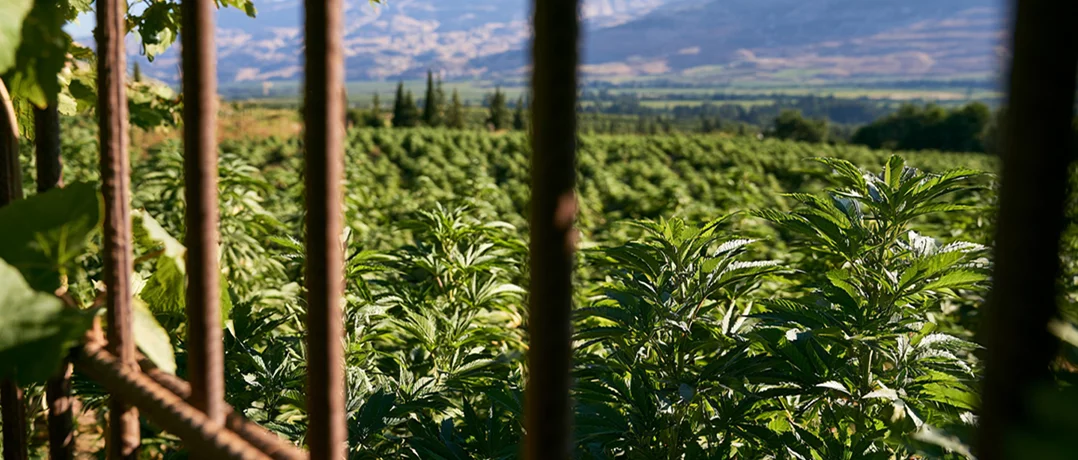
Lebanon legalized cannabis cultivation in 2020. Six years later, no farmer has received a licence to grow it legally.
Parliament adopted Law 178/2020, a regulatory authority was appointed, and its chairman says the required regulations, draft decrees and licensing platform have been prepared. Yet legal cultivation has not begun. The central issue is whether the state can convert an approved reform into a functioning, transparent and commercially credible sector.
A legal framework without implementation
Law 178 did not legalize recreational cannabis. It authorized regulated cultivation for medical, pharmaceutical and industrial purposes. The objective was to move an existing activity out of the illicit economy, integrate growers into a formal system, attract investment and develop a legal export industry.
The framework extends beyond farmers to cooperatives, pharmaceutical companies, laboratories, industrial operators and research institutions. It was designed to support a value chain from licensed cultivation to testing, manufacturing and export.
However, Parliament passed the law before the institutions required to apply it were operational. The Cannabis Regulatory Authority was appointed only in July 2025, approximately five years after the legislation was adopted. Even after the authority’s formation, licences could not be issued because the implementing decrees had not entered into force.
Dr. Dany Fadel, chairman of the authority, told The Beiruter that the authority prepared the necessary regulations and decrees and submitted them through the required administrative channels. According to Fadel, the Ministry of Finance requested procedural and drafting amendments, which the authority completed, but the file still did not advance.
He also said an electronic platform had been developed to receive licensing applications from farmers. If this account is accurate, the regulatory design is substantially ready and the remaining obstacle lies in the state’s approval process.
Fadel attributes the delay to entrenched centres of influence within the ministries ; what he describes as a “deep state.” The delay is clear, but the allegation of deliberate obstruction by particular officials or networks remains unproven and requires further evidence.
The government nevertheless remains responsible for explaining the blockage. It should identify which ministry is reviewing the file, which approval or signature is missing, and whether any substantive dispute remains unresolved. Without that information, responsibility is dispersed and delay becomes difficult to challenge.
Legalization that leaves growers illegal
The failure to issue licences has consequences beyond administrative delay. Cannabis cultivation did not stop after the law was passed; it continued outside the legal framework. The state therefore changed the law’s general direction without creating a lawful route into the market.
Fadel argues that this leaves farmers exposed to prosecution and dependent on illegal buyers, who can purchase crops at depressed prices because growers have no access to licensed processors or exporters. The pricing claim has not been independently established, but the structural problem is evident: when the legal channel does not operate, producers remain tied to the informal networks the law was intended to replace.
The result is a policy contradiction. Lebanon legalized controlled cannabis cultivation partly to reduce illegality, regulate production and improve state oversight. By withholding the licences necessary to enter that system, it has preserved the conditions under which cultivation remains illicit.
A real market, but not an automatic advantage
There is genuine international demand for medical cannabis. Germany imported 201,094 kilograms for medical or medical-scientific purposes in 2025, compared with 72,706 kilograms in 2024. The increase confirms that the market is expanding, but it does not guarantee Lebanese producers access to it.
Lebanon’s established reputation for cannabis and hashish production is frequently presented as a competitive advantage. In regulated medical markets, however, reputation is secondary to certification. Importers require consistent chemical composition, laboratory testing, full traceability, controlled cultivation, secure transport and compliance with agricultural and manufacturing standards. A product valued in the informal market is not automatically acceptable to a pharmaceutical buyer or European regulator.
Commercial success will depend on producing standardized batches repeatedly and documenting every stage from seed to final buyer. The challenge is institutional and technical, not simply agricultural.
Fadel says he is pursuing a laboratory costing approximately $4 million at the Lebanese University’s Faculty of Agriculture, and that the project has faced institutional resistance. The cost, financing and status require verification. But without accredited testing and quality control, Lebanon will struggle to enter tightly regulated markets regardless of cultivation capacity.
Fadel also says he presented the authority’s framework at an international conference in London attended by comparable regulators; the event and participants should be verified. The broader point is that foreign buyers need confidence in both the product and the authority certifying it.
The economic case requires credible numbers
The cannabis debate has often been driven by large revenue projections. In 2018, then-economy minister Raed Khoury spoke of a potential industry worth approximately $1 billion. Later claims placed the sector’s possible value at several billion dollars.
Such estimates rarely define whether they measure exports, company revenue, profit, tax receipts or Treasury income. A multibillion-dollar sales figure would not translate into an equivalent gain for the state or farmers.
A basic calculation illustrates the scale involved. At an illustrative wholesale price of $3,000 per kilogram, $4 billion in raw-cannabis sales would require exports of approximately 1,333 tonnes, more than six times Germany’s total reported imports for 2025. This does not rule out a larger industry involving manufactured pharmaceutical products, but raw-flower projections require caution.
The sector does not require inflated estimates to justify development. A regulated market could generate agricultural income, exports, industrial investment and specialized employment. Its greatest economic value would likely come from the activities surrounding cultivation: laboratories, extraction, pharmaceutical manufacturing, research, packaging, certification and quality control.
Exporting raw cannabis would create a legal crop. Developing the full production chain would create an industry, and retain more value inside Lebanon.
Who will control the legal market?
Once licensing begins, the next question will be access. Cannabis cultivation in the Bekaa predates Law 178, and any credible transition must address the status of traditional growers who operated for decades outside the law.
The formal market will require licensing, testing, traceability, certification and enforceable contracts. These are essential for medical exports, but can exclude smaller producers if fees are excessive, procedures opaque or compliance infrastructure available only to well-financed companies.
Lebanon could therefore legalize the crop while leaving traditional growers outside the licensed market or confined to its least profitable segment. Concerns over restrictions linked to criminal records are especially relevant where growers may have been prosecuted for the same cultivation activity the state now intends to regulate.
The appropriate response is not to dilute health or quality standards, but to make market access transparent and competitive. Licensing criteria should be published. The beneficial owners of licensed companies should be disclosed. Farmer cooperatives should have practical access to laboratories, financing and purchase contracts. Rejected applicants should receive reasoned decisions and a credible appeal process. Competition rules should prevent a small group of operators from controlling cultivation, processing and exports at the same time.
These safeguards would not guarantee success, but their absence would increase the risk that legalization replaces an illicit concentrated market with a legal concentrated one.
The state-capacity test
The cannabis file has reached a point at which further delay requires a specific official explanation. The law exists. The authority has been appointed. Its chairman says the regulations, decrees and licensing platform are ready. Yet farmers still have no legal route to plant.
The government should publish the file’s administrative status and identify every remaining approval. If ministries disagree over the substance of the regulations, those disagreements should be stated openly. If another decree is required, the responsible institution and timetable should be specified. If obstruction inside the administration is substantiated, the matter is political rather than merely procedural.
Cannabis will not resolve Lebanon’s economic crisis, and the sector should not be presented as a substitute for wider reform. It could, however, produce legitimate agricultural income, support new industrial and scientific infrastructure, create specialized jobs and add to exports.
Its larger significance is institutional. Implementing Law 178 would show whether Lebanon can move beyond passing reforms to building the institutions, procedures and accountability required to enforce them. Six years after legalization, the unresolved question is no longer whether the crop is viable. It is whether the state can make its own law operational.
-
-

-
Michel TawkResearcher and Writer
-
