



Beyond resilience lies a more urgent question: why should any society be expected to adapt indefinitely to conditions that should never have become normal?
The dangerous myth of Lebanese resilience

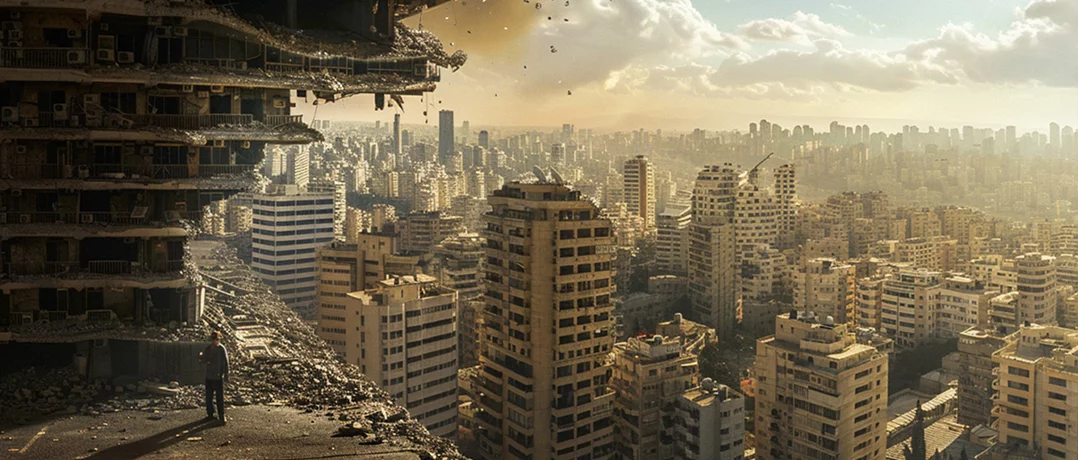
The world has long admired Lebanon's "remarkable resilience." Every hurdle survived, every war endured, every betrayal absorbed, every loss mourned has been folded into the same familiar narrative: “the Lebanese always find a way”. It is a phrase repeated with admiration, as though the ability to keep standing amid ruin was something to celebrate.
But what if normalizing resilience has become one of the most dangerous words in Lebanon's vocabulary, shaping the nation’s state of mind?
What if a word that once meant strength has slowly become permission, for governments to fail without consequence, for institutions to collapse without accountability, and for an entire population to be expected to adapt endlessly to the unacceptable?
No nation should have to become exceptional at surviving.
A word that changed meaning
Linguistically, resilience carries a positive connotation. It suggests strength, flexibility, the capacity to absorb a blow and return to shape. But somewhere over the last twenty years, for many Lebanese, that meaning flipped. Resilience stopped sounding like praise and started sounding like a life sentence.
But when adversity becomes permanent, when crisis follows crisis for decades, resilience ceases to be a compliment and becomes an expectation. It assumes that people will adapt because they have no other choice, that they will continue rebuilding, recalculating, and carrying on while the conditions forcing them to do so remain unchanged.
For years, Lebanese people have been expected to live with what should have been intolerable: banks freezing life savings, a currency that has lost more than 90 percent of its value, hospitals struggling to secure essential medication, families rationing electricity, armed groups dragging the country into conflicts that millions never chose, and a capital city devastated by one of the largest non-nuclear explosions in history without meaningful accountability. Those responsible rarely answer for failure, while the voices demanding justice grow louder but continue to go unheard. In the absence of accountability, impunity has become deeply engraved in both Lebanon's social fabric and its legal system.
Choosing grit over acceptance
There is a difference between resilience and what has actually been built in Lebanon over the last two decades, and that difference matters. Grit endures without accepting. Grit is gritted teeth. It is the thick skin Lebanese people have developed, because they had no choice but to grow one.
That distinction is not just semantic. Resilience implies a kind of peace with the situation, an adjustment that says "this is survivable." Grit implies the opposite: I am getting through this, but I am not okay with it, and I never will be. Grit keeps the anger alive. Resilience risks anesthetizing it.
Lebanese people have grit. What they have refused, more and more vocally, is the label of resilience, because resilience has become a tool of normalization. Every time the international press or a well-meaning observer marvels at how "resilient" Lebanon is, it shifts the burden of the crisis away from the institutions that caused it and onto the shoulders of the people who are suffering through it. It turns catastrophic governance failure into a personality trait. It says, essentially: you are so good at enduring this, so why would anything need to change?
Reclaiming the Lebanese right to live
This is the uncomfortable question underneath all of it: why should any society be expected to keep adapting to conditions that should never have existed in the first place? Why is the ability to withstand indefinite hardship treated as an achievement rather than as evidence that something has gone catastrophically, unforgivably wrong?
Lebanese people do not want to be praised for surviving a broken condition. They want the condition fixed. They do not want awards for adaptability. They want the abnormal to stop being treated as normal.
To call Lebanon resilient, again and again, without asking why resilience is required at all, is to help normalize an abnormal situation. It lets the world, and sometimes Lebanon itself, stop asking the only question that actually matters.
We are not looking to endure. We are looking to live.
-
-

-
Jenna GeageaReporter/Writer
-
