Lebanon's diamond market is being reshaped by the rise of lab-grown diamonds, forcing consumers to choose between long-term resale value and affordable luxury.


Lebanon's diamond market is being reshaped by the rise of lab-grown diamonds, forcing consumers to choose between long-term resale value and affordable luxury.

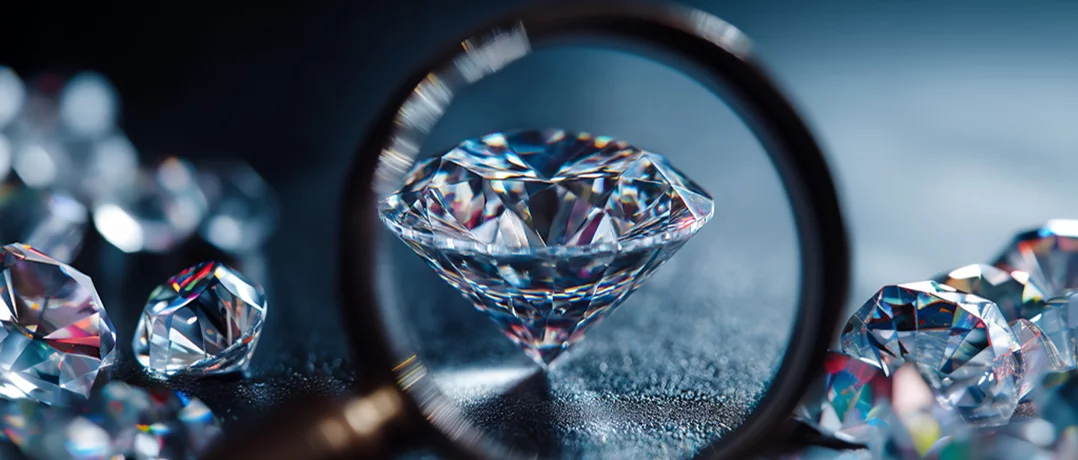
For generations, diamonds have symbolized love, luxury and lasting value. But an industry built on rarity is undergoing one of its biggest transformations, as lab-grown diamonds reshape consumer preferences and challenge the dominance of mined stones.
The transformation became even more evident this month when mining giant De Beers announced it would suspend production for two years at its Venetia mine in South Africa, the country’s largest diamond mine. Citing weak demand for natural diamonds and growing competition from cheaper lab-grown alternatives, the move highlights the mounting pressures facing the global industry.
Advances in technology have turned lab-grown diamonds from a scientific innovation into a mainstream luxury product. Created using High-Pressure High-Temperature (HPHT) and Chemical Vapor Deposition (CVD) technologies, they are challenging traditional notions of rarity and value.
The data reflects the scale of the shift. In the United States, the world’s largest bridal jewelry market, lab-grown diamonds accounted for 61% of engagement-ring center stones purchased by surveyed couples in 2025, according to The Knot’s 2026 Real Weddings Study, up 239% since 2020. Meanwhile, increased production has driven wholesale prices down by 80% to 90% since 2022.
The market is no longer divided between two competing products. It has evolved into two distinct categories: natural diamonds, positioned as rare assets with long-term value, and lab-grown diamonds, offering larger, high-quality stones at a fraction of the price.
Following years of financial crisis, declining purchasing power and shifting consumer priorities, Lebanon has become fertile ground for the industry’s global transformation. Social media has further accelerated awareness of lab-grown diamonds, fueling the emergence of businesses dedicated exclusively to laboratory-grown jewelry, many founded by entrepreneurs with no background in the country’s traditional jewelry trade.
As global trends reshape Beirut’s jewelry market, the debate now extends far beyond sparkle: Should a diamond be viewed as an investment, or simply as something beautiful to wear?
Despite the rapid growth of lab-grown diamonds worldwide, traditional jewelers argue that their core clientele remains largely unchanged.
According to Rami Haddad, an HRD-certified diamond grader and jewelry store owner, natural diamonds continue to attract buyers who value rarity and long-term financial security.
"The client base for natural diamonds hasn't changed, it has remained the same because it is difficult to change their mindsets," Haddad says. "This segment of customers did not shift toward buying lab-grown diamonds."
Instead, he believes the growth of laboratory-grown diamonds has come primarily from younger consumers facing different economic realities.
"The younger generation turned to purchasing lab-grown diamonds primarily because their purchasing power is small," he explains. "Unfortunately, no one is guiding them regarding what will happen to them as a result of buying lab-grown diamonds."
For Haddad, the issue extends far beyond affordability.
Although natural diamond prices softened following the arrival of lab-grown stones, he says they have largely stabilized.
"Natural diamond prices did not increase; rather, they remained stable. With the entry of lab-grown diamonds into the market, natural diamond prices fell slightly between 25% and 30%. However, people continue to buy natural diamonds because their value remains within them; upon selling, one can recover a portion of the original price."
The greatest concern, he argues, lies in the rapid depreciation of laboratory-grown stones.
"The paradox is that lab-grown diamonds have dropped in price by approximately 80% to 90% since 2022 until today," he says, describing one of the sharpest value declines seen in any luxury product category.
The debate over diamonds ultimately comes down to one fundamental question: what exactly is the buyer paying for?
For supporters of natural diamonds, the answer is rarity.
Haddad argues that a diamond should not merely be judged by its appearance but by its ability to retain value over time.
"The price of an engagement ring with a one-carat natural diamond, which remains the most requested size, is around $5,400 for a G-color stone," he says, adding that experienced jewelers can often negotiate discounts of between 15% and 20%.
He believes stones of at least one carat can serve as long-term investments.
By contrast, he says laboratory-grown diamonds have virtually no secondary market.
"If you purchase a five-carat lab-grown diamond with IF clarity and D color, then return to the same store only days later to sell it, nobody will buy it back."
His recommendation is unusually direct. "We advise people to purchase a Zircon stone if they do not wish to buy a natural diamond, as this is better for them and prevents them from losing their money."
Haddad also challenges the terminology used by the industry itself.
"Lab-grown diamonds are not real diamonds and never will be," he says. "If the opposite were true, why did they place the word 'Lab' next to 'Diamond'?"
He points to countries that require laboratory-produced stones to be marketed as synthetic rather than simply diamonds, arguing that terminology matters because it shapes consumer expectations.
Yet this perspective represents only one side of a rapidly changing market.
For a growing number of entrepreneurs, the future of the diamond business is no longer defined by geological rarity alone, but by technology, affordability and changing consumer expectations.
For Rania Charouk Achkar, owner of an online business dedicated to lab-grown diamond fine jewelry, the industry's transformation is not about replacing natural diamonds, but about giving consumers more choice.
"The global lab-grown diamond market has moved quickly from being a niche alternative to becoming an established category within fine jewelry," she says. "Improvements in technology have made better-quality stones available in a much wider range of shapes and sizes, and increased production has brought prices down significantly."
She believes Lebanon is following the same path.
"When I first entered the market, clients asked, 'Is it real? Is it fake? Is it a copy?' Today, they're asking about cut, certification, proportions and stone quality."
According to Charouk, demand is no longer limited to engagement rings. Buyers are increasingly purchasing lab-grown diamonds for earrings, tennis bracelets, anniversary gifts and larger statement pieces that would be financially out of reach if they were mined diamonds.
Perhaps the biggest advantage of lab-grown diamonds is price.
Depending on size and quality, consumers can save 80% to more than 95% compared with an equivalent natural diamond.
Charouk points to a 1.04-carat natural round diamond with D color and VS1 clarity priced online at roughly $7,300 for the loose stone alone. A comparable certified one-carat lab-grown solitaire ring in 18K gold starts at approximately $1,300, including the finished setting.
The difference becomes even more dramatic with larger stones. A certified five-carat natural oval diamond can exceed $247,000, while a comparable certified five-carat lab-grown ring can cost under $5,000, including the gold setting.
"The real question isn't simply whether lab-grown diamonds are less expensive," she says. "It's what the same budget allows you to purchase: a larger stone, higher color and clarity, or a more elaborate piece of fine jewelry."
One of the most common misconceptions, according to Charouk, is that laboratory-grown diamonds are fake.
"A lab-grown diamond has the same chemical composition, crystal structure, and optical and physical properties as a natural diamond," she says.
"I explain it simply: they are both 100% diamonds, but with different origins, supply structures and price structures."
Still, she stresses that certification alone is not enough.
"Certification is important, but careful, experienced selection is what determines whether a stone is visually worth buying."
She explains that factors such as cut precision, symmetry, proportions and light performance ultimately determine a diamond's beauty, regardless of its origin.
The sharpest divide between the two industries concerns resale value.
Unlike proponents of natural diamonds, Charouk openly acknowledges that laboratory-grown diamonds should not be viewed as investments.
"I respond very honestly: lab-grown diamonds should not be purchased as an investment, and their resale market is currently limited."
However, she argues that consumers should also consider how much money they keep by spending significantly less upfront.
"A consumer buying a lab-grown ring for a fraction of the price of a comparable natural diamond keeps most of that difference from day one."
"Neither decision is wrong, provided it's made with complete and transparent information."
Looking ahead, Charouk believes lab-grown diamonds will become a permanent segment of Lebanon's jewelry market rather than replacing natural stones.
"Over the next five years, I believe lab-grown diamonds will become a normal, clearly established part of the Lebanese fine-jewelry market. They won't eliminate natural diamonds, they'll exist alongside them as a distinct choice."
She expects consumers to become increasingly focused on craftsmanship, transparency, certification and after-sales service rather than price alone.
Meanwhile, traditional jewelers remain convinced that rarity and resale value will continue to preserve the appeal of mined diamonds.
The battle between mined and lab-grown diamonds is no longer simply transforming the jewelry business, it is redefining what luxury means in the 21st century. As Lebanon embraces this global shift, consumers are no longer choosing between two stones, but between two philosophies: rarity or accessibility, investment or affordability, tradition or innovation. In the end, the industry's future may not be determined by what sparkles the brightest, but by what people ultimately choose to value.

Journalist with 15 years of experience shaping stories that inform, inspire, and spark conversation.
