From mountain monasteries to Beirut’s literary salons, Lebanon’s history reveals a deep legacy of preserving and shaping the written word.




From mountain monasteries to Beirut’s literary salons, Lebanon’s history reveals a deep legacy of preserving and shaping the written word.

Lebanon has always understood, perhaps better than most, that civilization is carried in books.From a stone monastery perched in the depths of the Qadisha Valley, where Maronite monks established the Arab world's first printing press in 1585, to the candlelit drawing rooms of mid-century Beirut, where writers and poets gathered around women of extraordinary vision, this small country has punched far above its weight in the history of the written word. On World Book and Copyright Day, two chapters of that history deserve to be told together.
The Qadisha Valley, the deepest valley in Lebanon, its name meaning "holy" in Aramaic originates from a cave at the foot of the Cedars of Lebanon, beneath the shadow of Qurnat al-Sawda, the highest peak in the country.
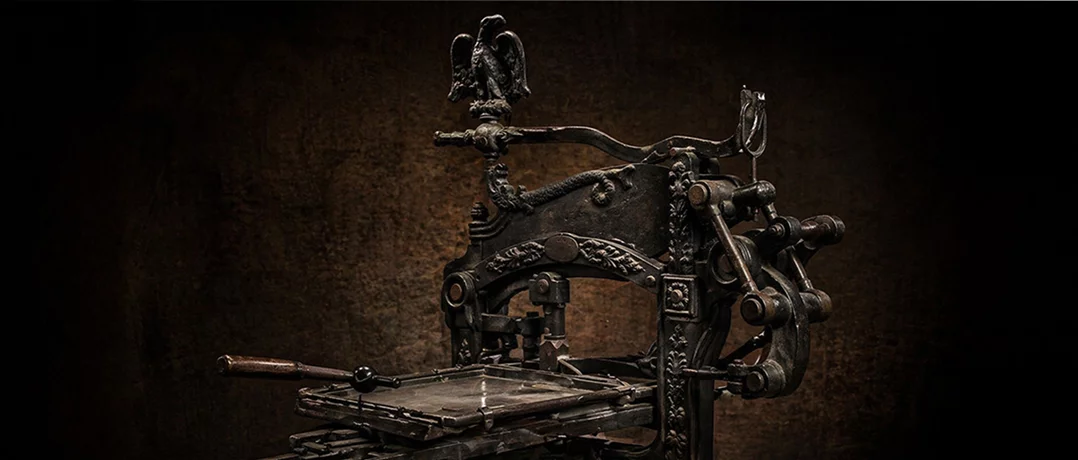
It was in this valley, in this monastery clinging to rock and cedar, that the first printing press in the Arab world was established in 1585. The achievement belongs to the Maronite monks of Qozhaya, and its significance cannot be overstated. At a time when printing technology was still relatively new even in Europe, Gutenberg had produced his Bible barely 130 years earlier , these monks in a remote Lebanese monastery were already thinking about how to reproduce and preserve the written word for their community. The press printed in Syriac, the ancient liturgical language of the Maronite Church. In 1610, it produced a copy of the Psalms in Syriac script, a landmark moment, representing not merely a religious text reproduced, but a culture asserting its determination to survive and be remembered.
The press, along with its Syriac type, church vessels, clerical garments, and a collection of pottery and traditional agricultural tools, is today preserved in the monastery's museum, which is listed as a UNESCO World Heritage Site.
The Qozhaya press did not stand alone in Lebanon's printing story. More than a century later, in 1731, Deacon Abdallah al-Zakher established a press at the Monastery of Mar Yuhanna al-Sabigh in Khenchara, the first to use Arabic script in Lebanon, and the second Arabic printing press in the Arab East after Aleppo's, which no longer survives. In 1734, it produced Mizan al-Zaman ("The Balance of Time"), the first book printed in Arabic in Lebanon. Together, these two mountain presses form an unbroken thread: from the Syriac letters of Qozhaya in 1585 to the Arabic typeface of Khenchara in 1734, Lebanon's monasteries were, for nearly two centuries, the quiet engines of Arab intellectual life.
If Lebanon's mountain monasteries were where the written word was first given mechanical life, it was in the drawing rooms of Beirut that it was later given a heartbeat. Long before the age of literary festivals and publishing houses, the ‘salon littéraire’ was the space where writers, poets, and thinkers gathered to read, debate, and challenge one another, and Lebanon produced some of the Arab world's most remarkable examples of the form.
In 1880, Lebanese writer Maryam Nimr Makariyus established the Dawn of Syria literary society in Beirut Wikipedia, marking an early flowering of organized intellectual life in the city. But it was in the mid-twentieth century that Beirut's literary salons reached their most vibrant expression, and at the center of that world stood a woman of formidable intellect determination: Salma Sayegh.
Salma Sayegh (1889-1953) was a Lebanese writer, novelist, and feminist of the Nahda era,the great Arab cultural renaissance that sought to modernize Arab thought and letters. In the 1940s and 1950s, Sayegh hosted a prominent literary salon at her home in Beirut, which was attended by some of the leading literary figures of the era. Hers was not merely a social gathering but a genuine intellectual institution, a space where ideas were tested, poems were heard for the first time, and the literary culture of a generation was shaped.
Among those who gathered in her salon was the poet Salah Labaki, who happened to be her son-in-law, her daughter Aida married the Lebanese poet Salah Labaki. Labaki (1906-1955) was a poet, scholar, journalist, and lawyer, considered a pioneer of the renewal movement in Arabic poetry, and more specifically in Lebanese poetry, in the second quarter of the twentieth century. He was deeply influenced by French Symbolism, and his presence in Sayegh's salon placed him at the intersection of Lebanon's classical literary heritage and its modernizing impulse.
Sayegh herself was a figure of remarkable range. She wrote for several journals, newspapers, and magazines, and traveled to Egypt, Turkey, France, England, and eventually Brazil, where she became a member of the Andalusian League, a Lebanese literary circle in São Paulo that supported the spread of Arabic literature. She was a woman who had crossed continents for literature, so it was entirely fitting that her home in Beirut should become a destination for those who loved it.
Unlike salon sessions in England, which sometimes took place during the day, the salons in cities such as Beirut were usually held in the evening or at night in the family homes of their hostesses. One of the less documented salons in Beirut, records note, was convened on three consecutive full-moon nights each month, where guests stayed awake until dawn, enjoying lively literary discussions. These were not passive audiences, they were participants, contributors, critics. The salon was a form of collective authorship, where a poem read aloud was refined by the room, and where a writer's reputation was built not on reviews but on presence.
During the three decades following World War II and preceding the outbreak of civil conflict in 1975, Lebanon established a unique role for itself in the region, becoming at once an intellectual center and political outlier Literary Hub, a place where writers from across the Arab world could speak freely. The literary salon was the intimate precursor to that larger cultural openness, the private rehearsal for Beirut's public role as the Arab world's freest city of ideas.
Salma Sayegh died in 1953, just as that golden era was reaching its fullest bloom. But the tradition she embodied, of the home as a space of intellectual hospitality, of literature as a communal rather than solitary act, left a deep mark on Lebanese cultural life.
On World Book and Copyright Day, it is worth holding both images together: the monks of Qozhaya hauling a printing press up a mountain in 1585, and Salma Sayegh opening her Beirut drawing room to poets and thinkers in the 1940s. Separated by four centuries, they were engaged in the same essential act, ensuring that words would be heard, that ideas would survive, and that the written word would find its audience. Lebanon's oldest tales are a powerful reminder of how much courage, craft, and vision it once took simply to put words on a page.

