



Lebanese Arabic is a unique, melodic dialect shaped by centuries of history, culture, and foreign influences, from Aramaic to French.
The Lebanese dialect: A medley of influences

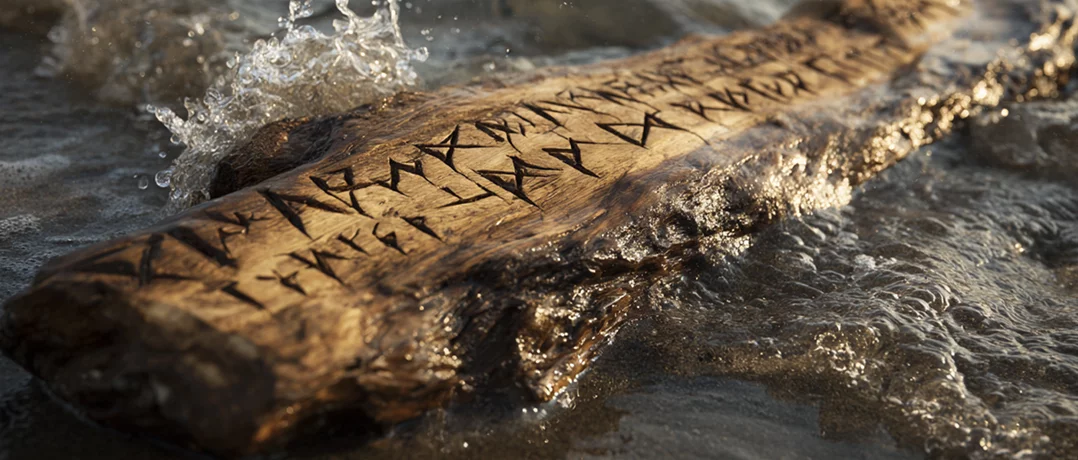
Lebanese take pride in the way they speak and thanks to its export of songs, plays, TV programs, and literature many outside of Lebanon have become familiar with the Lebanese dialect. But what exactly differentiates Lebanese Arabic? What are the influences that brought about the idiosyncrasies of the Lebanese language? The answer is not so straight forward because we know that the Arabic spoken in Lebanon has been influenced by many factors; Lebanon’s geographic location, history, cultural and religious diversity, have all helped shape its dialect in one way or another. It is also an amalgamation of all the languages that passed over its territory.
Aramaic origins and influence
Lebanese dialect is a variety of the Levantine Arabic, which also includes Syrian, Palestinian and Jordanian. Due to the similarities, Levantine Arabic speakers understand one another relatively well. A Jordanian in Lebanon or a Lebanese in Syria have no problem communicating with one another, as our grammar, pronunciation and core vocabulary are largely shared. The language of the Levant (before Arabic) was predominantly Aramaic, an ancient Semitic language that originated around 1200 BCE, in the region of Aram (Syria). In addition, but to a lesser degree, Greek was also in use, as the urban administrative language, along with Hebrew and Syriac (or Syriac Aramaic) for religious and scholarly purposes. Before Aramaic, the spoken language was largely Phoenician in the main cities of Lebanon.
When the Arab Muslim armies conquered the Levant in the 7th century, they brought with them the Arabic language which gradually replaced Aramaic. During the first few centuries of the Arabic conquest, both languages were widely spoken; Aramaic at home and Arabic for official or religious purposes. Over time, spoken Aramaic faded in the Levant (it is still spoken today in the village of Ma’lula, in Syria). However, the Arabic that was spoken kept the Aramaic pronunciation habits, namely the phonology, syntax, semantics and some vocabulary. This is why Levantine Arabic sounds very different from the Gulf, Maghrebi (North African) and the Egyptian Arabic dialects. Levantine Arabic softened the guttural sounds, compared to the harsher pronunciation in the Gulf Arabic. Words with the letter Jeem ج has a j sound while in Gulf Arabic it is pronounced geem with a g sound. Another example is the letter Qaf ق which is often pronounced as simply ‘a’ as a glottal stop (especially in urban areas) while in Gulf Arabic it is pronounced as a hard “g” sound.
Evolution of Lebanese Arabic dialect
When Arabic was introduced to Lebanon it was adopted faster in the coastal cities (Beirut, Sidon, Tripoli and Tyre), while the mountain interior areas continued to communicate with Aramaic dialects, especially as they were more isolated and less administratively integrated. Eventually the Arabic spoken in bigger cities and the Aramaic dialects of the mountain villages got blended around the 12-13th century, and Lebanon, within its modern borders, began to develop a Levantine dialect of its own distinction. More changes were made during Ottoman rule (1516 -1918), where some of Turkish language vocabulary was integrated via the army, police and bureaucracy, and later made its way into civilian life. Common Lebanese words, such as bouza (ice cream), barke (maybe), lamba (lamp), daftar (notebook), khalas (finish), tanjara (cooking pot), baladiye (municipality) derived from Turkey, for example.
Later on, the French mandate period in Lebanon left another mark on Lebanon’s linguistic landscape. Aside from many Lebanese adopting French as a second language, Lebanese Arabic has many loanwords from French. Today, it is common to say the following words in the Lebanese dialect: merci, bonsoir, ascenseur, toilette, piscine, balcon, pantalon, rouge (lipstick), tartine (sandwich) or car parts like moteur (motor) and direction (steering wheel) to name a few. In addition, French words have become Arabized into Lebanese phrases such as, Bonjourik ya Maya (Good morning, Maya), Merci kteer (thanks a lot) and Keefak, ca-va? (How are you, good?).
Outsiders often describe Lebanese as sounding more ‘melodic’ and ‘softer’ than it’s Levantine neighbors. As mentioned earlier, with the exception of the concentrated Druze areas (i.e., Chouf), the Qaf ق is pronounced as a glottal stop in Lebanese, so words starting with ق is pronounced alb (heart), not Qalb or ammar (moon), not Qammar. Additionally, Lebanese typically uses vowels that tend to be longer and more clearly articulated (a gliding effect) than the other Levantine dialects. An example of words in Lebanese versus Syrian: Beit/Bet (house), nawr/nor (light), zeit/zet (oil). Overall, Lebanese speech distributes stress evenly across syllables instead of shortening unstressed one. This results in a rhythmic tone that flows and is less of a staccato rhythm. Over time the Beirut accent became the ‘ideal’ Levantine dialect, sounding lyrical, cosmopolitan and modern. No doubt, Lebanon’s strong popular culture influence, such as the songs of Fairuz and so much more, helped further spread the dialect to all corners of the Arab speaking world.
-
-
.webp)
-
Alia FawazJournalist
-
