



The Lebanese rules of love

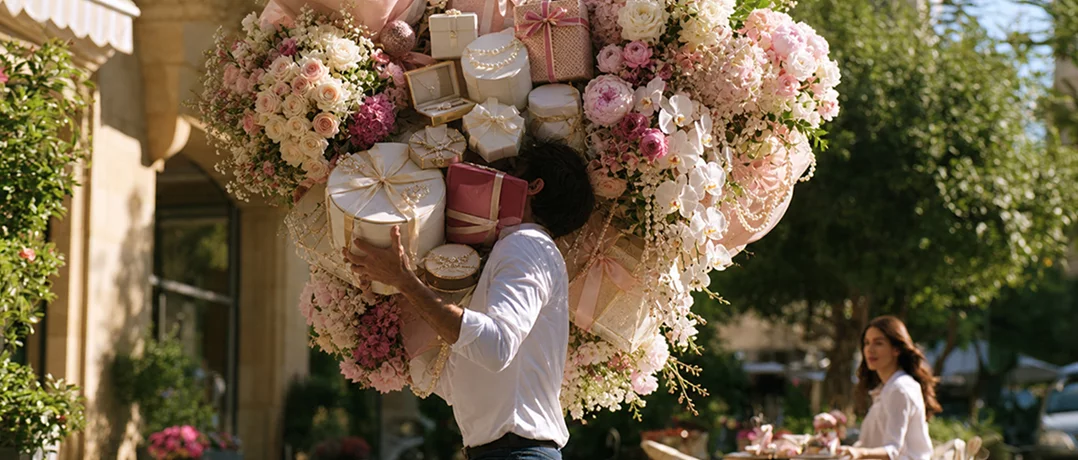
In Lebanon, a very specific rulebook was written for how love is supposed to unfold, unpublished, unofficial, and yet somehow known by everyone before their first date has even ended. Nobody remembers signing up for it. Everybody plays along anyway. Welcome to the Lebanese Rules of Love.
Act one: The approach
Before the relationship has even acquired a name, there is often a familiar set of expectations around it. He is supposed to make the first move, plan the date, bring the flowers and, traditionally, pay the bill. He opens the door, pulls out the chair, walks her to the car. None of these gestures is particularly significant on its own. Together, however, they form a particular idea of what courtship should look like, the man demonstrates effort, generosity and intention, while the woman is, at least traditionally, expected to receive it.
These expectations are changing, particularly among younger Lebanese couples. Women initiate and grand gestures are not necessarily treated as proof of seriousness. But the older script has not disappeared. It still shapes what many people consider romantic, respectful or even “proper” dating.
Then comes the point where the relationship stops belonging entirely to the couple.
In Lebanon, meeting the parents can quickly become meeting the family. It begins with meeting mom and dad, but soon, it turns into teta and jeddo, aunts and uncles, cousins, godparents, family friends and the relative who somehow knows everything about everyone. One introduction can turn into an entire afternoon around a dining table.
The questions are usually polite. Where do you work? Where is your family from? What do your parents do? Where did you study? But beneath the conversation is a familiar form of social assessment. In a culture where family background remains closely tied to identity, reputation and social standing, a partner is rarely evaluated in isolation.
Act two: The proposal
For many families, heavily practiced in Islam, but increasingly common in Christian households too, there's the tolbe: the groom, flanked by his parents, formally shows up at the bride's home to ask for her hand, generally over a cup of coffee that has never carried more weight. It looks casual. It is not casual. Everyone in that room knows exactly why they're there, and yet the conversation must still meander politely through health, weather, and extended family gossip before anyone dares mention the actual point of the visit.
The Lebanese proposal has evolved into a full theatrical event, rose petals, string quartets, drone footage, a photographer hired specifically to capture a moment that must look "spontaneous." Understatement is not an option. The ring should be impressive, the setting memorable and the entire moment worthy of being retold.
The engagement party, in Lebanon, has become the wedding’s prequel, often rivaling the wedding itself in scale, guest list, and DJ budget. Then, there's a laylieh, a pre-celebration party thrown by each family, complete with music and dancing. The groom's family may send over a tray of sweets to the bride's household beforehand, a gesture symbolizing the sweetness to come.
Act three: The wedding
By the time the wedding arrives, everything becomes grander. Lebanese weddings are often large, elaborate celebrations, with guest lists that can easily reach 500 people or more. The scale is part of the occasion, elaborate venues, carefully chosen decorations, abundant flowers, elaborate tables and lighting, all designed to make the night feel memorable and extraordinary.
Then comes the music. The zaffe leads the couple into the celebration with drummers, musicians and dancing, while the room gradually fills with the sounds of traditional songs, modern hits and the collective energy of hundreds of guests. The dancing continues throughout the night, with families and friends taking over the dance floor, celebrating together long after the formalities are over.
For many Lebanese couples, the wedding is a major social celebration, bringing together generations of family and friends in a setting where every detail, from the flowers to the music, the food and the guest list, is part of the celebration.
The real rule behind all the rules
The guest list grows, the flowers multiply, the music gets louder, the proposal becomes an occasion, and a wedding can bring together hundreds of people. These things can sometimes feel excessive, especially in a culture where appearances and expectations carry their own weight. But they also come from a genuine instinct, to make love visible, shared and worthy of celebration.
There is a particular generosity to that kind of love. It does not always know how to be quiet, but it knows how to show up. It feeds you, introduces you to everyone, fills a room for you and turns a private milestone into a collective memory.
The real Lebanese rule, then, may be the simplest one, love is meant to be lived grandly. Not necessarily perfectly, and not without its pressures, but openly, generously and with enough people around the table to remember it long after.
-
-

-
Jenna GeageaReporter/Writer
-
