



The Lebanese who boarded the Titanic
The Lebanese who boarded the Titanic

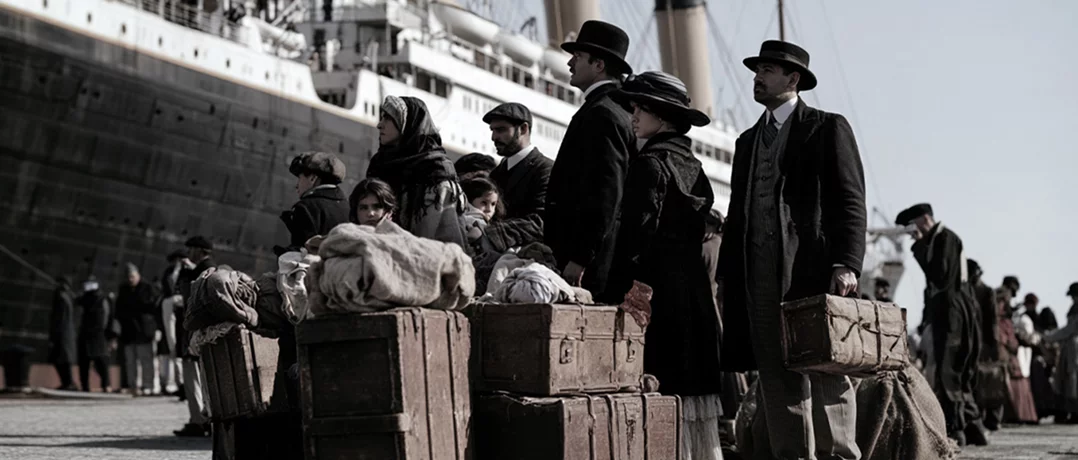
On the night of April 14, 1912, as the RMS Titanic began its descent into the North Atlantic, survivors would later describe an unlikely scene rising from third class: a circle of passengers from the mountains of Lebanon, facing death, breaking into the dabke. By several accounts, it wasa final assertion of identity from people who had crossed an ocean chasing a different kind of future entirely.
For decades, the presence of Arab passengers aboard the Titanic was largely overlooked. Research by Palestinian-American journalist Ray Hanania, inspired by hearing the word “yalla” in James Cameron’s 1997 film, uncovered dozens of Arabic surnames in the ship’s records. While official lists identified 79 Arab passengers and crew, researchers estimate the actual number may have been closer to 165, with many names altered or anglicized. Contemporary reports referred to 154 “Syrians” aboard, reflecting the Ottoman-era classification of present-day Lebanon, with only 29 survivors. Among the communities hit hardest was Kafr Mishki in the Bekaa, which reportedly lost at least 13 residents that night.
A ship beyond imagination
Nearly all of the Lebanese aboard were traveling third class, having come from villages including Hardine, Tibnine, Kafr Mishki, Zgharta, Dhour el Choueir, and Serhal, farmers, tailors, and young families chasing the promise of a new life in America. For many, the ship itself was an overwhelming introduction to that promise. Passenger accounts collected by researchers describe steerage travelers passing briefly through the first- and second-class decks en route to their cabins, taking in carpeted corridors, sweeping staircases, and gilded railings entirely unlike anything in their home villages, a glimpse of the abundance many hoped America itself would eventually offer them.
A Lebanese community
According to Hanania's research, witnesses aboard the ship specifically noted that the Arab passengers held the liveliest parties on the voyage, and that the group celebrated three separate weddings during the crossing. That same reporting is the source of one of the most widely repeated, and hardest to independently verify, details of the disaster, accounts describing Lebanese passengers responding to the ship's final moments by forming a circle and dancing the dabke to the sound of a piper, a detail that has been passed down through survivor descendants and repeated across subsequent retellings, though it remains an anecdotal account rather than one confirmed by official inquiry records.
Survival against all odds
One of the few survivors was Anna Thomas (Touma) from a small Lebanese village. She boarded the ship with her young son Georges, leaving behind a dozen families from her hometown, all of whom drowned in steerage, locked below deck. Her grandson, Joseph Thomas, would later write “Grandma Survived the Titanic”, where Anna recalled that when two Lebanese men asked her to pray, she replied: “I will, but I better find out what I have to pray about.” She survived, but never forgot the cries from below, the sound of her village sinking with the ship.
Another survivor, Shawnee (Shaaninee) Abi Saab Wahbee from Thoum, boarded the Titanic in Cherbourg. She had lost her husband in America and was returning to Lebanon after her son’s death. She was a mother trying to start again, one of thousands of women shaped by migration and loss. That night, she was thrown into a lifeboat dressed only in her nightgown and life jacket. She later told the Sharon Herald in 1937: “A scared young man leaped into the boat. Women shielded him with their gowns so the sailors wouldn’t see him, they would have shot him.” By morning, several around her were frozen to death. Shawnee reached New York alive, cared for by the Hebrew Sheltering Society, her belongings compensated at $150. Witnesses said that when she left Lebanon, her hair was black. A year after the Titanic, it had turned completely white.
Louis Garrett, twelve years old and traveling from the village of Hakoor with his sister, later recalled reaching the upper deck and being helped into a lifeboat, and described witnessing John Jacob Astor assisting other passengers before Astor's own death. Garrett's account, recorded decades later by a relative, describes him coming to view his survival as a matter of providence.
A chapter still being recovered
More than a century later, researchers acknowledge the record remains incomplete. Hanania himself has said the Arab passengers' stories should have been told to the world at the time, calling the silence surrounding them almost a second tragedy layered atop the first. What has been recovered paints a clear picture of well over a hundred Lebanese men, women, and children boarding a single voyage toward reinvention, and a disproportionate share of them, along with entire branches of their home villages, never completing it.
-
-

-
Jenna GeageaReporter/Writer
-
