



Marking the International Day for the Elimination of Violence Against Women, three survivors recount their journeys from silence to self-possession.
The lives they reclaimed from violence

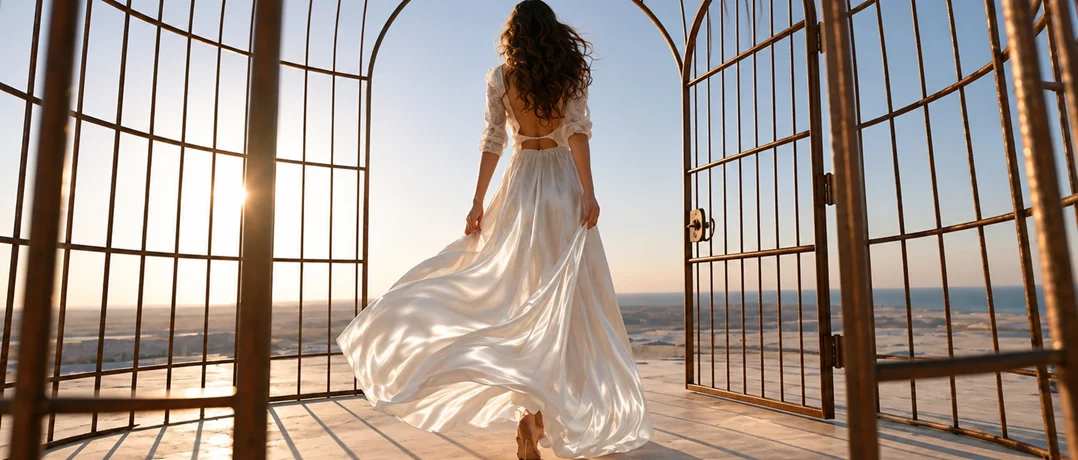
Names have been shortened, and identifying details withheld, at the request of the interviewees.
Violence against women often begins as a tightening of control, a humiliating remark, a silence the whole household learns to keep. It thrives wherever shame outweighs justice. The most difficult truth is that many women endure in secret for years.
Rima, 41: “The gun was never the first warning”
Married at 22, Rima mistook control for devotion. Her husband, a charming man from a respected family, first policed her phone, then her friends, then the length of her skirts. The first slap came in the third year of marriage, followed by flowers and a tearful apology.
“I learned his moods,” she told The Beiruter. “I could tell from the sound of his keys in the door what kind of night it would be.”
The night everything ended began with a burnt dinner. He pulled a pistol from the bedroom drawer, a weapon she had always known was there, and pressed it against her temple while their eight-year-old daughter watched from the hallway.
“I remember the cold of the metal and the silence afterward. He wasn’t shouting. That was what frightened me. He was calm, as if he were asking me to pass the salt.”
Her daughter’s small, pale face in the doorway broke something open. “In that second I stopped being afraid for myself. I thought, she will grow up believing this is what love looks like. I would rather die than let that happen.”
He lowered the weapon only when a neighbor began pounding on the door. At dawn, while he slept, Rima carried her daughter and left.
“People ask why I stayed so long. Nobody asks why he was allowed to do it. I am done carrying that question for him.”
Nour, 27: “I was not ruined. I was wronged.”
At 19, Nour, a pharmacy student in Beirut, accepted a ride home from a colleague of her older brother, a man her family trusted. He drove past her street.
“I kept saying, ‘You missed the turn,’ and he kept smiling. That smile is what I still see when I close my eyes.”
She was assaulted in a parked car. Afterward, shame arrived faster than grief. She showered until the water ran cold, burned her clothes, and told no one for two years.
“A girl is taught that her body carries her honor. So, when someone violates it, you feel you have stolen something from everyone you love. I was convinced I was the one who had done something wrong.”
The turning point came in a therapist’s office, where a stranger offered a sentence she now repeated, What happened to you reveals everything about him and nothing about your worth.
Nour eventually told her mother, who wept, held her, and begged forgiveness for the silence of generations. She filed no complaint; the man had left the country, and she has made peace with that.
“My healing was never about punishing him. It was about taking my own name back. I am not a story told in whispers. I am a woman who survived, and I intend to enjoy every day of what comes next.”
Samira, 58: “Silence was the cage, and I helped build it”
Samira has worked hard all her life. Born in a mountain village, she married at 17 and spent thirty-seven years in a house where fear was constant.
Her abuse left few bruises. Her husband controlled the money, counted the groceries, and punished any purchase he had not approved. He humiliated her before guests, mocked her lack of schooling, and promised she would starve without him.
“He rarely needed to raise his fist. His contempt was enough. A person can be broken slowly, without a single mark for the neighbors to see.”
She raised four children inside that violence. Then one evening her youngest daughter, newly married herself, asked a question that unraveled everything: “Mama, were you ever happy?”
“I opened my mouth to lie, and nothing came. My daughter saw it all in that pause.”
At 54, Samira began to understand the cost of the life she had endured. But she never found a way out of the marriage herself. Her husband died suddenly of a heart attack, bringing the abuse to an end.
She did not escape the violence. Life ended it for her. For Samira, freedom arrived through a death that left her with the difficult task of learning how to live without the man who had controlled her life.
Abuse exists in different ways, a weapon, a betrayal of trust, a slow erosion of selfhood. Survival is only the beginning, and reclaiming one’s voice is its own act of courage.
-
-

-
Jenna GeageaReporter/Writer
-
