



From his father’s persecution to the Soviet collapse, Xi’s political education informed his consolidation of party control and the political imperatives that continue to drive his rule.
The making of Xi Jinping

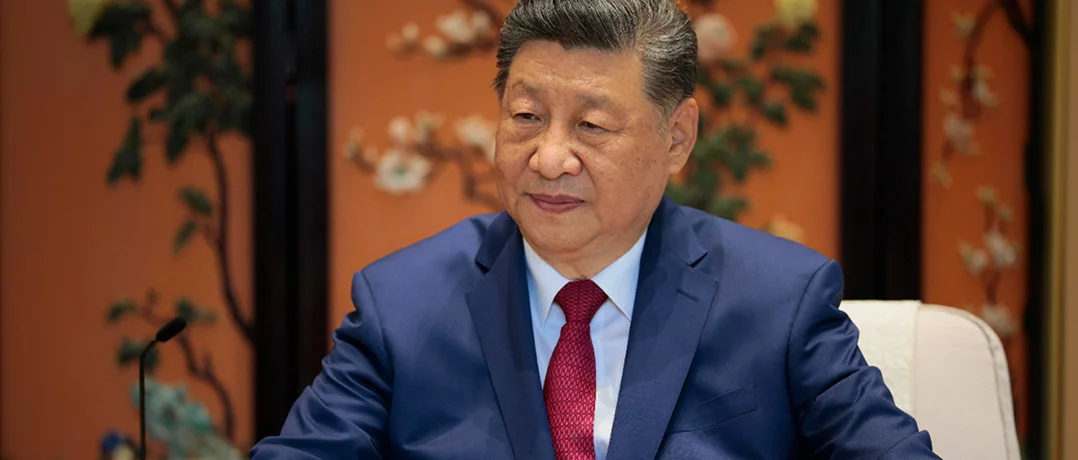
Xi Jinping was nine years old when his father was purged. Xi Zhongxun, a veteran revolutionary who had risen to become a vice premier, was stripped of his positions in 1962 after Mao Zedong accused him of involvement in an effort to rehabilitate a disgraced Communist figure. Years of investigation and confinement followed, before the Cultural Revolution brought further persecution and public humiliation. By the time Xi Jinping reached adulthood, his family had experienced the volatility of Maoist politics at close range. Yet Xi Zhongxun never abandoned the party, and his son would eventually devote his own career to the institution that had brought the family both privilege and persecution. “There is this idea that suffering, even when the Party itself has turned against you, can be a good thing because it forges you, it tests you, it reveals your mettle,” Joseph Torigian, senior fellow for Asia studies at the Council on Foreign Relations, told The Beiruter. Sixty-four years after his father was purged from the upper ranks of the Communist Party, Xi presides over the world’s second-largest economy, commands one of its most powerful militaries and leads a country whose rivalry with the United States now extends across technology, trade, security and global influence. The convictions behind that power were forged across decades, and they rest on a political education steeped in the fragility of power and the demands of preserving it. Xi Jinping was born in Beijing in 1953 into China’s revolutionary elite, but the privileges of that position proved precarious. His father had been a Communist since his youth and became a vice premier under Zhou Enlai, placing the family near the center of the political establishment created after the Communist victory. Xi Zhongxun’s fall began in 1962, when a dispute over a novel about revolutionary leader Liu Zhidan led Mao to accuse him of trying to reverse a party verdict. Stripped of his positions, he spent the following years under investigation and political criticism. His persecution intensified during the Cultural Revolution, Mao’s decade-long campaign against supposed ideological and political enemies, as officials across the Communist Party were purged, detained and publicly denounced. Xi Jinping, still a teenager, was sent in 1969 to Liangjiahe, a poor village in Shaanxi province, as part of a nationwide campaign that dispatched millions of urban youths to the countryside. He spent seven years there. Such an experience offered ample reason to turn against the political system that had persecuted his family. Xi chose instead to join it. After being rejected several times, he was admitted to the Communist Party in 1974, beginning an ascent through its ranks that would eventually carry him to its highest office. Xi Zhongxun’s example offered his son a powerful model of political loyalty. Even repeated persecution had not shaken his commitment to the party. “It established a strident sense of zeal, conviction, and belief in Xi,” Torigian said. Xi emerged from those experiences neither estranged from the party nor naïve about the exercise of power within it. He inherited his father’s loyalty alongside an acute awareness of how precarious political standing could be. After Mao’s death in 1976, Xi Zhongxun returned to senior political life and became closely associated with the economic opening that transformed China under Deng Xiaoping. As Guangdong’s top party official from 1978 to 1980, he championed greater economic flexibility and helped initiate the special economic zones that became laboratories for foreign investment and market forces, helping establish his reputation as one of the Communist Party’s more liberal and pragmatic senior figures. That reputation has encouraged an appealing contrast between father and son. Xi Zhongxun appears as the reformer who helped loosen the state’s grip on economic life, while Xi Jinping appears as the centralizer who restored the party to areas from which it had retreated. Torigian cautions against drawing too sharp a divide between them. Xi Zhongxun was liberal and reformist relative to other Communist leaders of his era, but the spectrum itself remained bounded by the party. His pragmatism concerned how Communist rule should be exercised, not whether it should endure. The ideological distance between father and son was therefore narrower than the familiar contrast between reformer and centralizer suggests. More than seven decades after the establishment of the People’s Republic, the revolution, civil war and deprivation that defined the Communist Party’s founding generations have receded from lived experience, posing a challenge for a political system that continues to derive legitimacy and purpose from revolutionary struggle. “How do you preserve a state that’s based on revolutionary or religious principles from one generation to another?” Torigian said. Xi has sought to bridge that divide through party history, patriotic education and revolutionary memory, connecting contemporary citizens to struggles they never experienced while placing Communist rule within a national story extending far beyond 1949. “The way you ensure that people inherit the so-called ‘red genes’ is you study Party history,” Torigian said. The task is ultimately to transmit convictions born of revolution to generations that know it only as history. If Xi’s family history offered one education in political survival, the Soviet Union offered another in political extinction. Its dissolution in 1991 presented Beijing with an unnerving precedent. The Soviet Communist Party had survived civil war, Stalinist terror, Nazi invasion and 40 years of superpower confrontation, only to lose its monopoly on power during Mikhail Gorbachev’s political and economic reforms. For Chinese Communist leaders, its collapse raised the possibility that their own rule could prove equally vulnerable. Competing explanations produced very different prescriptions. One emphasized economic stagnation, bureaucratic rigidity and insufficient reform. Another blamed Gorbachev, Western ideological influence and the erosion of the institutions and convictions that sustained Communist rule. Xi’s diagnosis has leaned heavily toward the latter. “Xi Jinping basically said the Soviet Union collapsed because they lost control of their ideology and history, as well as the military,” Torigian said. Xi’s reading of Soviet history places ideological authority and military loyalty at the heart of regime survival. Torigian described him as acutely conscious that divisions within Chinese society could converge with foreign pressure to produce an unexpected political crisis. Even prosperity carries risk if success breeds complacency at home while China’s rise intensifies resistance abroad. The Soviet lesson was therefore that power alone could not guarantee survival. A ruling party could command a superpower and still collapse from within if it lost control of the institutions, loyalties and political narrative that held the system together. Xi’s preoccupation with political strength also informs how he views China’s intensifying competition with the United States. The rivalry spans nearly every traditional measure of national power. Washington and Beijing compete over advanced semiconductors and artificial intelligence, industrial capacity, military power in the Indo-Pacific and influence over the international order. Yet their economies remain deeply intertwined even as Washington restricts China’s access to advanced chips, Beijing pursues technological self-sufficiency and tensions over Taiwan sharpen military competition. and tensions over Taiwan sharpen military competition in the Western Pacific. Xi also views the rivalry through an ideological lens. “To Xi, America is a system, where the people who have more money exploit the people who have less,” Torigian said. Xi’s political project seeks to pair the material power of an advanced economy with the ideological cohesion he believes the American system lacks. Prosperity, technological strength and military power cannot secure China’s rise if they come at the expense of political conviction or party control. The durability of that project takes on greater urgency as Xi, now 73, enters the later years of his rule. “Succession, and who you hand off to, is really the elephant in the room,” Torigian said. Xi has concentrated authority while leaving no clear successor. Elevating an heir risks creating a competing center of power, while leaving the position unresolved increases uncertainty over what follows him. His father helped build the revolutionary order, endured its persecution and remained loyal to it. Xi inherited that system and has spent his leadership seeking to protect it from the weaknesses he believes brought down others. The final test of Xi’s political project will be one his father’s generation also confronted: how to make a political inheritance survive the leader entrusted with preserving it.Xi Jinping’s father was persecuted by his own Party five times, and he saw pride in it. It’s a manipulation of the politics of suffering.
The politics of suffering
But it also sparked a very canny, cagey, cunning, even cynical way of thinking about politics.
Inheriting a revolution
How do you ensure that your vision for the nation survives? For Xi, it’s a complicated mix of tradition and innovation, that there has to be some kind of workable dialectic between the two to succeed.
You read these stories, you read these narratives, and you feel like you are the latest generation to inherit that struggle.
The lesson of Soviet collapse
They lost control of the pen and the gun.
A contest of systems
When he describes America, he describes it as a society that is materially wealthy but spiritually poor.
-
-

-
Katharine SorensenReporterSpecializing in global affairs, technology and economics, with a focus on on-the-ground investigative reporting.
-
