



The horror genre explores the psychology of fear, offering audiences controlled thrills while reflecting the cultural anxieties, social tensions and deeper fears of each generation.
The pleasure of fear in horror cinema

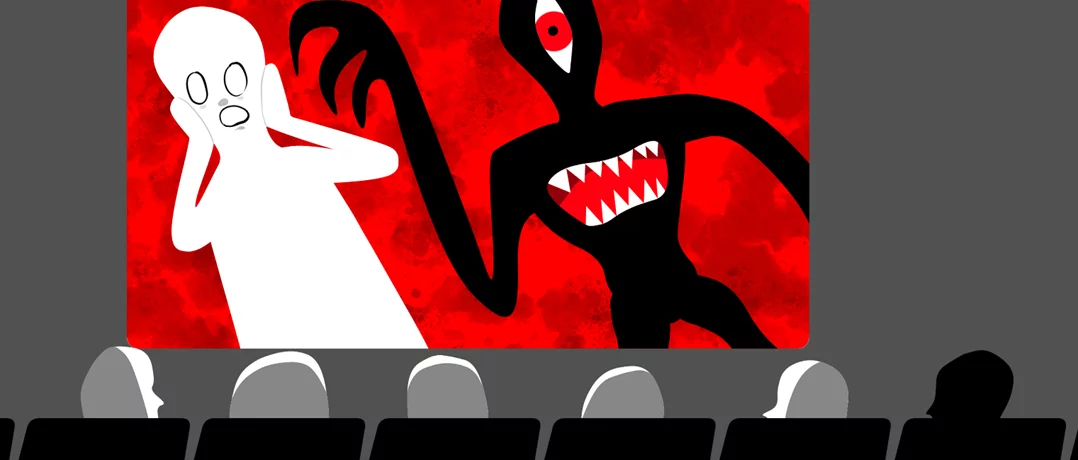
Since the earliest days of cinema, the horror genre has drawn audiences towards the emotions most people spend their lives avoiding. Fear, suspense and psychological unease have become enduring sources of entertainment, raising a question at the heart of the genre, why do audiences willingly seek out experiences designed to frighten them?
Psychology describes this paradox as “recreational fear”, in which the body responds to a perceived threat while the mind remains conscious of its safety. The resulting tension, followed by relief, can produce a sense of exhilaration. Yet horror films’ appeal extends beyond the physical thrill. Across generations, the genre has reflected the fears of its time, transforming anxieties surrounding nuclear destruction, disease, grief and social injustice into monsters, supernatural forces and unsettling cinematic narratives.
A critic’s eye
Film critic Josephine Habchi approaches horror from a unique direction. “I have never understood the appeal of horror films that take pleasure in displaying blood, corpses and dismembered bodies,” she told The Beiruter. “I do not believe that provoking disgust necessarily amounts to creating horror.”
She still understands why audiences gather around the genre. “Some seek an adrenaline rush, others enjoy confronting fear within a safe environment, while others find pleasure in the mystery and the unknown, something that other cinematic genres may not offer,” she observed. The genre is broader than its reputation. “Horror is not reserved for those who enjoy violence. It also offers a space for lovers of suspense, mystery and psychological exploration.”
Her own taste leans toward restraint. “The most intelligent form of horror is the kind that seeps into the mind rather than assaults the eyes,” she argued. The measure of a great film is what survives after the credits. “To leave a cinema questioning what you have seen, and what you have not, with an unsettling feeling that lingers long after the film ends, is what makes horror truly deserving of its place in cinema.”
Her example is Alejandro Amenábar’s The Others (2001), starring Nicole Kidman, a film that unsettled her deeply. “It left me utterly shaken when I first watched it and had me looking over my shoulder for an entire month,” she recalled. The film achieves this without spectacle. “Silence, shadows, closed doors and a story that gradually unfolds with remarkable precision are enough to sustain the tension until its final moments.”
Her conclusion returns to the idea that unites the genre’s fans. “I am less afraid of the monster I can see than of the one my imagination is free to conjure in my mind,” she reflected.
Perhaps that is where the genius of psychological horror lies.
The safe kind of danger
Karim Bou Arab, 28, is a nurse who spends his days around real crises, and he unwinds with slasher films. “People assume I’d want something gentle after a twelve-hour shift,” he told The Beiruter. “But a horror movie gives me controlled fear. My heart pounds, my palms sweat, and I still know I’m safe on my couch.”
That physical rush is the fight-or-flight response, in which the body releases adrenaline while the thinking brain stays aware the threat is fictional. “The best part is the second after the scare. Everything drops, I laugh, and I feel lighter than before the movie started.”
He also remembers how the genre carried him through 2020. “I rewatched pandemic thrillers during lockdown, which sounds insane. Yet it calmed me, because I could face a nightmare on my own terms.”
“Rehearsing fear in a safe space is like training a muscle,” he added.
A mirror held up to society
Lara Achkar, 34, teaches sociology and writes about film. For her, the screams matter less than what provokes them. “Every monster is a metaphor,” she insisted. “You learn what a society dreads by watching what it fears on screen.”
She points to Night of the Living Dead, released in 1968, a year of assassinations and unrest. “George Romero cast a Black actor as the hero, then ended with a bleak scene that echoed real violence. Audiences recognized the world outside the theater.” Years later, Jordan Peele’s Get Out gave racial anxiety a new shape. “The ‘sunken place’ is a perfect image of being silenced. It turned something people struggled to describe into something they could see.”
Recent films have turned inward. “Hereditary is really about grief and family trauma, with a supernatural frame. People left the theater shaken because they recognized the feeling, not because of the ghosts.”
Horror, she told The Beiruter, gives communities permission to discuss what polite conversation avoids. “Fear is easier to talk about when it wears a mask.”
The thrill of the unknown
Joseph Semaan, 25, runs a Halloween horror screening marathon with his friends, and he believes the genre’s oldest ingredient is uncertainty. “What you can’t see always beats what you can,” he reflected. “The best scares happen in the half second before the reveal, when your imagination fills the dark with something worse than any special effect.”
He loved to recall that the mechanical shark in Jaws kept malfunctioning during production, which forced Steven Spielberg to hide it for most of the film. “That failure created one of the most suspenseful movies ever made. The audience’s mind did the work.”
The unknown also explains cosmic horror for him. “Stories about vast, indifferent forces tap a very old instinct. Our ancestors survived by being wary of rustling in the grass.” Yet the club’s real magic is collective. “When friends and acquaintances gasp at once, then burst into nervous laughter, something bonds us. Nobody leaves as a stranger after sharing that.”
Horror endures because it lets people confront what unsettles them from a safe distance. The genre shifts its monsters with every generation, yet it keeps asking the same question about what truly frightens us and why.
-
-

-
Jenna GeageaReporter/Writer
-
