In Lebanon, dressing well during times of crisis reflects more than fashion, it reveals how identity, resilience, and self-expression endure through uncertainty.




In Lebanon, dressing well during times of crisis reflects more than fashion, it reveals how identity, resilience, and self-expression endure through uncertainty.

In Lebanon, fashion has long survived circumstances that might have been expected to diminish it. Economic crises, political turmoil, and even war have done little to extinguish the country's culture of dressing well. The persistence of that instinct raises an intriguing question: when the world feels uncertain, what role does personal appearance play in helping people make sense of it?
This is not frivolity. Or at least, it is not only frivolity. Psychology, sociology, and fashion theory understand that what we wear, especially in times of hardship, is rarely just about clothes. It is about identity, agency, and survival of a different kind.
When external circumstances feel chaotic and uncontrollable, human beings instinctively seek small domains they can govern, “enclothed cognition” the idea that clothing influences how we perceive ourselves. What we wear can alter our mood, our confidence, and even our cognitive performance.
In a crisis, the morning ritual of choosing an outfit becomes one of the few acts of pure self-determination left. You are unable to control the political situation, but you can control what you put on.
This dynamic is not unique to Lebanon, or to the present. During the Blitz in 1940s London, the British government ran “Make Do and Mend” campaigns urging people to repair and repurpose clothing rather than abandon the effort to look put-together. Historians have noted that maintaining personal appearance during that period was widely understood as an act of morale and defiance. Fashion, then, was resistance.
Beyond control, clothing is one of the most immediate and legible forms of self-expression available to us. In stable times, we dress to signal belonging, status, or mood. In unstable times, those signals take on added urgency.
When institutions fail and futures become uncertain, the question “Who am I?” becomes harder to answer with reference to a career, a city, or a stable social world. What remains is the self, and one of the most accessible ways to assert and preserve that self is through personal style.
Research in identity theory suggests that people cling more tightly to expressive behaviors during periods of threat. The psychologist Carolyn Mair, who has written extensively on fashion and mental health, argues that clothing is “a powerful tool for self-regulation”, something we use to manage how we feel about ourselves as much as how we appear to others.
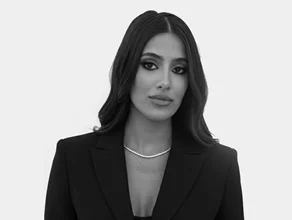
Few people are better placed to observe these dynamics than George Chamoun, a Beirut-based fashion stylist who has worked with clients across the spectrum, from high-profile celebrities to everyday individuals navigating their wardrobes. For Chamoun, the Lebanese relationship with fashion is not a recent phenomenon, nor a superficial one.
“Even in the 1980s and 1990s, during the civil war, Lebanese designers were reaching international recognition at a time when there was barely a fashion scene elsewhere in the Middle East. This has always existed, whether there’s war or not.”
Chamoun sees fashion as serving a dual function: expression and escape. “Maybe it’s not denial,” he says of the impulse to spend on clothes during hard times. “Maybe it’s a need to breathe, to escape. People are living with the feeling that everything could disappear at any moment. They don’t know what tomorrow will bring, so they want to enjoy life while they can.”
He also draws a direct line between clothing and confidence, something he has observed working closely with clients. “Fashion is definitely related to self-esteem, personality, and identity,” he says. “I always say that everyone is their own stylist. Every morning, when someone opens their closet and decides what to wear, they’re styling themselves.”
But Chamoun is careful to separate healthy expression from something more troubling. The rise of influencer culture and social media, he notes, has shifted the nature of fashion desire in ways that concern him. “So many young women are now attracted to the idea of owning a Hermès bag or a Chanel bag. The goal is no longer ‘I want to study and become an architect.’ It becomes ‘I want to look beautiful, shop, and own luxury items.’ There’s definitely a negative side to that.”
His conclusion is characteristically measured: “Elegance and balance are what matter most. You don’t need to wear designer brands from head to toe to look good. You can be extremely stylish at a very low cost. The problem is when brands become an obsession.”
The psychology here is nuanced. Spending on appearance during a crisis can be adaptive, a way of maintaining dignity, self-worth, and a sense of normalcy when everything else is in flux. But it can also tip into avoidance, particularly when financial pressure is severe and the spending becomes a way of not confronting difficult realities.
The Lebanese saying Chamoun quotes, “the Lebanese person goes into debt to look good”, captures both sides of this tension. There is warmth and humor in it, a cultural pride. But there is also a warning embedded in the joke.
What distinguishes healthy self-expression from harmful avoidance is awareness. Knowing why you are making a purchase, whether it’s a genuine source of joy or a way of outrunning anxiety, matters. Fashion can be a form of resilience. It can also be a way of not looking at the bill.
In the end, the Lebanese instinct to dress well in difficult times is neither purely vain nor purely admirable. It is deeply, unmistakably human. We dress, in part, to remind ourselves that we are still here. That we still have a self-worth presented to the world.