

Lebanon’s fashion resale scene is turning pre-loved clothing into a thriving market built on affordability, trust and sustainability.
The rise of the Lebanese fashion reseller

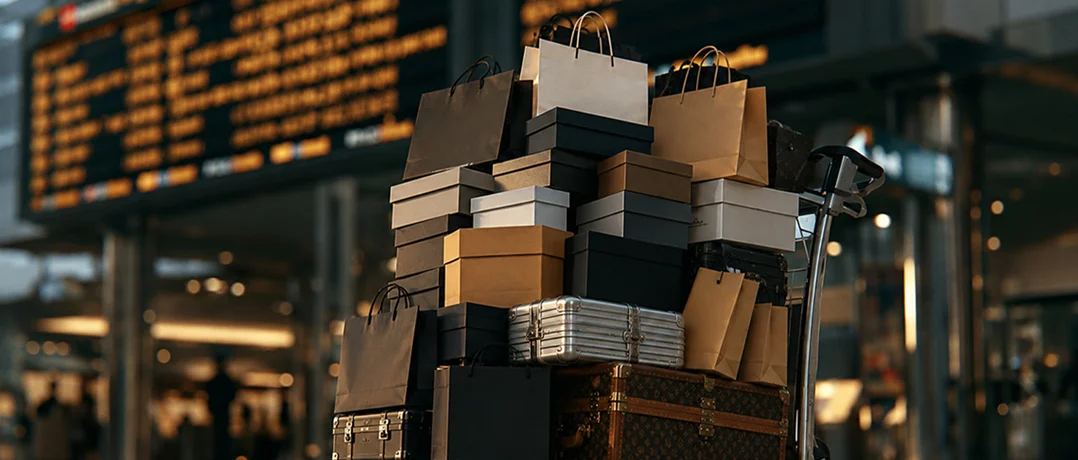
Across Lebanon, a new generation of fashion resellers has turned Instagram feeds into boutiques, and closets into inventory. Secondhand and pre-loved fashion, once seen as a last resort, has become a legitimate, even glamorous, way to shop.
The appeal is simple, reselling makes luxury attainable. A barely-worn designer piece, bought secondhand, costs a fraction of its original price, and the person selling it gets to recover some of what they spent rather than let it sit unused. The system benefits everyone, the seller who declutters and earns, the buyer who accesses pieces they couldn't otherwise justify, and, increasingly, the environment.
The Beiruter spoke with two women who each built their own reselling businesses, driven largely by trust, word of mouth and a genuine love of fashion.
Baraa Abou Shalakh: From selling her own closet to sourcing from Europe
Baraa Abou Shalakh’s journey into fashion resale began with a lifelong love of fashion and, unexpectedly, financial necessity. "I've always had a huge love for fashion since I was small," she said, but growing up in a modest family, she had little exposure to designers or luxury fashion.
After graduating university and securing a decent salary, she began buying pieces for herself. When COVID hit and she lost her job, she started selling her own clothes and belongings for extra cash. Once her closet was empty, she asked herself: "Why don't I do this as well, so I can have an extra income?"
She began sourcing through OLX, contacting owners and buying pieces when she received an offer, then reselling them with a commission. Her initial markups were "maybe $20, $30, maximum $50, just to grow the business." As satisfied clients introduced her to friends, word of mouth gradually built her network.
Authentication soon became central to her work in a market filled with counterfeits. Baraa took courses in grading and authentication and even purchased fake items to compare them with genuine ones. "I built a dataset on how to authenticate items," she said. "That's why now, even if I see an item from a distance, I can tell whether it's fake or not."
Social media has helped her reach more people, but Baraa believes visibility does not necessarily translate into sales. "Reach is nothing more than a number compared to actually gaining the trust of the person in front of you in order to make sales."
Her vintage, early-2000s-and-'90s aesthetic is intentional, with much of her stock sourced through a European partner, Lisa. Their partnership began when Lisa contacted her on Instagram. "I thought it was a scam at first." At the time, Baraa had very little money saved. “I proposed to pay what I had and once I sold something, I would immediately send her the rest." Lisa agreed, and what began as a leap of faith has become a three-year partnership.
Today, Baraa is also developing an AI authentication project designed to offer Lebanon a local alternative to Entropy. "It's an authentication machine that works with datasets to authenticate items, and it has 99% accuracy," she explained. Entropy machines cost around $3,000, and her goal is to develop a locally built alternative that resellers can rely on.
Her second ambition is a physical store designed to resemble a Lebanese home. "Even though people like to buy through social media, they also love to touch and examine things in person, not just online through pictures," she said, particularly when it comes to vintage pieces.
Gisele Chaaya: Curating a closet, building a community
For Gisele Chaaya, fashion reselling grew out of a lifelong love of style rather than a business plan. Having lived in both the United States and Europe, she developed an eye for vintage pieces, carefully chosen items that were unique and, crucially, in top condition. "I've always shopped in vintage shops," she said, " always looked into vintage shops that sold items that are different, that are unique, but that are also in top condition."
The turning point came with Lebanon's economic crisis. "The idea of starting a page on Instagram came about when the economic crisis hit," she explained. She and several of her closest friends realized they were sitting on closets full of clothes they no longer wore, and reselling them felt like an obvious solution, a way to "make some money, maybe get rid of a lot of things that they have, and maybe keep or buy an item that they could use more," rather than let good pieces gather dust.
What sets Gisele's page apart is how personal she keeps it. She sources every piece herself, choosing only items she genuinely finds different, and she handles the entire process, sourcing, listing, selling, and delivering without a team. "I do the pickups and deliveries twice a week. I don't send my items with delivery agencies. I don't have people working for me, so I do it all myself," she said. It's a deliberately small operation, and that's the point. By keeping her circle close, she has built something closer to a community than a storefront, "I've built a nice community of people who know that I know really well." She keeps her margins low for the same reason, "I keep my percentage very low just to keep the page going", and said many of her clients have become genuine friends along the way.
Her business also leans heavily on real-world connection through pop-ups, held wherever she can find the space, in Beirut, or in Batroun, often at the homes of people she knows well. There's no grand expansion plan in sight. Her ambition is simpler, and in some ways more sustainable: keep doing pop-ups, keep meeting new people, and keep the relationships that have made the page what it is. "Most of my clients have become friends." she said, "so that's what I love about it."
Reflecting further afterward, Gisele added a point she felt was essential to the whole conversation. "Recycling for me is of utmost importance, and recycling in fashion in particular," she said. Overspending on pieces that end up repeating in a closet is, in her view, a real problem, both financially and environmentally, and reselling is a practical corrective. "If your items are in new condition, in top condition, and you can resell them, maybe out of five pieces that you have that you don't wear anymore, you end up buying one thing that is good," she explained. "At the same time, somebody else is enjoying the piece that they can't find anymore."
Fashion redefined
Taken together, these two perspectives capture why fashion reselling has taken root so firmly in Lebanon. Its success is rooted in community, the trust built between a seller who delivers the item herself and a buyer who becomes a regular customer. And a growing awareness that fashion doesn't have to be disposable, that a closet can be a resource rather than a graveyard for good intentions and impulse buys.
What started as friends helping friends clear out their closets during a moment of economic strain has evolved into something with staying power. As long as there are people willing to curate carefully, sell honestly, and show up in person, the Lebanese fashion resale scene looks set to keep growing.
-
-

-
Jenna GeageaReporter/Writer
-
