As artificial intelligence transforms fashion, industry experts argue that while AI can accelerate design and marketing, it cannot replicate the creativity, intuition, and emotional depth that define human style.


As artificial intelligence transforms fashion, industry experts argue that while AI can accelerate design and marketing, it cannot replicate the creativity, intuition, and emotional depth that define human style.

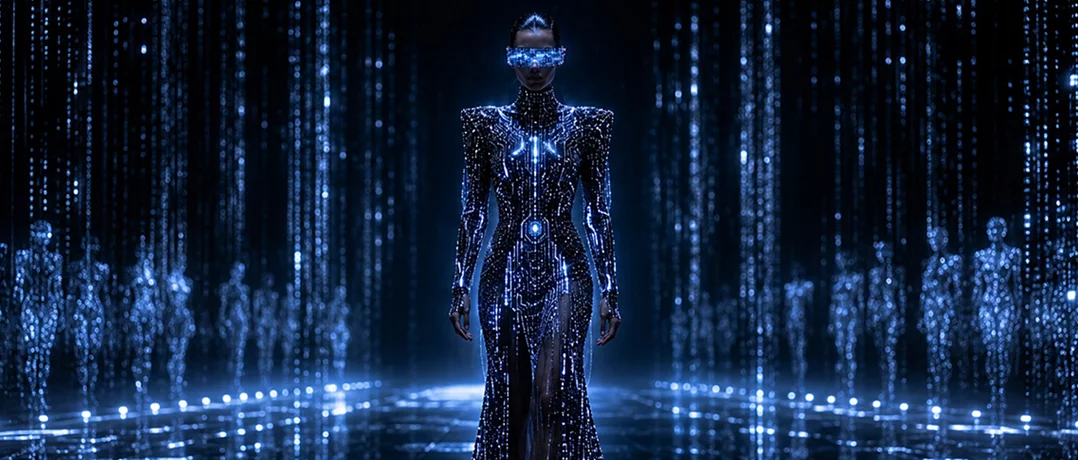
designers to the shopping apps on our phones. It promises speed, savings, and endless creative permutations. But does it possess the soul that has always defined great style? To explore this question, The Beiruter spoke with fashion stylist and consultant Carla Tayar, who offered a nuanced view of what AI can, and categorically cannot, do for an industry she considers, first and foremost, an art form.
"Fashion is part of the art world," Tayar insisted. "Music, painting, architecture, all of that belongs to the art world," and she believes AI must be judged by different rules once it enters that territory. “When you find out that art was AI-generated, you feel a little disappointed, no matter how good it is." For Tayar, that disappointment traces back to a single missing ingredient: "there is always a lack of soul."
Tayar acknowledged AI's practical value for designers. It "can generate hundreds of sketches in an instant," suggesting colors, fabrics, patterns, and silhouettes in a fraction of the time a human would need. "It makes many things easier for designers. It can save money and time," she says.
Yet that same efficiency carries a sharper edge. Because AI "works with data and algorithms," Tayar argues it inevitably imitates rather than originates, and this creates a legal blind spot for the designers whose work feeds those datasets. "Designers are now facing many difficulties because they no longer have the same level of copyright protection," she explained. "If another designer or a brand copies their work, they may be able to take legal action, but they cannot sue AI."
Still, she is emphatic that imitation is not innovation. A designer's work, she said, is inseparable from lived experience, "a culture, a story, or a song that the creator has genuinely experienced", something no model trained on borrowed data can authentically replicate. "AI will never be able to do the work that a designer with an artistic mind can create," she said simply. "It cannot replace them."
Perhaps nowhere is this tension more visible than in advertising, where brands increasingly favor AI-generated faces over traditional photo shoots. Tayar sees the commercial appeal plainly: "It is much easier and cheaper for brands to use AI-generated models," she said, noting that companies can now conjure any body type, skin tone, or ethnicity on demand, "African, Japanese, Korean, French, European, anything they choose," without the overhead of a physical shoot.
But there is a cost that no spreadsheet captures. "Even if they look extremely realistic, the consumer may still feel that they cannot trust them completely," Tayar observed. "There is no real relationship or connection," she said, and in an industry built on aspiration and identification, that absence is significant. "Connection is important in marketing because it attracts consumers."
The most personal test of AI's limits, for Tayar, lies in styling itself. Apps that analyze a photograph and recommend colors or silhouettes have become commonplace, but she is skeptical they can match a human consultant. "A stylist first has to understand the person behind the clothes," she says, their personality, energy, and body language, not merely their measurements.
"What if her character, personality, or the way she moves, walks, and speaks does not fit what she is wearing? Then we have failed," Tayar explains, describing a kind of intuitive calibration she believes algorithms simply cannot perform. AI, in her view, can analyze skin tone and suggest a palette, but it "does not have the intuition or creativity that only human beings possess", and without that, styling becomes generic rather than personal. "It takes information from different sources and makes suggestions," she said. "So, at the end of the day, it is not truly personal."
In a closing message to a generation increasingly reliant on artificial intelligence, "AI is certainly a very powerful tool," Tayar said. "AI is the future... a major part of our daily lives." But she draws a firm line beneath that praise: "AI will never, ever replace the human mind, human culture, human imagination, or creativity."
Fashion, like music or painting, is built from feeling, and feeling, she believes, cannot be computed. "Imagination and creativity are what give something feeling and soul," she said. "When something lacks feelings and identity, it is not the same. It can never be the same."
As the industry races to adopt ever-faster, ever-cheaper tools, Tayar's conversation offers a counterpoint. Technology may reshape how fashion is made and marketed, but its meaning, will always be handwritten.

