

As Israeli attacks continue in southern Lebanon, a wave of official visits is highlighting efforts to strengthen state presence, restore services and support residents’ return.
The South between strikes and state presence
The South between strikes and state presence
By Nathalie Durham | September 17, 2026

Reading time: 5 min
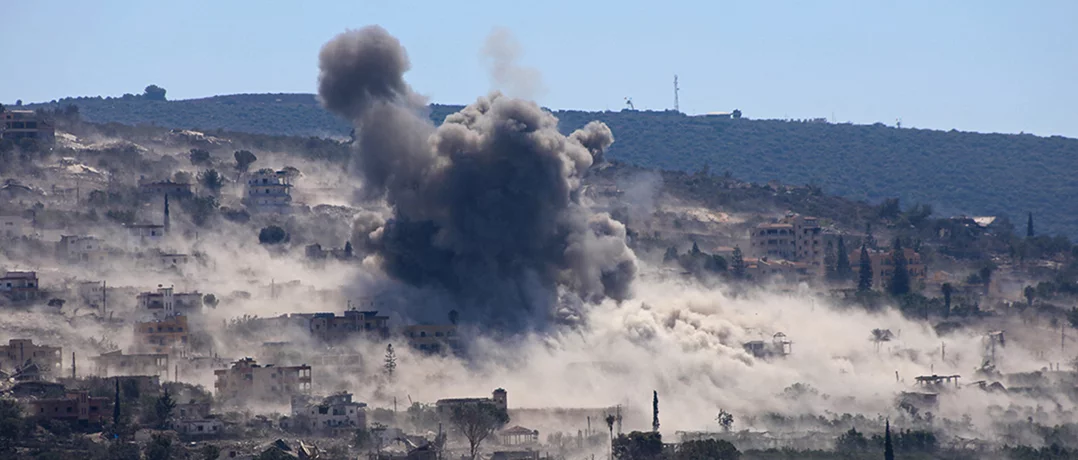
Over the past few weeks, the South has become the center of an unusual wave of official visits. President Joseph Aoun went to Nabatieh and Zawtar Gharbieh, Prime Minister Nawaf Salam visited the Army in Tyre, U.S. Ambassador Michel Issa toured Zawtar Gharbieh, and ministers have gone south to inspect bridges, roads and schools.
Several developments are unfolding at the same time: continued Israeli attacks and occupation of parts of southern Lebanon, a wider Lebanese Army deployment, damaged infrastructure, residents trying to return and the implementation of three “pilot zones” under the framework agreement.
A series of official visits to the South
The most recent visit was on September 15, when U.S. Ambassador Michel Issa went to Zawtar Gharbieh with a delegation from the Council for Development and Reconstruction. He visited the Church of the Annunciation and inspected the temporary bridge at Qaaqaaiyet el-Jisr, one of several infrastructure projects intended to restore access to southern communities. His visit came as Israeli military vehicles were reported moving in nearby Zawtar Sharqieh, where Israeli forces remain present, while an Israeli drone flew over the area.
The U.S. Embassy said Issa went to the South to assess conditions on the ground and review the progress and remaining challenges in the pilot zones. It said U.S. support is aimed at helping the Lebanese government and Army strengthen state authority, protect civilians, restore services and improve security. Issa also referred to residents’ concerns, saying he understood their “urgent desire to return home and rebuild their lives in safety and dignity.”
Issa’s trip followed a series of visits by Lebanese officials to many of the same areas. On September 12, President Joseph Aoun made a surprise visit to Nabatieh with Army Commander General Rodolph Haykal and senior security officials after the escalation around the city. He inspected Army units, visited Nabatieh Governmental Hospital and met residents, saying the state needed to provide the security and services necessary for people to remain in their areas. He also reiterated Lebanon’s demands for Israeli withdrawal, the return of detainees and displaced residents, and reconstruction.
Aoun later went to Zawtar Gharbieh, one of three pilot zones alongside Froun and Srifa. The areas are being used to implement a process involving Lebanese Army deployment and security measures linked to Israeli withdrawal.
Other visits have focused more directly on maintaining public services as residents remain in or return to the South. On September 2, Education Minister Rima Karami toured Saida, Nabatieh and Tyre to assess the situation of schools. In Burj Qalawieh, outside a destroyed school, she said the ministry was working to provide prefabricated classrooms and help students return to their areas. General Security chief Major General Hassan Choucair also visited Nabatieh as his agency increased patrols and its presence on the ground.
The Lebanese Army has been another central focus of these visits. On August 21, Salam travelled to Tyre, where he visited the Benoit Barakat barracks with Defense Minister Michel Menassah and received a briefing from senior officers on the South Litani sector. Salam said the Army’s presence represented the presence of the state, linking its deployment to the wider effort to restore schools, hospitals, roads, electricity and water and move forward with reconstruction.
Infrastructure was also already part of that effort earlier in August. On August 5, Menassah and Public Works Minister Fayez Rassamny visited the destroyed Qaaqaaiyet el-Jisr bridge and Zawtar Gharbieh. Rassamny announced work on a temporary crossing and road repairs in several villages to restore access to communities as the Army expands its role in the area.
State presence amid continued strikes
The recent wave of official visits is taking place against a backdrop of continued Israeli military activity across the South. Around Nabatieh, Israeli fire has repeatedly targeted the Ali Taher heights and the outskirts of Nabatieh al-Fawqa, where Israeli forces have also carried out large explosions targeting underground tunnels and installations. Strikes have extended to the area between Mayfadoun and Zawtar al-Sharqiya, while Israeli aircraft have also hit Mansouri, Majdal Zoun and nearby valleys, as well as Qantara in Marjayoun district. At the same time, the Army, General Security, State Security and other bodies have increased patrols, checkpoints and field deployments in and around Nabatieh.
The impact has gone beyond the immediate military front. Israeli attacks destroyed Ghandour Hospital and damaged the Finance Ministry building in Nabatieh, disrupting services that residents rely on every day. The Finance Ministry temporarily transferred transactions for Nabatieh residents to its regional office in Saida, while the National Social Security Fund temporarily closed its local office because of the security situation. Healthcare, administrative services and access to public institutions have therefore all been affected by the continuing escalation.
Beyond security, Lebanese authorities are also trying to keep state institutions operating, repair roads and infrastructure, maintain schools and other essential services, and create conditions that allow residents to remain in their towns or return to them. President Joseph Aoun reflected that message during his visit to Nabatieh, describing the South as “the heart of the state and Lebanon” and stressing that the state stands with its residents. Prime Minister Nawaf Salam has expressed the same approach, saying the government is working to ensure that “the state is present alongside the people of the South” while rebuilding what was destroyed and supporting residents’ return.
-
-

-
Nathalie DurhamResearcher/Writer
Junior research writer focusing on politics, public policy and international affairs.
-
