A rural Lebanese healthcare clinic serving all communities says it has been left without meaningful state support for nearly a decade despite filling critical gaps in the country's strained health system.




A rural Lebanese healthcare clinic serving all communities says it has been left without meaningful state support for nearly a decade despite filling critical gaps in the country's strained health system.

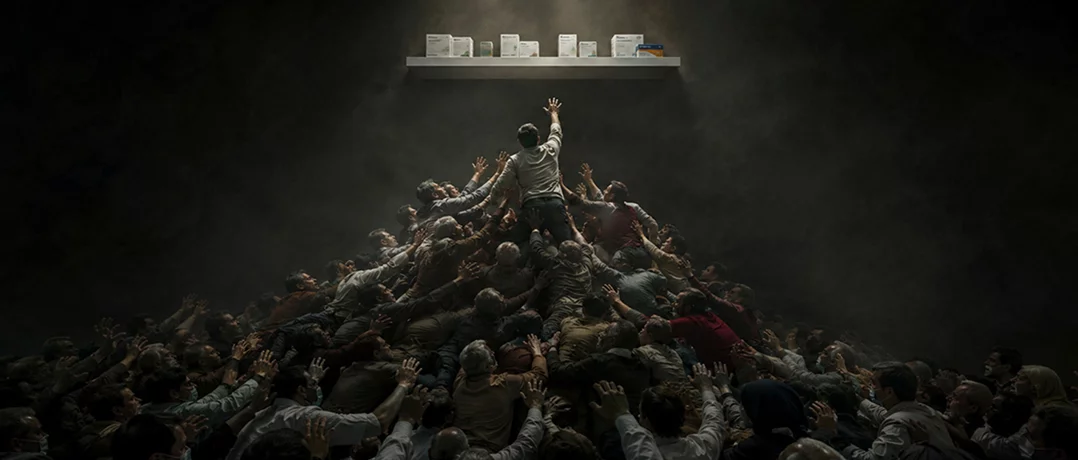
Across Lebanon, primary healthcare clinics have become one of the last remaining safety nets in a strained health system, absorbing the burden of rising medical needs in both urban neighborhoods and remote areas. These clinics operate in remote towns and underserved neighborhoods that the formal healthcare system long ago stopped reaching. They serve Christians and Muslims alike, the employed and the destitute, the registered and the displaced. They do not ask for political affiliation or sect.
And when they turn to the government for support, for medicine, for equipment, for basic acknowledgment of the role they play, they are met with silence.
The clinic attached to the Rahbeh Greek Catholic parish has been running since 1985. Four decades. The Beiruter spoke with Father George Charbory, head of the parish and supervisor of the clinic, who has watched it serve generations of residents from across the area's different sects and backgrounds.
"Our clinic is active and serves everyone, all groups and sects," he says. "Even many of our Muslim brothers benefit from its services. We are carrying out a humanitarian and charitable mission above all."
During COVID-19, when the state was scrambling and hospitals were overwhelmed, the clinic stepped in. It distributed oxygen devices and medical equipment to residents in the surrounding community. It did what it always does: it filled the gap.
But for roughly nine years, according to Father Charbory, the clinic has not received any meaningful medical aid from either the Ministry of Public Health or the Ministry of Social Affairs, despite paying the required subscriptions and fees, despite filing the required paperwork, despite continuing to serve the community without interruption.
"We have been serving people for many years," he says, "but we do not feel there is real attention given to these health centers, despite the role they play in remote and underserved areas."
Father Charbory's account of his attempts to access state support is a portrait of institutional indifference that will be familiar to anyone who has tried to navigate Lebanon's bureaucracy with a genuine need.
After hearing that the Ministry of Public Health was distributing medical aid to health centers, he gathered an official file and went to the ministry to request medicines for the clinic. He returned multiple times. He submitted his documents each time. He waited.
"Each time they asked me to leave my file and phone number and said they would contact me," he says. "But no one ever called."
He eventually returned to follow up in person, and after a prolonged process, obtained approval for a shipment of medicines. But what should have been a routine administrative interaction had become something else entirely, something that required repeated visits, persistent follow-up, and a tolerance for being made to wait that Father Charbory found deeply objectionable.
"I did not go there to beg," he says, with unmistakable clarity. "I went to request medicine for people in need. We have dozens of families we assist, and the clinic serves everyone. Citizens and service-providing institutions should be treated with respect."
He noted, pointedly, that things were not always like this. During the tenure of former Health Minister Ghassan Hasbani, medical aid was regularly distributed to health centers and clinics. The comparison is damning not because it idealizes the past, but because it proves that the system is capable of functioning,when there is the will to make it do so.
Father Charbory's frustration extends beyond his own clinic. Several centers affiliated with the Tripoli Greek Orthodox Archdiocese, in Dinniyeh, Koura, and other regions, face the same absence of support, he says, despite continuing to provide healthcare in areas where public services are either minimal or nonexistent.
His broader critique is of a state that does not treat all its citizens equally, where access to support depends on connections, on affiliation, on factors that have nothing to do with need.
"The Ministry of Health should be for every Lebanese citizen, regardless of affiliation or sect," he says. "Citizens should feel they have equal rights within these institutions."
He is equally pointed about the Ministry of Social Affairs, saying that support for clinics affiliated with dioceses and church institutions is, in his words, "almost nonexistent."
What makes Father Charbory's testimony particularly striking is not the anger in it, though the anger is justified, but the dignity. He is not asking for charity.
"We are not merchants; we are servants of the people," he says. "We sacrifice our time and resources to help those in need. All we ask for is respect, equal treatment, and for aid to reach those who deserve it, free from any other considerations."
For forty years, the clinic in Rahbeh has kept its doors open. Through everything Lebanon has thrown at it, it has not closed, not turned anyone away, not asked what sect you belong to before treating you. The least the state could do is answer the phone.