



Lebanon’s 2026 tourism season suffered from war, declining arrivals and weaker spending, leaving businesses with mounting losses and recovery dependent on restored stability and confidence.
Tourism takes a hit: Revenues drop to 50 percent
Tourism takes a hit: Revenues drop to 50 percent
By Rimah Hashem | September 05, 2026

Reading time: 7 min
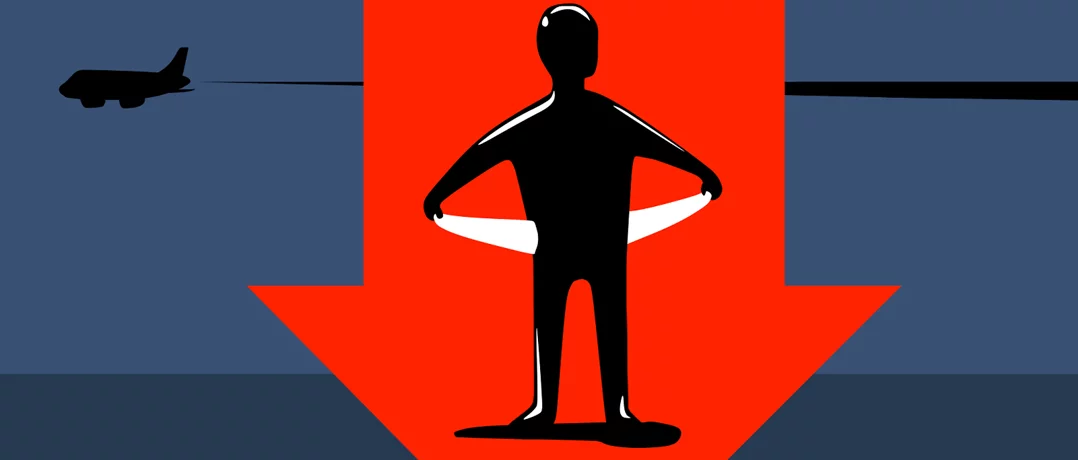
Illustration by Karim Dagher
Lebanon’s tourism sector failed to regain its momentum this summer, as hopes for a promising season collided with difficult security and economic realities that pushed tourism activity back into decline. Between the drop in the number of Lebanese expatriates arriving in Lebanon and reduced spending among residents, tourism businesses suffered direct losses affecting revenues and occupancy rates, with the hotel sector among the hardest hit.
The losses go beyond a missed tourism season. They extend to the sector’s ability to maintain its sustainability and role as one of the drivers of the Lebanese economy. Tourism is connected to a wide chain of activities and services, and any decline in visitor numbers or spending quickly affects hotels, restaurants, transportation, trade and other businesses linked to the tourism cycle. As security risks increased, stability became the decisive factor in travel decisions to Lebanon, placing the sector before a challenge that goes beyond weak demand and requires restoring confidence in the Lebanese destination.
In this context, President of the Federation of Tourism Syndicates in Lebanon and President of the Syndicate of Hotel Owners, Pierre Achkar, told Nidaa Al Watan that “the losses suffered by the tourism sector are significant,” noting that “the decline in revenues clearly reflects the scale of pressure facing tourism businesses this year.”
Achkar explains that “the losses in the tourism sector are significant, and this is evident by comparing institutions’ revenues with last year. Current revenues range between 50% and 65% of last year’s revenues. Some businesses are recording around 50%, others reach 60%, while the best-performing institutions do not exceed 65% of last year’s revenues.”
To illustrate the size of the gap, Achkar gives a numerical example, saying: “If we assume that a business generated $200 in revenue last year, today it is generating between $60 and $65.” According to Achkar, this decline reflects the contraction that affected tourism activity, as revenues fell to levels significantly below those recorded during the previous season.
30% of expatriates did not come
Achkar points out that “one of the main reasons behind the decline in tourism activity is the decrease in the number of Lebanese expatriates who represented a major part of tourism movement during the summer season.”
He says that “around 30% of Lebanese expatriates did not come to Lebanon,” considering that “the absence of this percentage directly affected various tourism businesses, especially hotels, which rely heavily on visitor activity during the season.”
The decline is not limited to the number of arrivals to Lebanon. Achkar highlights “another equally important factor: the decline in spending among Lebanese residents in the country due to reduced financial capacity and purchasing power.”
He explains: “The Lebanese person living in Lebanon has started to have fewer resources. Previously, a person would spend $100, but today they spend around $60.” Therefore, according to Achkar, the tourism sector “is facing a double decline: fewer visitors on one hand, and lower tourism spending on the other.”
Security changes the season’s calculations
Comparing the current season with the previous one, Achkar stresses that “the security situation last year was not stable, but current circumstances differ significantly in terms of the scale of escalation and its impact on decisions to travel to Lebanon.”
He says: “It is true that the security situation last year was unstable, but it was not like today. Last year there were not around one million displaced people from the south, and Beirut had not been subjected to bombardment.”
According to Achkar, “this security development had a direct impact on the decisions of Lebanese living abroad, as security conditions became a decisive factor in determining their travel destinations, even for Lebanese who were accustomed to spending the summer season in their homeland.”
He explains that “when homes were bombed, the decision to come to Lebanon during the peak tourism season became more difficult, which is why many cancelled their trips to Lebanon.” He stresses that “Lebanon’s security image plays a major role in attracting tourists and visitors, and any escalation quickly affects bookings and tourism activity.”
Hotels among the hardest hit
Achkar notes that “the hotel sector was among the tourism sectors most affected by developments in Lebanon, amid declining visitor numbers, reduced spending capacity, and the impact of security concerns on bookings and demand for hotel rooms.”
He confirms that “the hotel sector had been counting on a better summer season, but security developments prevented expectations from being achieved and forced businesses to face a weak season in terms of revenues and activity.”
The season is over…
In his final assessment of the tourism season, Achkar considers that “the opportunity has passed for the sector and the losses incurred during the season will be difficult to recover after it has ended,” saying: “The season is over, and what is gone is gone.”
This reflects the scale of difficulties faced by tourism businesses after revenues dropped significantly compared with last year, at a time when the sector had hoped the summer season would provide an opportunity to revive activity and compensate for part of the accumulated losses.
Stability is the condition for recovery
Achkar stresses at the end of his remarks that “tourism cannot flourish or regain its activity in the absence of stability,” considering that “security is the foundation upon which Lebanon’s tourism sector depends.”
He concludes: “We cannot live without stability, and war is tourism’s biggest enemy,” stressing that “any real recovery of the tourism sector remains linked above all to providing a stable and secure environment that allows visitors and tourists to decide to come to Lebanon with confidence.”
Figures and comparisons
Monthly data from Banque du Liban indicate that total tourism revenues in 2025 reached approximately $4.65 billion, compared with around $4.57 billion in 2024.
Notably, the number of visitors increased by around 45% in 2025, while tourism revenues rose by only 1.7%. This means that the problem in 2025 was not only the number of tourists, but also their level of spending. The return of expatriates and tourists significantly increased arrivals, but revenues remained almost at the same level as in 2024. This is also confirmed by recent analysis of the sector: revenues remained at similar levels despite the increase in arrivals, reflecting a decline in average visitor spending.
What do 2026 indicators show?
Caution is needed before providing an estimated annual revenue figure. The latest official Banque du Liban series for Travel Services extends until December 2025, and there is currently no complete annual figure for 2026.
However, available indicators up to July 2026 provide a clear picture of the difficulties faced by the season:
The number of passengers through Beirut Airport during the first seven months of 2026 reached around 2.75 million passengers, compared with 3.80 million passengers during the same period in 2025, representing a decline of 27.5%. The number of arrivals fell by 30.3% to around 1.44 million.
This makes 2026 fundamentally different from 2025: in 2025, visitor numbers recovered strongly, while in 2026 the tourism season suffered a new setback due to security developments.
The picture can be summarized as follows:
2023: Strong tourism year = $5.6 billion
2024: War affected the season = $4.57 billion
2025: Strong return of tourists, but spending did not increase = $4.65 billion
2026: New decline in travel activity, final figure not yet released
More importantly for the Lebanese economy, tourism revenues are not merely income for hotels and restaurants; they are a major source of foreign currency and help finance the trade deficit. Therefore, their decline directly affects the balance of payments and dollar liquidity.
As the tourism season comes to an end, the sector’s challenge appears more difficult than simply waiting for a better season next year. Recovering losses requires restoring confidence before restoring bookings, and creating a stable security environment that allows Lebanon to regain its position as a tourism destination. Continued tensions will keep tourism businesses under pressure from declining revenues and delay any real recovery until stability returns, a condition that remains essential for the sector to regain its strength.
