How White Friday in Amman is strengthening Lebanon-Jordan ties by bringing together designers, artisans, and entrepreneurs through a vibrant marketplace celebrating fashion, creativity, and cultural exchange.




How White Friday in Amman is strengthening Lebanon-Jordan ties by bringing together designers, artisans, and entrepreneurs through a vibrant marketplace celebrating fashion, creativity, and cultural exchange.

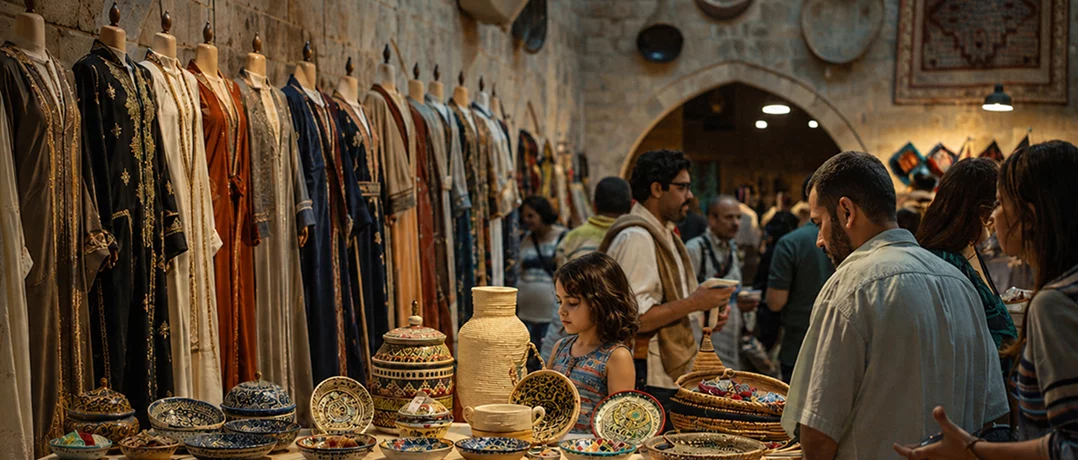
Lebanon and Jordan are connecting through fashion, art, and commerce through the simple exchange of creativity, and craftsmanship. Twice a year, in Amman, a market brings together Lebanese designers, Jordanian brands, and shoppers from across the region, transforming a retail event into a meeting point between two neighboring countries. Behind the racks of clothing, handmade jewelry, and locally crafted products lies a larger story: one of cultural familiarity, economic cooperation, and the enduring ties that continue to link Lebanon and Jordan beyond their borders.
The Beiruter spoke with co-founder Hala Kfoury Juma, a Lebanese businesswoman based in Amman, who created the concept with her Jordanian partner, Thuraya Husseini. This year marked another milestone: the first time the event expanded into a combined Summer Festival, run at a larger scale than any previous edition. For Hala, the fair is less about the discounts than the relationship it represents, one she has spent nearly a decade building between two countries she considers equally her own.
The inspiration for the idea began in Beirut, where Hala’s son and a friend were running something called the Black Friday Market. "It was very successful. Many brands participated. They would rent a large hangar, and brands would flock there. It became a huge hit," Hala told The Beiruter. Her son had a simple pitch for his mother: "Why don't you bring this idea to Jordan?"
Hala and Thuraya liked it enough to bring the original organizers to Amman to share their know-how, then reshaped the format for Jordanian shoppers and brands.
One early decision became, unintentionally, a small piece of branding history. The first edition landed during Ramadan, when Friday carries particular religious weight in Jordan. "We didn't want to call it 'Black Friday' because Friday during Ramadan is considered a special day in Jordan. So we named it White Friday instead," she explained. The name caught on well beyond their own event, "many businesses in Jordan later adopted the name 'White Friday' and started using it for their own discount campaigns," she notes, a sign of how deeply the concept took root.
Many editions later, the event now runs twice yearly, once before summer, once before winter. The product range, as Hala puts it, is "fashion, home accessories, creations, makeup, perfumes... The market views almost 2,000 people a day, Lebanese and Jordanian alike.
What Hala described is a curated meeting point for small brands and independent designers from both countries who would not otherwise have a shared stage. Lebanese participants get a chance to sell past-season inventory or debut new collections to a Jordanian audience that, by her account, is already primed to love what they bring. Jordanian brands, in turn, get exposure alongside them. The result is less a trade fair than a rotating showcase of two countries' craft and design scenes, set up booth by booth so visitors move between them almost without noticing where one country's offerings end and the other's begin.
"I'm 100% Lebanese. I grew up in Jordan during the Lebanese Civil War, so Jordan has always felt like my second home," Hala expressed. That personal history mirrors the fact that Jordan has long absorbed waves of Lebanese arrivals during periods of conflict, and today hosts a sizable, well-established Lebanese community. "Jordanians generally love the Lebanese," she says. "We have many Lebanese restaurants in Jordan, and anything Lebanese tends to become very popular. People love Lebanese products, Lebanese fashion, Lebanese beauty, even the way Lebanese people speak. They really admire Lebanon."
This, she noted, is part of a broader closeness between the two nations, who she said share similar cultural backgrounds within the wider Arab world. That goodwill, she believes, translates directly into how Lebanese vendors are received: Jordanian shoppers they actively look forward to them, eager to see what is new each season.
The timing of this cultural exchange is significant. "Especially during the war and the recent regional instability, events like this help stimulate economic activity. Lebanese participants come here, sell their products, and that benefits everyone." Jordanian shoppers and co-participating brands, in turn, get the added foot traffic and variety. As she summed it up: "It is truly supporting both countries at the same time."
Hala’s ambitions for White Friday go beyond simply attracting more Lebanese vendors, though that's a near-term goal. "I hope more Lebanese businesses learn about the event and join us," she said. “It is a beautiful way of introducing the two rich nations to each other.”
Almost a decade after its first edition, White Friday’s real impact lies in the connections built around it, between designers searching for new audiences, consumers discovering neighboring creativity, and two countries whose histories have always been intertwined.
The exhibition offers an exchange built through commerce, culture, and human relationships. Every Lebanese designer who finds a customer in Amman, and every Jordanian brand that gains a new audience through the event, adds another thread to the nations’ relationship.
The event is about continuing to create spaces where Lebanon and Jordan can meet, collaborate, and recognize the value they already share, from craftsmanship, entrepreneurship, and the belief that economic exchange can also be a form of connection.