



As Lebanon fought for independence in 1943, AUB and USJ approached the historic moment differently, reflecting contrasting views on French influence and the country's future.
Two universities, two visions of independence
Two universities, two visions of independence
By Natalie Durham | November 22, 2026

Reading time : 6 min
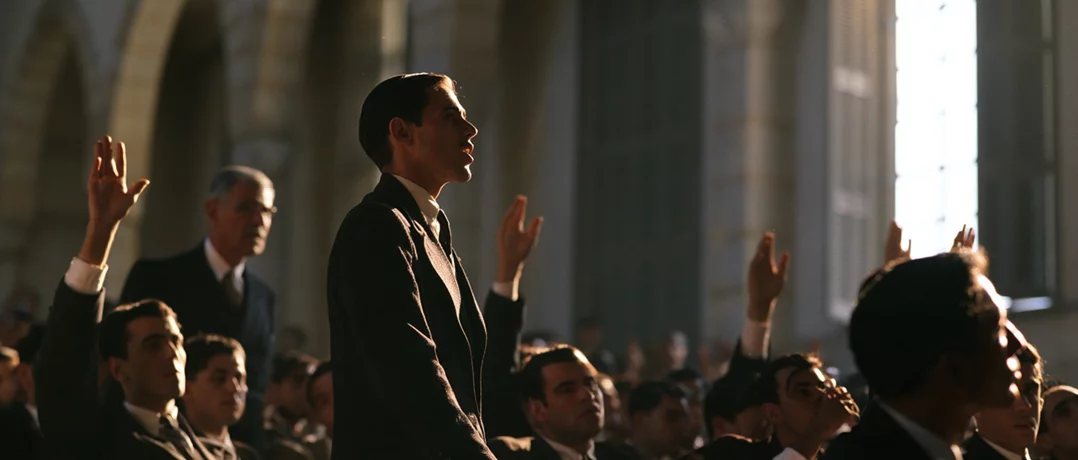
When Lebanon fought for independence in November 1943, the struggle was not confined to Parliament or government offices. It reached university campuses, where students were also becoming involved in the country's political future. At the American University of Beirut (AUB), students joined demonstrations against French rule. At Université Saint-Joseph (USJ), the situation was more complicated, shaped by the institution's close historical ties with France. Both universities witnessed the country's transition, but did they share the same vision of independence?
When students challenged French rule
Political discussions were already part of life at AUB before independence. During the late 1930s and early 1940s, students debated Lebanese independence, Arab nationalism and the future of the region. The university's archives describe a campus where political ideas were openly discussed, alongside growing student involvement in community service. By the time Lebanon's independence crisis erupted in November 1943, students were already familiar with the political questions facing their country.
On November 11, 1943, French authorities arrested President Bechara El Khoury, Prime Minister Riad El Solh and other Lebanese officials after Parliament voted to remove references to the French Mandate from the Constitution. Demonstrations spread across Lebanon, and AUB students were among those who joined the protests.

AUB students protesting in the streets. Source: Jaffet Library, AUB
The unrest also disrupted academic life. In his 1943-1944 annual report, AUB President Bayard Dodge recorded that nationalist leaders had called on merchants to close their shops and students to stay away from school. For more than a week, day students did not attend classes. Boarding students remained on campus, where the administration arranged films, sports and meetings. Academic life resumed after the Lebanese leaders were released on November 22.
Dodge reflected on the university's wider responsibility during a period of growing nationalism. He described AUB as a small League of Nations, bringing together students from across the Arab world and neighboring countries. He believed the university should teach students how their countries could govern themselves while maintaining cooperation with others. For Dodge, education also meant encouraging young people to turn their national pride into public service and contribute to their societies.
The students' involvement was not forgotten after independence. On November 21, 1945, the Lebanese government awarded AUB students the Medal of National Struggle in recognition of their support for the independence cause.

Medal of National Struggle in recognition of AUB students’ support for the independence cause. Source: Jaffet Library, AUB
However, historian Christian Taoutel, Head of the Department of History and International Relations and Curator of the Archives at USJ, draws a distinction between student participation and institutional involvement. He told The Beiruter that students from both universities joined the demonstrations as individuals, not necessarily as representatives of their institutions.
"Students went out to demonstrate in their own names, not in the name of the university," he said, describing the protests as part of a wider popular movement.
Taoutel also pointed out that much of the student participation came from secondary schools rather than universities. According to him, many demonstrators were between 15 and 17 years old, particularly from schools in predominantly Muslim neighborhoods of West Beirut, where opposition to continued French influence was especially strong.
As for AUB, Taoutel believes its administration was more receptive to independence than USJ's.
"AUB was moving more toward independence than USJ," he said, explaining that weakening French influence aligned with American geopolitical interests and with the political views of a significant part of AUB's Arab student community.
He argued that the American and French universities had different relationships with their respective countries of influence, which affected how their leadership approached Lebanon's political transition.
USJ and the foundations of an independent state
At USJ, the story was different. Founded in 1875, the university maintained strong academic and cultural connections with France. Its Faculty of Law, established in 1913 through cooperation with the University of Lyon, played an important role in developing legal education in Lebanon. Its graduates included figures who contributed to the country's constitutional development.
According to Taoutel, USJ's close connection with France strongly influenced its response to the independence movement. The institution's senior leadership included French Jesuits, while a significant part of its teaching staff and student community maintained strong French cultural and educational ties.
He explained that many within USJ's administration and student population were sympathetic to former President Émile Eddé, who favored maintaining close relations with France rather than ending French involvement entirely.
Eddé's approach differed from that of Bechara El Khoury and Riad El Solh. While the latter pursued independence through a political understanding between Muslim and Christian leaders, Eddé favored an agreement that would preserve a French military presence in Lebanon. According to Taoutel, Eddé considered such an arrangement an important safeguard for the country's Christian communities.
"The administration supported independence, but they were afraid of how that independence would be managed," Taoutel explained.
He stressed that USJ's leadership was not opposed to Lebanese sovereignty. Rather, it was concerned about the conditions under which the country would become independent and whether Lebanon could manage without continued French assistance.
"They wanted independence, but with France remaining present in some way, protecting and supporting us culturally and economically," he said.
Despite the differences between AUB and USJ, Taoutel emphasized the importance of distinguishing between students' individual political views and the positions of their universities. Students had their own opinions and could participate in demonstrations independently of their university's administration.
"We cannot say that the universities sent their students to demonstrate," he explained. "There were university students who went into the streets, certainly students from AUB and USJ, but they participated as individuals."
The other side of independence
The role of AUB and USJ in 1943 shows how Lebanon's independence was experienced differently across the country. While students joined demonstrations demanding an end to French rule, the universities had their own concerns about the political changes taking place. Their different positions reflected a wider debate in Lebanon over its relationship with France and what the country's future should look like.
But Taoutel believes the story of independence goes beyond November 22. He points to 1920, when Greater Lebanon was established, and 1946, when the last French troops left the country, as equally important dates. In his view, November 22, 1943, became a national symbol, but it did not mark the complete end of French presence in Lebanon.
The two universities also show that independence did not mean the same thing to everyone. While AUB was more welcoming of the end of French influence, USJ was concerned about what would happen once France was no longer there to support Lebanon. Students took to the streets, but the institutions themselves had different views of the country's future.
Both universities witnessed the same historic moment, yet they approached it differently. And behind the celebrations of November 22 lies a question that remains relevant today: What did independence really mean for Lebanon, and was the country ready for what came next?
-
-

-
Natalie DurhamResearcher/Writer
Junior research writer focusing on politics, public policy and international affairs.
-
