



With UNIFIL’s withdrawal approaching, attention is turning to UNTSO, a long-standing UN observer mission in Lebanon that could take on a larger role in monitoring the southern border.
UNTSO: The UN observer mission that could succeed UNIFIL
UNTSO: The UN observer mission that could succeed UNIFIL
By Natalie Durham | October 29, 2026

Reading time : 5 min
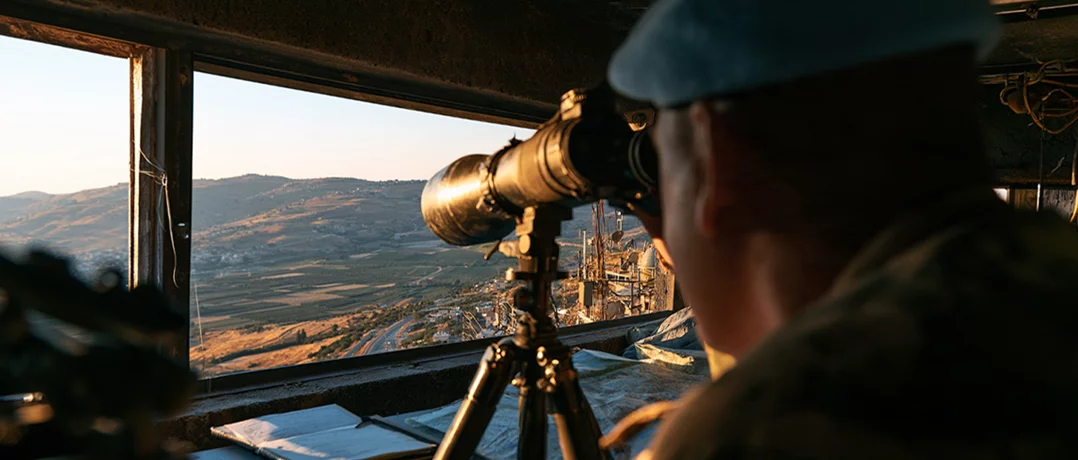
The United Nations Truce Supervision Organization (UNTSO) has been present in Lebanon for more than seven decades, but it has mostly stayed in the background of international peacekeeping in the South.
UNTSO already works in southern Lebanon through its Observer Group Lebanon (OGL). It uses unarmed military observers to follow developments on the ground, record violations and keep in contact with the parties involved.
But what exactly is UNTSO, what role does it play in Lebanon, and how does it differ from UNIFIL?
UNTSO's potential role in southern Lebanon
UNIFIL is set to end its operations on December 31, 2026, and talks are now underway on the future of the UN's presence in southern Lebanon. One option on the table is strengthening the role UNTSO already plays.
During discussions on possible alternatives to UNIFIL, back in October, UN Under-Secretary-General for Peace Operations Jean-Pierre Lacroix put forward the idea of a UN force working under the UNTSO umbrella. Under this proposal, the UN would rely on an organization that is already in Lebanon instead of setting up a completely new mission.
The talks come as the UN prepares to implement Security Council Resolution 2790, adopted in August 2025. The resolution provides for UNIFIL to stop operating at the end of 2026 and to start withdrawing its personnel over the following year.
The resolution also asked the UN Secretary-General to look into ways of keeping the Blue Line monitored and continuing support for the Lebanese Armed Forces (LAF) after UNIFIL withdraws.
Because UNTSO has its own UN mandate, it can keep operating in Lebanon independently of UNIFIL. Taking on additional responsibilities, however, would require further decisions and operational arrangements.
What is UNTSO, and what does it do in Lebanon?
The United Nations Truce Supervision Organization (UNTSO) was set up on May 29, 1948, after the Security Council adopted Resolution 50. The resolution called for an end to hostilities in Palestine and authorized military observers to supervise the truce.
It was the United Nations' first peacekeeping operation, created three decades before UNIFIL.
UNTSO works differently from conventional peacekeeping forces. Its unarmed military observers monitor ceasefires, oversee armistice agreements, record violations and help keep tensions from turning into wider confrontations.
UNTSO's headquarters is in Jerusalem. It also has liaison offices in Beirut, Cairo and Damascus, along with liaison arrangements covering Israel and Jordan.
UNTSO has reported 159 military personnel from 27 countries. Its observers are experienced military officers who work in multinational teams. To keep the work impartial, each observation is confirmed by at least two officers from different countries.
The organization provides observers to two missions: Observer Group Lebanon (OGL), which supports UNIFIL, and Observer Group Golan (OGG), which supports the United Nations Disengagement Observer Force (UNDOF).
OGL has been working in Lebanon since 1949. When UNIFIL was established in 1978, UNTSO observers were assigned to work with the new peacekeeping force.
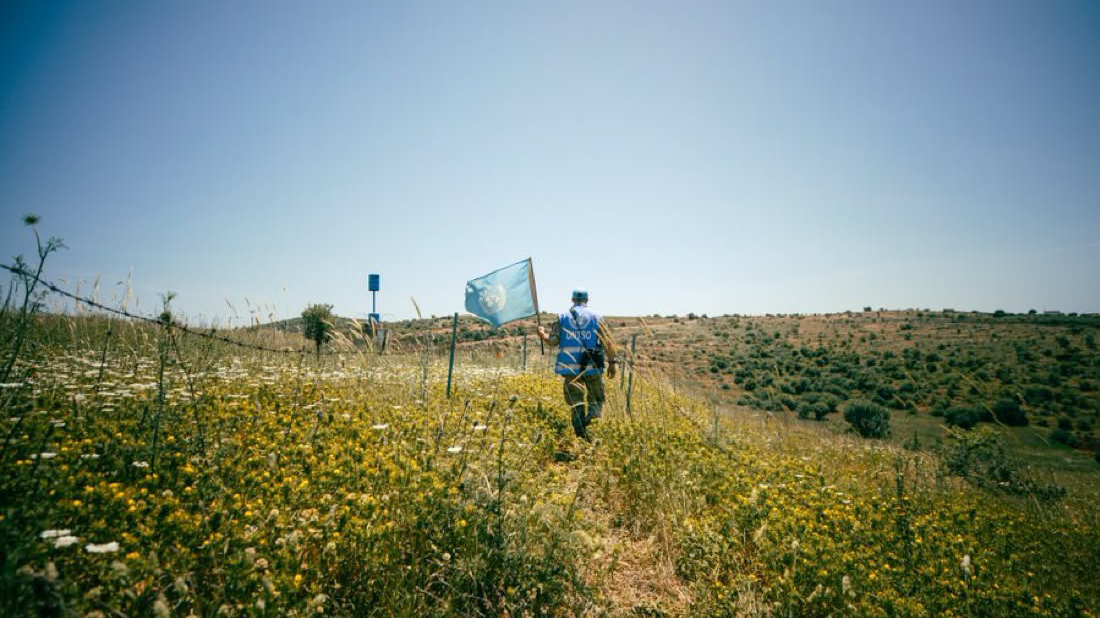
Today, OGL's unarmed military observers patrol villages and the Blue Line, keep track of developments and report what they see. They are also responsible for staying in touch with local communities and officials. OGL has more than 30 military observers supporting UNIFIL's mandate.
Their work went on after the cessation-of-hostilities agreement of November 27, 2024. In January 2025, UNTSO announced that OGL had resumed operations at Patrol Base West in southern Lebanon, after security assessments and coordination with UNIFIL.
UNTSO also keeps in contact with Lebanese authorities. In May 2025, Defense Minister Michel Menassa met UNTSO Chief Major General Patrick Gauchat and the head of its Beirut liaison office to discuss the organization's monitoring responsibilities and its coordination with UNIFIL.
 An unarmed military observer from Observer Group Lebanon (OGL), part of the United Nations Truce Supervision Organization (UNTSO), monitoring the area along the Blue Line in southern Lebanon, supporting UNIFIL by observing and reporting incidents and violations of UN Security Council Resolution 1701. Source: UNIFIL
How would UNTSO differ from UNIFIL?
The main differences between the two missions lie in their mandates, their personnel and what they are equipped to do on the ground.
UNIFIL was established in March 1978 under Security Council Resolutions 425 and 426. Its task was to confirm Israel's withdrawal from Lebanon, restore international peace and security, and help the Lebanese government re-establish its authority in the South.
After the 2006 war, Resolution 1701 widened its responsibilities to include monitoring the cessation of hostilities, accompanying and supporting the Lebanese Armed Forces (LAF), and helping with humanitarian access and the safe return of displaced civilians.
While UNTSO's observers are unarmed, UNIFIL deploys armed peacekeepers and has a much larger military and logistical structure.
Resolution 1701 also authorizes UNIFIL, within its capabilities and area of deployment, to take necessary action to protect UN personnel and civilians under imminent threat, to resist attempts
to stop it from carrying out its mandate, and to make sure its area is not used for hostile activities.
UNTSO's current mandate, by contrast, covers observation, reporting, liaison and ceasefire supervision, without the broader security responsibilities given to UNIFIL.
As UNIFIL's withdrawal draws closer, attention has turned to whether UNTSO could take over some of its responsibilities in southern Lebanon. Strengthening its presence could mean deploying more observers and expanding monitoring along the Blue Line.The Lebanese Army would remain responsible for security on the ground, and UNTSO would keep providing an international monitoring presence.
-
-

-
Natalie DurhamResearcher/Writer
Junior research writer focusing on politics, public policy and international affairs.
-
