



Lebanon’s revised waste fee cuts the number of taxed imports after strong opposition, as the government looks for a new way to finance a costly waste system without putting too much pressure on consumers and businesses.
What changes with Lebanon’s revised waste fee?
What changes with Lebanon’s revised waste fee?
By Natalie Durham | August 18, 2026

Reading time: 5 min
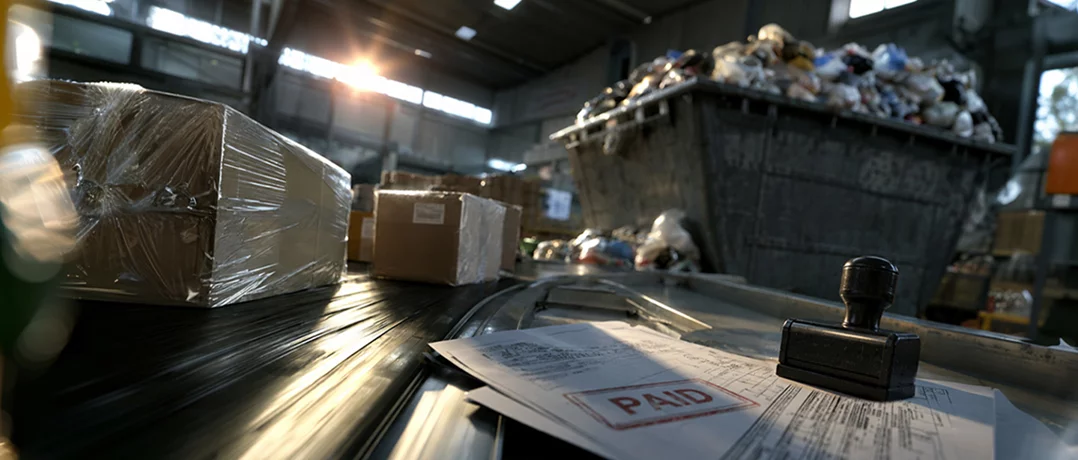
Lebanon’s controversial environmental fee is back, but not in the form first proposed. On August 13, 2026, Cabinet approved an amended version of Decree No. 3214, which imposes fees on imported products that eventually become waste. The original decree, approved in June and suspended after strong opposition, covered 98 customs categories. After weeks of objections and negotiations, the government removed around 75% of them, leaving only 26 categories subject to the fee.
How Lebanon planned to charge for waste
The fee comes from Law No. 38 of January 5, 2026, which amended the country’s 2018 solid-waste law. It follows the “polluter pays” principle, meaning products that eventually generate waste should contribute to the cost of dealing with it. The charge is collected by Lebanese Customs from importers when goods enter the country, rather than being imposed as a separate bill directly on households.
The problem was that the first version went much further than many expected. It replaced rates of roughly 0.1-0.5% with fees ranging from 1% to 3% across 98 categories, including food, fuel and goods used by Lebanese factories. Political parties, unions, businesses and civil society groups warned that the measure could raise prices at a time when purchasing power was already under pressure. Cabinet therefore suspended the decree on June 29 and sent it back for review.
What was exempted, and what still gets taxed
The exemptions are significant. The revised system removes fees from major food products, meat, fish, dairy products, vegetables, fruit, grains, sugar, pharmaceutical products, fuel and many raw materials used in Lebanese agriculture and industry. The goal was to prevent the environmental fee from increasing the cost of basic consumption or making Lebanese production more expensive. Fuel was also removed after the Ministry of Energy warned that the fee was limiting reductions in fuel prices and requested that petroleum products be exempted.
The revised decree now applies to just 26 categories, including alcoholic beverages, tobacco, perfumes, cars, watches, leather and fur products, with different fee rates depending on the product. By keeping higher rates on a smaller group of goods, the government is trying to recover some of the revenue lost after most products were removed from the original list.
Lebanon’s waste financing problem
The central problem is money. For years, the sector has depended heavily on public financing and the Independent Municipal Fund. Finance Minister Yassine Jaber has said that temporary financing arrangements cannot continue indefinitely and that a more permanent mechanism is needed.
That could benefit municipalities and the wider waste-management system if the revenue is actually used for collection, sorting, treatment and disposal. Citizens could also benefit from a more reliable waste system. But importers of the remaining taxed products are directly affected, and consumers could ultimately carry part of the cost if businesses pass the new fees into retail prices.
However, Lebanon’s waste problem is not only financial. The Environment Ministry estimates that the country currently produces around 6,300 tons of municipal waste every day, while less than 10% is treated. Around 3,200 tons a day already go to sanitary landfills operating beyond their original capacity, while another 2,300-2,400 tons are disposed of in open dumps. More than 1,000 uncontrolled dumpsites are estimated across the country.
The pressure is also immediate. Jaber warned in July that Lebanon was approaching a critical point within three to four months, as existing waste-management contracts were nearing their end. He said the Independent Municipal Fund already suffers from a major deficit and owes the Treasury hundreds of millions of dollars. Jaber also acknowledged that the original decree had not been sufficiently studied and covered too many products, helping explain why the government was forced to rewrite it.
The Opposition that forced a rewrite
When Cabinet approved it, the ministers of health, labor, telecommunications and industry objected. The General Labor Union had earlier called for Decree 3214 to be cancelled, while Charles Arbid, president of Lebanon’s Economic, Social and Environmental Council, welcomed the government’s decision to suspend it, saying the move took into account the country’s difficult economic and social conditions, particularly the situation of vulnerable groups.
MP Farid Boustani, chairman of Parliament’s Economy Committee, also pushed for a different approach. He warned that additional taxes and fees could slow economic recovery, increase inflation and weaken purchasing power. He argued that the state should instead improve collection, fight tax and customs evasion and reduce waste in public spending.
The revised decree excludes most basic goods and productive inputs from the fee. The key question now is whether the money collected will actually be used to improve waste collection, sorting, recycling and treatment.
-
-

-
Natalie DurhamResearcher/Writer
Junior research writer focusing on politics, public policy and international affairs.
-
