



Lebanon’s Warwar juvenile center is under scrutiny after an inspection found problems with healthcare, hygiene, staffing and rehabilitation, raising questions over who is responsible for conditions inside the facility.
What is happening inside Lebanon’s juvenile center?
What is happening inside Lebanon’s juvenile center?
By Nathalie Durham | October 08, 2026

Reading time : 4 min
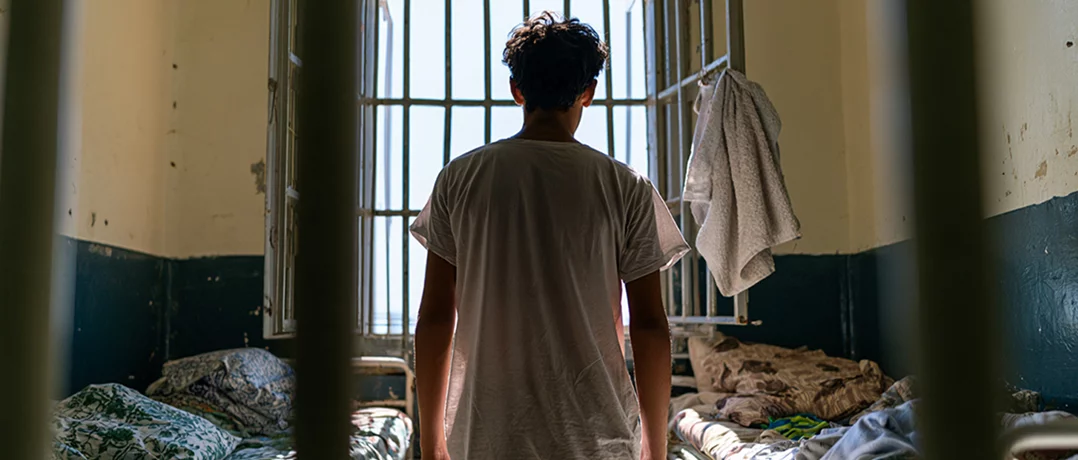
Lebanon’s rehabilitation center for boys in conflict with the law is facing renewed scrutiny after a September inspection by the National Human Rights Commission (NHRC) found problems involving healthcare, hygiene, staffing, security and access to rehabilitation programs.
The Warwar center opened in May 2025 to move juveniles out of Roumieh prison and provide them with rehabilitation, education and psychosocial support. It was established through cooperation between Lebanese authorities, the European Union (EU) and the United Nations Office on Drugs and Crime (UNODC), with a capacity of around 100 boys.
Today, however, the question is not only what conditions exist inside Warwar, but also which authority is responsible for fixing them.
Who is responsible inside Warwar?
Judge Raja Abi Nader, head of the Prisons Directorate at the Ministry of Justice and Beirut juvenile judge, told The Beiruter that responsibility for the center is divided between different authorities.
According to Abi Nader, the Ministry of Justice is responsible for the rehabilitation side and works with organizations contracted to provide programs to juveniles.
“The Ministry of Justice is doing what it is responsible for” Abi Nader said. He explained that the ministry is working with UNICEF on healthcare-related matters and that organizations providing rehabilitation programs operate under the supervision of the Ministry of Justice.
The difficulty, he said, appears when these organizations cannot enter the center regularly because there are not enough security personnel available to operate the facility and supervise activities.
“If the organizations are only able to enter two or three days a week instead of every day because the number of personnel is insufficient to operate the center and allow rehabilitation programs every day, then this falls under the Ministry of Interior and the Internal Security Forces,” Abi Nader said.
He explained that “the management of the center, in terms of security, organizing the work inside it, health, food, drinking water and medical care, falls under the authority of the Internal Security Forces”.
The staffing problem was also documented during the NHRC’s unannounced visit on September 17. The commission said the center’s director reported a serious shortage of personnel. During the visit, the commission observed one officer responsible for guarding three residential wings spread across two floors and accommodating 148 juveniles.
From a new center to 148 juveniles
When Warwar opened in 2025, the United Nations Office on Drugs and Crime described it as a facility designed for around 100 juveniles. It was intended to permanently separate boys from adult prisoners and give them access to social services, psychological support, life-skills activities and rehabilitation programs.
By September 2026, the National Human Rights Commission reported that 148 juveniles were being held at the center. Its inspection found shortages of water in several sanitary facilities, maintenance problems, inadequate hygiene conditions and irregular access to medication. The commission also found that the center did not have a full-time doctor or nurse regularly stationed there.
The commission also said rehabilitation and educational activities were limited. At the time of the visit, activities included two literacy groups, one carpentry group and one barbering group, with around eight juveniles participating in each.
The report further raised concerns over the use and conditions of isolation rooms and recorded allegations of mistreatment that the commission said required an independent investigation. It called for the immediate end of disciplinary isolation and for stronger safeguards for children held at the facility.
The Commission is waiting for answers
Following the visit, the National Human Rights Commission contacted the authorities responsible for different parts of the juvenile detention system.
Dr. Fadi Gerges, president of the National Human Rights Commission, told The Beiruter that the commission sent 8 official correspondences following its findings.
“We sent letters to the Minister of Justice, the Minister of Interior, Major General Abdallah, the Ministry of Social Affairs, the Ministry of Education and Higher Education, and the Ministry of Public Health” Gerges said.
According to him, “the security authorities called us back and said they were conducting an investigation concerning the mistreatment,”. However, “the Ministry of Education did not answer, the Ministry of Health did not answer, and the Ministry of Justice did not answer.”
Gerges explained that under the commission’s procedures, the authorities have 15 days to respond. The commission intends to follow up once that period expires.
“When the 15 days are over, we will make another visit and see what has changed,” he said.
Warwar was created to move juveniles away from an adult prison environment and place rehabilitation at the center of their detention. More than a year after its opening, the coming weeks and the commission’s next inspection will show whether the responsible authorities have acted on the findings and whether conditions inside the center have improved.
-
-

-
Nathalie DurhamResearcher/Writer
Junior research writer focusing on politics, public policy and international affairs.
-
