



Two years after the ceasefire agreement, Lebanon’s struggle to assert state authority over Hezbollah’s military decisions raises questions about sovereignty, accountability and the limits of political power. A first in a series of contemporary retrospectives tracing Lebanon's present backwards.
Who could keep Lebanon out of war?

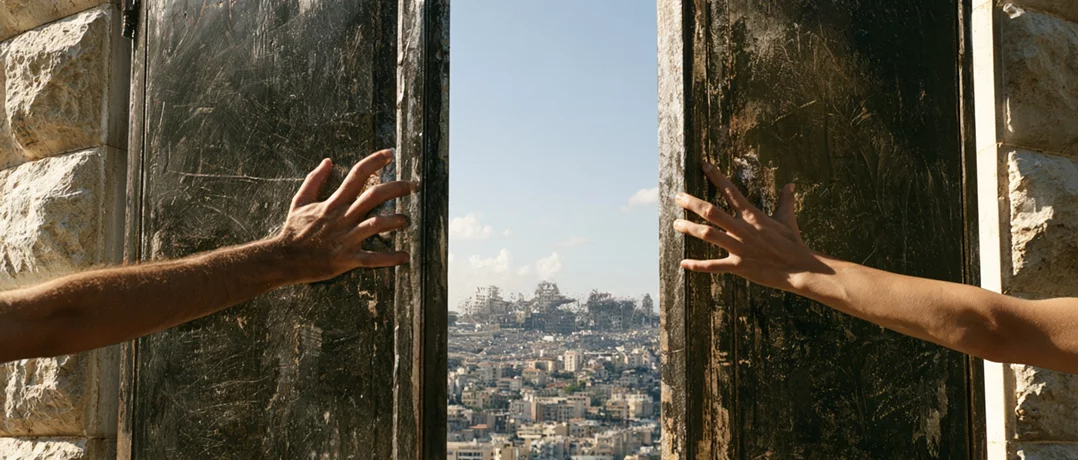
November 27 marks two years since the Lebanese government promised to prevent Hezbollah from attacking Israel. Israel undertook to stop offensive operations against Lebanon. They even agreed on the hour the ceasefire would begin. Four in the morning. If I could put one question to the Lebanese officials who accepted those terms, it would be this. What did they believe they could do on the night Hezbollah decided otherwise?
That night came in March. After the United States and Israel attacked Iran and killed its supreme leader, Ali Khamenei, Hezbollah fired on Israel. The party said it was avenging Khamenei and defending Lebanon. Israel launched heavy strikes, and roads filled with people fleeing areas that had been bombarded in 2024. On March 2, Lebanon’s cabinet prohibited Hezbollah’s military and security activities. After the meeting, Mohammad Haidar, a minister affiliated with Hezbollah, explained that his side had objected to the decision and would stay in government.
Haidar was entitled to object. He knew which room to enter, who had made the proposal and how to put his party’s disagreement on the record. Now consider the same arrangement from Prime Minister Nawaf Salam’s chair. When Hezbollah decided to fire, in which meeting could he register his objection? By the time he had a cabinet decision in hand, people were already on the road.
There had been reasons to expect better. In January 2026, the Lebanese army reported that it had achieved the objectives of its first phase of deployment and weapons control south of the Litani. Read the statement closely and you can see where a soldier’s responsibilities ended. The army described progress on land under its authority, explicitly excluded positions still occupied by Israel and acknowledged that work on tunnels continued. A soldier could answer for the ground his unit held. Who could answer for the commitment Hezbollah believed it owed Iran?
Someone in a village still within reach of Israeli fire could reasonably ask what use exclusive state control would have been if Israel carried on striking anyway. Israeli attacks continued during the ceasefire. No government in Beirut could guarantee what an Israeli pilot would be ordered to do the next morning. It could, however, insist on deciding what Lebanon would do about it. That distinction matters most to the people who stand to lose their homes whichever side fires first.
The cabinet had instructed the army to draw up its plan in August 2025. Ministers could give that order, summon the commander and ask him how far his troops had got. The harder question was who could give Hezbollah an order it felt bound to obey. Earlier that year, events in Beirut had given the Lebanese some reason to think the answer was changing.
The new government itself was evidence that something had changed. In January 2025, 84 of Lebanon’s 128 MPs backed Nawaf Salam for prime minister. Hezbollah had wanted Najib Mikati to stay. In the preceding months, Israel had killed Hezbollah’s leader, Hassan Nasrallah, and Syrian rebels had toppled Bashar al-Assad. Nasrallah’s successor, Naim Qassem, acknowledged that Hezbollah had lost its military supply route through Syria. In Beirut, MPs had room to make a choice that Hezbollah opposed, and enough of them took it.
It was reasonable to read Salam’s appointment as a measure of how much power Hezbollah had lost. What it measured quite well was the party’s ability to get its preferred prime minister. In a parliamentary consultation, Hezbollah needed other people’s votes. To open a front, it needed enough of its own men to follow an order. A weakened party could lose the first contest by a wide margin and retain everything it needed for the second.
Consider what the decision had looked like a year earlier. By the time Lebanon accepted a ceasefire in November 2024, the war in Gaza was still going on. So the two fronts could be separated. Who had decided to join them in the first place? On October 8, 2023, the day after Hamas attacked Israel, Hezbollah fired on Israeli positions in the occupied Shebaa Farms in declared solidarity with the Palestinians. A Lebanese citizen could share that solidarity and still want a say in whether to open a front from her own country. What provision had anyone made for her answer to be no?
We know something about the range of views in the south because, in May 2022, people there had been asked to vote. In the constituency that includes Nabatieh and Bint Jbeil, the Hezbollah-Amal list won nine of eleven seats. Two opposition candidates, Firas Hamdan and Elias Jaradeh, won the others. Anyone tempted to declare that the south had turned against Hezbollah should try explaining those nine. Anyone who claims the party speaks for the south owes an explanation for the other two. And even the nine can tell us only so much. What exactly had a vote cast in May 2022 authorised anyone to do the morning after October 7, 2023?
Think back to what a voter had lived through by the time of that election. The Beirut port explosion had left families demanding to know who had known of the danger and what they had done about it. The banking collapse had already taught depositors how hard it was to get an answer about their own savings. A citizen who voted against an incumbent had ample grounds to do so before anyone mentioned weapons. To read those ballots backwards through the war is to forget what people were asking of their country while they still had reason to believe it might answer.
On the evening of October 28, 2019, Prime Minister Saad Hariri received Hussein Khalil, a political adviser to Nasrallah, at his home in Beirut. Reuters later reconstructed the meeting from interviews with four senior sources. Khalil believed the protests that had begun on October 17 were running out of steam. He urged the prime minister to hold on. Hariri had concluded that he could offer the people in the streets at least part of what they wanted. The next day he resigned.
Khalil and Hariri were watching the same protests. What divided them was their estimate of how long people would keep showing up. For one evening, men accustomed to deciding the future of the Lebanese had to sit in a room and try to guess what the Lebanese would do in the morning. On October 29, anyone celebrating in the streets had earned the right to enjoy that reversal. They had just shown who could bring down a Lebanese prime minister. Who would get to choose the next one?
-
-

-
Dr. Ramzi Abou IsmailWriterPolitical psychologist and commentator on politics, identity, and conflict.
-
