



Why Lebanon needs a National Sorry Day

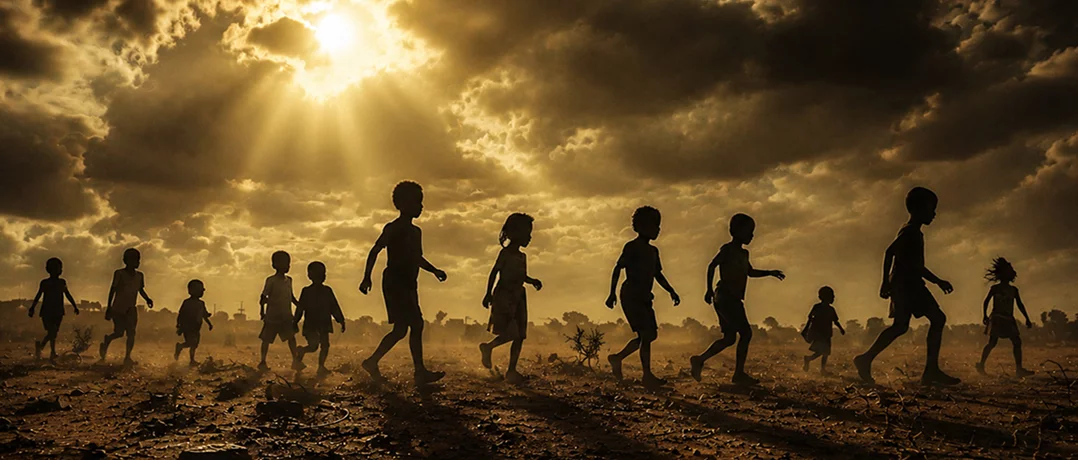
Every nation carries wounds it would rather forget. Australia’s is etched into the living memory of its First Peoples: the systematic, state-sanctioned removal of Indigenous children from their families, a policy that spanned decades and left behind generations severed from language, identity, and belonging. National Sorry Day exists because, for much of Australia’s modern history, that wound was denied or ignored. It is a day of reckoning, a moment when a country confronts what was done in its name and refuses to look away.
Lebanon understands this dynamic in its own way. Decades of war, political violence, foreign intervention, and unresolved national trauma have left deep scars across Lebanese society, many of them never formally acknowledged by the state. From the civil war and the disappearance of thousands to successive regional conflicts fought on Lebanese soil, ordinary citizens have repeatedly borne the consequences of decisions made beyond their control. Like Australia’s reckoning with the Stolen Generations, Lebanon continues to grapple with questions of accountability, collective memory, and the human cost of a political system that has often prioritized survival over truth.
The question National Sorry Day ultimately poses is one Lebanon has yet to answer fully: what does acknowledgment mean when those responsible have never been held accountable, and when the wound itself remains open?
Australia’s reckoning
From the late nineteenth century until the 1970s, Australian federal and state authorities implemented policies of forced assimilation targeting Aboriginal and Torres Strait Islander children. Officials openly framed the policy as an effort to “breed out” Indigenous identity by absorbing Indigenous communities into white Australian society. Children, many of mixed descent, were removed from their families, placed in church missions or government institutions, forbidden from speaking their native languages, stripped of their names, and often subjected to harsh or abusive conditions.
These children became known as the Stolen Generations. Historians estimate that between 10 and 33 percent of Indigenous children were forcibly removed during this period. In 1997, the Human Rights and Equal Opportunity Commission presented the landmark Bringing Them Home report to Parliament after gathering testimony from survivors and communities nationwide. The inquiry concluded unequivocally that the removals constituted a grave violation of human rights and that Australia owed Indigenous peoples both an apology and meaningful redress.
The report was tabled on May 26, 1997. One year later, the first National Sorry Day was commemorated across Australia, with hundreds of thousands signing “Sorry Books” to express remorse for policies carried out in the name of the state.
On February 13, 2008, Prime Minister Kevin Rudd delivered the National Apology to the Stolen Generations before Parliament. “We apologize for the laws and policies of successive Parliaments and governments,” he declared, “that have inflicted profound grief, suffering and loss on these our fellow Australians.”
What a Lebanese “Sorry Day” could mean
Lebanon’s trauma has not been singular. It has unfolded in layers, with each national crisis arriving before the previous one had healed.
The Lebanese Civil War, which lasted from 1975 to 1990, killed more than 150,000 people and left approximately 17,000 missing or forcibly disappeared. Militias from multiple factions abducted civilians from homes, streets, and checkpoints. Yet when the war ended, Lebanon did not establish a truth commission or launch a comprehensive national inquiry. Instead, Parliament passed the 1991 General Amnesty Law, effectively erasing accountability for crimes including murder, torture, enforced disappearance, and sexual violence. Many wartime militia leaders later entered political office and continue to shape the country’s political system today.
In 1995, the disappeared were declared legally dead, not because their fates had been established, but because the state chose administrative closure over national investigation.
The post-war era brought further cycles of conflict. Israeli military campaigns in 1996, 2006, and again between 2023 and 2024 inflicted widespread destruction. The most recent war killed more than 4,000 people, displaced over 1.2 million, and damaged or destroyed more than 10,000 homes across southern Lebanon.
Underlying these wars, however, is a question increasingly voiced within Lebanese civil society: who made the decisions that repeatedly turned Lebanon into a battlefield? Who committed Lebanese territory, civilians, and national interests to regional conflicts in which ordinary citizens had no meaningful say, yet carried the full burden of the consequences?
That debate inevitably extends beyond the legacy of the civil war itself. For years, many Lebanese have argued that decisions of war and peace were often made outside the framework of the Lebanese state, leaving civilians to absorb the political, economic, and human consequences of conflicts they neither initiated nor controlled. The issue is not merely military. It is fundamentally about sovereignty, accountability, and the right of citizens to determine the future of their own country through state institutions rather than parallel power structures.
A Lebanese “Sorry Day” would not necessarily impose collective guilt. Rather, it would demand a shared national acknowledgment of truth, a public reckoning capable of laying the groundwork for accountability, justice, and institutional reform.
Such an act would be politically radical in Lebanon precisely because the country’s sectarian system has long depended on selective memory and managed amnesia. Each community preserves its own narrative, mourns its own victims, and rarely confronts the suffering of others within a unified national framework. A formal day of acknowledgment would challenge that structure by insisting on a common historical record: an agreed account of what occurred, who suffered, who made the decisions, and at what cost.
Between memory and silence
Australia’s National Sorry Day emerged first from survivors, activists, and civil society before governments eventually followed. Lebanon, too, has survivors and civic movements demanding accountability. What it has lacked is a political establishment willing to absorb the discomfort that genuine honesty requires.
The question, ultimately, is not whether Lebanon deserves such a day. It is whether a country that has spent decades managing its wounds instead of healing them can finally confront its past honestly, and say so publicly.
-
-

-
Jenna GeageaReporter/Writer
-
