


Lebanon’s worsening alcohol crisis reflects a global health burden intensified by economic collapse, repeated trauma, mental health struggles and limited access to addiction treatment.
Alcohol and Lebanon’s crisis of coping

Alcohol remains a major and often overlooked cause of death worldwide, its consequences unfolding across hospital wards, road accidents and families living with the long-term effects of addiction and disease. According to the World Health Organization's Global Status Report on Alcohol and Health, alcohol consumption is responsible for millions of deaths annually, and roughly 400 million people aged 15 and older worldwide live with an alcohol use disorder. Lebanon, has become an increasingly instructive, and increasingly worrying, case study within that global picture, particularly as collapse, instability, and a strikingly permissive regulatory environment reshape how, and how freely, its population drinks.
According to WHO data, Lebanese adults consumed an average of 1.99 liters of pure alcohol per person in 2024, the same level recorded in 2023. That figure has actually declined slightly since 2000, dropping roughly 1.015 times over the period, with consumption peaking in 2010 at 2.27 liters per capita. But aggregate consumption tells only part of the story: a February 2025 study by the American University of Beirut, "Exploring the Triad: Mental Health, Substance Use, and Injury Occurrences among Young Adults in Lebanon," examined 401 young Lebanese adults and found that 16 percent exhibited potential substance use disorders involving alcohol and/or drugs, findings that underscored a tight, troubling intersection between substance use, mental health, and injury risk among the country's younger population.
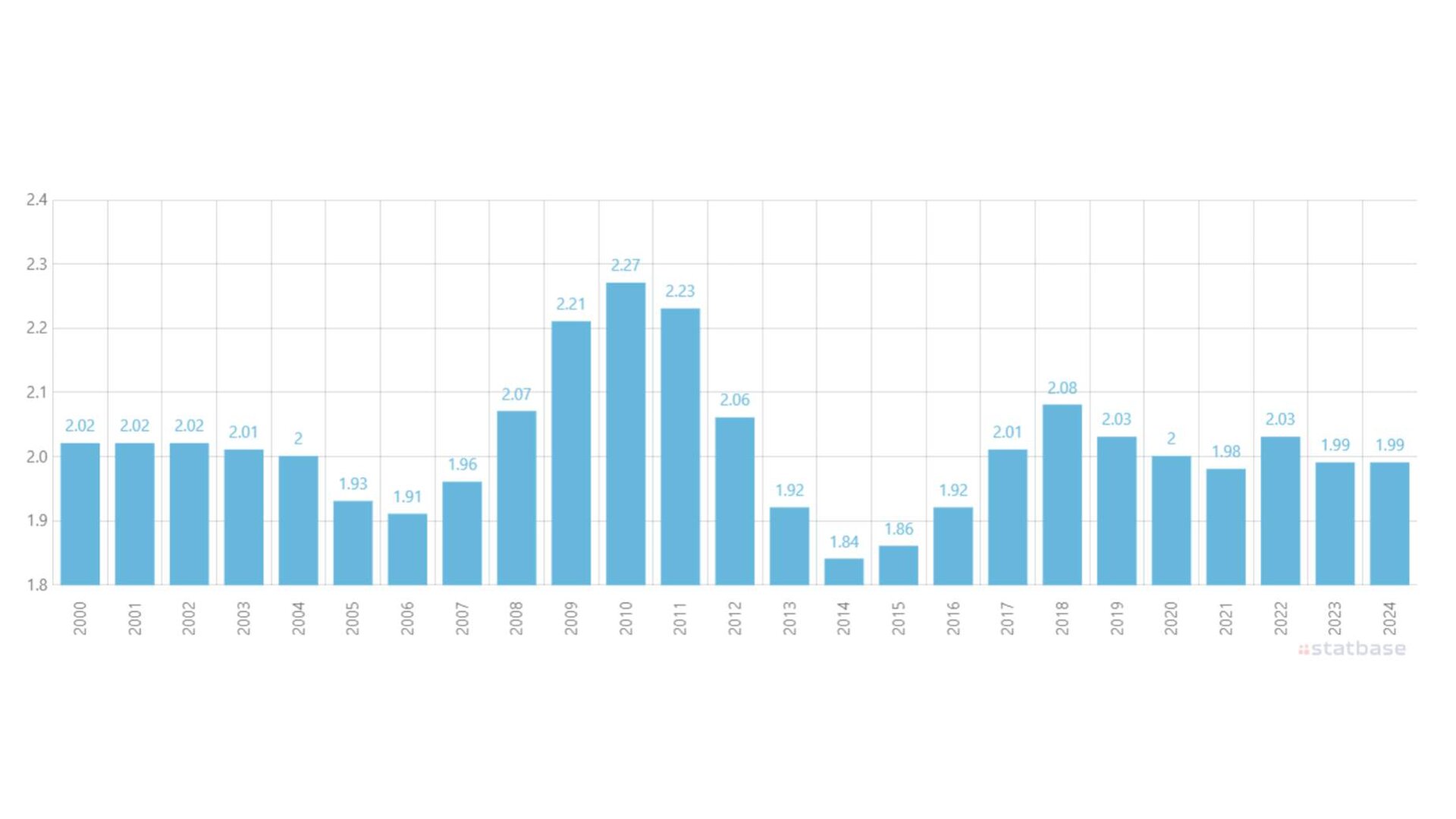
Source: World Health Organization
A law frozen
Few people are better positioned to describe the regulatory side of Lebanon's alcohol problem than Joseph Hawat, president and founder of JAD (Youth Against Drugs). Hawat told The Beiruter that Lebanon has, so far, avoided the mass-casualty alcohol poisoning events seen elsewhere in the region. "A few months ago, we saw 32 deaths in Jordan caused by alcohol poisoning. We have also seen cases of alcohol poisoning in Iraq. Here, we have not had any deaths," he said. What Lebanon does see regularly, he explained, is poisoning tied to counterfeit, smuggled, or improperly stored alcohol, bottles left under direct summer sun on a bar top, for instance, allowing chemical reactions with fermented substances inside.
Hawat traces much of the problem to price and oversight. "Very cheap types of alcohol are being sold, alcohol that costs less than the price of the bottle itself, the paper and the label, the packaging, the shop's profit, and the alcohol company's profit," he said, arguing that quality standards need far stricter enforcement, alongside an outright ban on sales to minors. That gap is not hypothetical. "There is a problem in Lebanon where a 12- or 13-year-old can go and buy alcohol whenever they want."
Access, more broadly, is essentially unrestricted. "We are the only country where you can buy alcohol whenever you want, at midnight, one, two, three or four in the morning," Hawat said, describing a drive-through culture found nowhere else in the world. "We are also the only country in the world where alcohol is sold to you while you are sitting in your car... you can stop on the side of the road and be handed a cup of ice with a mixed drink." He connected this directly to road safety, citing a global statistic that roughly 30 percent of fatal road accidents involve alcohol-impaired drivers.
The legal framework underpinning all of this, Hawat noted,, is essentially frozen in time. "We have a law regulating cigarettes, but we do not have a law regulating alcohol," he said. "Our alcohol laws still date back to the Ottoman period." Licensing and penalty structures remain absurdly outdated as a result, a license fee of 100,000 Lebanese pounds paired with a fine of just 200,000 pounds, figures never adjusted for inflation or currency collapse. Enforcement, in practice, is essentially nonexistent. "Nobody really enforces the law. And if someone does issue a fine, they do not even know where the money should be transferred."
What recent research shows
Beyond the regulatory gap, recent Lebanese research has continued documenting alcohol's psychological and social entanglements. A 2025–2026 cross-sectional study of 460 Lebanese adults, published in Addictive Behaviors Reports, examined how social desirability and conformity pressures relate to problematic use of licit substances including alcohol, situating the issue within Lebanon's compounding political, economic, and cultural pressures; the same paper cites treatment centers reporting a 169 percent rise in substance use disorder cases between 2019 and 2022 alone. A separate 2024 study in the European Journal of Psychiatry, drawing on 646 participants, found that alcohol and sedative use risk scores correlated significantly with personal and family history of substance abuse, psychiatric illness, and sleep disturbances, reinforcing that alcohol use disorder in Lebanon rarely exists apart from broader mental health struggles.
A crisis multiplied by crisis
What distinguishes Lebanon's recent trajectory is the sheer stacking of national traumas since 2019, currency collapse, COVID-19, the Beirut port explosion, and prolonged political paralysis, layered atop one another with little recovery time between them. Addiction treatment providers describe this period as a clear inflection point. Skoun, one of Lebanon's largest addiction treatment NGOs, has reported operating at full capacity year-round, with its once-negligible waitlist growing to dozens of people waiting one to two months for admission. The JAD clinics in Jbeil and Jal al-Dib reported that demand for addiction treatment quadrupled over a three-year span, while Oum El Nour saw the volume of calls it received roughly double.
Providers have also observed a shift in drinking patterns themselves: away from recreational, social consumption and toward isolated self-medication for stress, depression, and insomnia, with drinking increasingly happening alone rather than in social settings. Cheaper, more accessible alcohol has filled the gap left by costlier alternatives as the Lebanese pound lost the vast majority of its value, a dynamic that dovetails directly with Hawat's warnings about unregulated, rock-bottom-priced products flooding the market.
The treatment gap
Lebanon's capacity to treat alcohol and substance use disorders remains severely constrained relative to need. Stigma, the absence of a coherent legal framework, and a strained public healthcare system leave many people without meaningful access to care, prompting organizations to push for integrating substance use treatment directly into primary healthcare centers rather than relying solely on specialized, often unaffordable private facilities. Many patients have shifted toward NGO-run care not necessarily because addiction has worsened in absolute terms, but because they can no longer afford private treatment amid the currency collapse, a dynamic that makes it genuinely difficult to disentangle rising demand from a simple loss of purchasing power elsewhere in the system.
A global problem with a distinctly Lebanese shape
Alcoholism worldwide follows recognizable patterns. It disproportionately affects the young and those already carrying psychological distress, and it kills through a mixture of disease, injury, and violence that adds up to millions of preventable deaths a year. Lebanon reflects those global patterns, but with its own accelerants layered on top, a population managing consecutive, unresolved national traumas, a regulatory system still legally anchored in the Ottoman era, and around-the-clock, unrestricted access that Hawat argued exists nowhere else in the world. The evidence is unambiguous on one point. In Lebanon, as elsewhere, alcohol use disorder rarely exists as a standalone problem. It is, far more often, a visible symptom of pain and neglect that has nowhere else left to go.
-
-

-
Jenna GeageaReporter/Writer
-
