



Aaqoura, the “Queen of the Jroud,” is a vast mountain village where ancient pagan heritage, early Maronite Christianity, apple orchards and turquoise lakes converge.
Aqoura… Queen of the Jroud

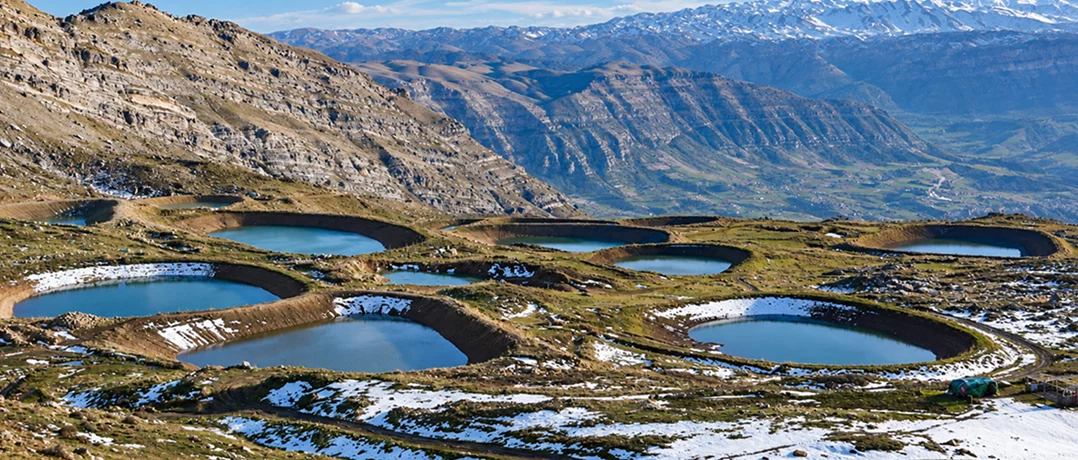
In the mountains of the Byblos District, at an average elevation of 1,600 meters and spread across some 140 square kilometers, Aqoura carries a nickname that says everything about its scale and setting, "Queen of the Jroud," ruler of Lebanon's rugged highland pastures. It is the largest village by land area in Mount Lebanon and the second largest in the country, a mountain commune of apple orchards, limestone cliffs, and terraced lakes bordered by fourteen neighboring villages, a geography that has shaped a history stretching from pagan temples to modern eco-tourism.
Local tradition traces Aqoura's founding to Roman times, when a spring is said to have been uncovered by digging into the nearby mountain, transforming otherwise dry highland into fertile farmland. That story of water shaping settlement fits the wider landscape. Aqoura sits close to Afqa, the dramatic gorge and cave-spring at the source of the Adonis River, long associated in antiquity with the cult of Astarte (Venus) and the myth of Adonis's death and resurrection, one of the most storied sacred sites of the ancient Levant. The temple at Afqa was destroyed on the orders of Emperor Constantine in the fourth century as part of the empire's suppression of pagan worship, a turning point that echoes directly into Aqoura's own religious origin story.
The cradle of Lebanese Maronite Christianity
Aqoura holds a distinctive place in Maronite history. Ibrahim el-Korchy, a disciple of Saint Maroun, is known for preaching in the area in the fourth century and converting its pagan inhabitants to Christianity, placing Aqoura among the earliest footholds of the Maronite faith in Mount Lebanon. The physical evidence of that transition still stands in the village today. The rock-cut Church of Saint Peter and Saint Paul, carved directly into stone, is considered by many local historians to be the oldest surviving church in Lebanon and one of the oldest in the world, built, according to tradition, by converting what had been a tomb chamber used by priests of the temple of Ashtarout at nearby Afqa into a Christian place of worship. Nearby, the Monastery of Saydet el-Habes ("Our Lady of the Hermit"), carved into a cliff face between Aqoura and neighboring Yanouh, extends that same layered story of hermitic and monastic Christianity taking root in the region's caves and rock formations.
Voting power and village identity
Today, Aqoura's population is overwhelmingly Maronite Catholic, with 2022 civil registry figures showing roughly 92 percent of its more than 4,000 registered voters belonging to the Maronite Church, alongside smaller Greek Orthodox and Greek Catholic communities. By voting power, Aqoura ranks as the third-largest town in the Jbeil District, trailing only the district capital of Byblos itself and neighboring Qartaba, a notable standing for a mountain village whose permanent population is far smaller than its electoral influence suggests, swelled as it is each summer by returning families and vacationing descendants.
Aqoura's economy has long rested on the particular fertility of its highland valleys. The village is renowned across Lebanon for its apples, grown in terraced orchards that ring the plateau, alongside vineyards that take advantage of the cool mountain climate. Its cave systems add another dimension to the landscape. The Roueiss grotto, with its extensive network of galleries, sits alongside the area's rock-cut churches as evidence of how thoroughly the mountain's geology has shaped both agriculture and worship here.
In recent years, the Aqoura Lakes, a series of turquoise, terraced pools ringed by dramatic limestone cliffs, have turned the village into one of Lebanon's most photographed natural destinations. Roughly 68 kilometers and about ninety minutes by car from Beirut, the lakes draw hikers, photographers, and day-trippers, particularly after snowmelt fills the terraces each spring, creating a stepped cascade of pools that has become emblematic of Lebanon's mountain scenery on social media and travel guides alike. Nearby, the village of Laqlouq, just a few kilometers northwest, extends the same alpine appeal with skiing in winter and hiking trails in summer, reinforcing the wider Aqoura area's reputation as a highland escape for both Lebanese visitors and the international travelers increasingly drawn to the region's "hidden gem" status.
A village layered like its cliffs
Between its Roman-era water legend, its foundational place in Maronite Christian history, its rock-cut churches, and its modern identity as a lake-studded mountain retreat, Aqoura embodies a landscape where ancient myth, early Christian memory, and contemporary tourism sit stacked atop one another, much like the terraced pools that now draw visitors to its cliffs. For a village whose land could swallow several ordinary towns, Aqoura's history remains, fittingly, larger than its population, a mountain queen whose story reaches back to gods, saints, and springs alike.
-
-

-
Jenna GeageaReporter/Writer
-
