



As world leaders gather in New York for UNGA 81, Prime Minister Nawaf Salam and Foreign Minister Youssef Rajji will represent Lebanon as the country raises the future of UNIFIL, Resolution 1701, support for the Lebanese Army and reconstruction in the South.
The Lebanese files going to the world stage
The Lebanese files going to the world stage
By Nathalie Durham | September 21, 2026

Reading time: 4 min
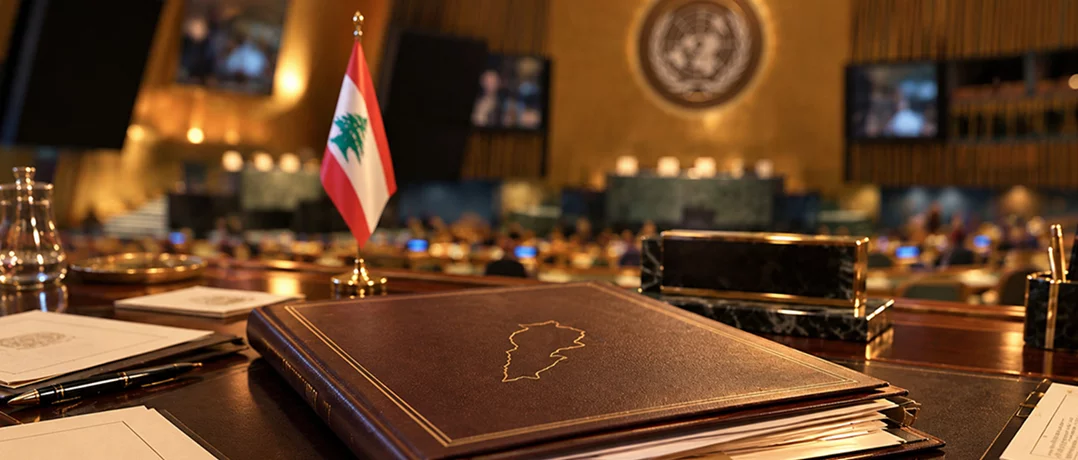
The 81st United Nations General Assembly (UNGA) brings world leaders to New York this week, with the General Debate running from September 22 to 28. For Lebanon, the session comes as several issues involving the United Nations are moving at the same time: continued instability in the South, the implementation of Resolution 1701, the approaching end of UNIFIL’s operational mandate, Lebanese Army deployment and efforts to secure international support for reconstruction.
Lebanese Prime Minister Nawaf Salam will lead Lebanon’s delegation to the UN General Assembly, where he will deliver Lebanon’s official address. He is also expected to hold separate meetings with heads of state and senior international officials on the sidelines of the session. Lebanese Foreign Minister Youssef Rajji will also participate in the General Assembly and hold meetings with foreign ministers and representatives of international organizations.
What will Lebanon take to the General Assembly?
Salam is expected to use Lebanon’s statement and his bilateral meetings to restate Lebanon’s position on several key issues: negotiations with Israel, extending state authority across Lebanese territory and implementing the government’s decision to place weapons exclusively under state control. He is also expected to seek greater international support for security in the South, reconstruction and the Lebanese Army and security forces.
These priorities have already been laid out by the government. Salam has linked the South file to Israeli withdrawal and state authority, saying on September 3 that the government would continue its efforts to secure “the full Israeli withdrawal from Lebanese territory” and the safe return of residents, while restoring the state’s full sovereignty over its territory. He has also said that negotiations remain the path the state is pursuing to address these issues.
Lebanon therefore arrives at the General Assembly with a clear set of demands: an end to Israeli attacks, full Israeli withdrawal, progress on the detainees file, stronger support for the Lebanese Army, the return of displaced residents and international assistance for reconstruction.
Resolution 1701 and the future of UNIFIL
Resolution 1701 and the future of UNIFIL are closely linked to Lebanon’s participation in this year’s General Assembly. UNIFIL’s operational mandate ends on December 31, 2026, after which the force is expected to begin an orderly withdrawal lasting up to one year, while the Lebanese Army takes on greater responsibility in the South. Salam has already made Lebanon’s position on the next phase clear. In August, he said the official Lebanese position remains committed to the presence of “a UN force in the South” carrying out three main tasks: “monitoring and reporting, coordination and liaison.” He added that he had personally conveyed this position to UN Secretary-General António Guterres and said Lebanon wants a UN force to succeed UNIFIL.
President Joseph Aoun has taken a similar position, saying that keeping an international force in the South would be Lebanon’s preferred option and that, if this is not possible, a replacement force should be established to support the Lebanese Army during the next phase. These positions place the implementation of Resolution 1701, the future international presence in the South and additional support for the Lebanese Army among the main UN-related issues Lebanon is carrying into the General Assembly.
Reconstruction and international support
Reconstruction is another file Lebanon is bringing to its international discussions during the General Assembly. The government is seeking support not only for rebuilding damaged homes, but also for restoring roads, public facilities and basic services needed for residents to return. On September 17, just before Salam’s trip to New York, he chaired a meeting on priority projects in the South and called for faster work to remove the effects of the war and rehabilitate infrastructure and essential facilities.
Two days earlier, after the reopening of the Qaaqaaiyet el-Jisr crossing between the Nabatieh and Bint Jbeil districts, Salam said rehabilitating infrastructure in the South and supporting residents were at the center of the government’s priorities. “This is what we are working on: ensuring that the state is present alongside the people of the South,” he said, adding that the government would gradually rebuild what had been destroyed and provide the conditions needed for residents to remain and return.
President Joseph Aoun has also placed reconstruction alongside Israeli withdrawal and Army deployment as one of the main priorities for the South. Speaking ahead of the current diplomatic push, he said the major challenges were Israel’s withdrawal from occupied southern villages, the deployment of the Army to the international border and reconstruction, adding that Lebanon would work with its international partners to advance these goals. For Lebanon, the reconstruction discussion at UNGA is therefore tied to a practical question already facing southern communities: how quickly damaged infrastructure and services can be restored so residents are able to return and remain in their villages?
-
-

-
Nathalie DurhamResearcher/Writer
Junior research writer focusing on politics, public policy and international affairs.
-
