



Israeli military activity reached the outskirts of Deir Mimas last weekend, adding pressure on a southern village already contending with longer journeys, lost income and uncertain access to agricultural land.
In Deir Mimas, war brings longer roads and lost livelihoods
In Deir Mimas, war brings longer roads and lost livelihoods
By The Beiruter | September 23, 2026

Reading time: 6 min
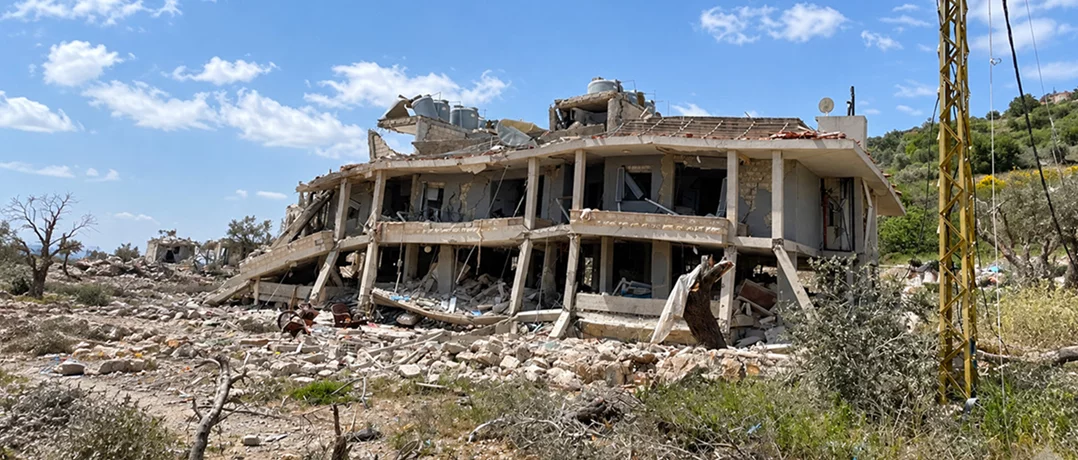
From the hills of Deir Mimas, the sounds of the most recent war between Israel and Hezbollah have long carried across the valley below. But between September 18 and September 20, Israeli military activity moved closer to the village itself, bringing both tanks to its outskirts and soldiers to houses along the roads leading into it. The village sits beside some of the most contested terrain in the eastern sector, on a hill above the Litani River in the southeastern Marjayoun district. Less than 10 kilometers from the Israeli border at its nearest point, Deir Mimas overlooks Beaufort Castle, the medieval fortress captured by Israeli forces in May 2026, and borders Kfar Kila, where Israeli forces remain active. Speaking to The Beiruter after the incidents, Tania Bernaba, vice president of the Deir Mimas municipality, described the distinction residents draw between the recent military activity around the village and conditions within it. “We always hear sounds on the outskirts because the village is in a strategic location,” Bernaba said. “But inside the village, nothing is happening.” More than six months into the outbreak of the war, Deir Mimas remains inhabited and accessible. But last weekend’s escalation come as residents contend with longer journeys, lost income and uncertainty over access to agricultural land ahead of the autumn harvest. Around 135,000 olive trees grow across the village, making access to its groves a question not only of movement but of livelihood. The confrontation began on Sept. 18 around a temporary Lebanese Army observation post established eight days earlier on the outskirts of Deir Mimas. According to a statement published by the Lebanese Army, the position was set up in coordination with the Military Coordination Group for Lebanon specifically to accompany residents inspecting agricultural land. That morning, an Israeli force approached the position inside what the Lebanese Army described as the Israeli-designated “security zone.” According to the Army statement, Lebanese forces reinforced the post, leading to a “state of heightened alert” between the two sides. The Lebanese troops later moved back approximately 100 meters but remained opposite two Israeli tanks, according to an AFP photographer at the scene. Lebanon’s National News Agency reported that Israeli forces threw six stun grenades during the confrontation. Following communications through the Military Coordination Group, the Israeli force withdrew and Lebanese soldiers returned to their main position in the town. The following day, Bernaba said, UNIFIL personnel came to the area to remove an earthen barrier that had been placed along the road near Deir Mimas. On Sept. 20, Israeli forces advanced again. Three Merkava tanks and five Humvees moved along the main road through the Houra area between Deir Mimas and Kfar Kila, according to local reporting. From the village, Bernaba said residents could see military vehicles moving around al-Maslabiyeh, near the entrance, and avoided the road when they knew the vehicles were there. She said the subsequent house searches remained along the outskirts rather than extending into the village center. “They never entered the heart of the village,” she said. “They stayed on the road along the outskirts, searched several houses there and then withdrew. They found nothing, and then they left.” Deir Mimas sits within a road network that has become more difficult to navigate as fighting has restricted movement across parts of southern Lebanon. Routes from the village run toward Kfar Kila and the border area, while connections through Burj al-Muluk, Qlayaa and Marjayoun provide access north and west. As some roads have become inaccessible or less reliable, journeys that once offered residents several options have narrowed to longer routes through the district. When The Beiruter visited Deir Mimas and the surrounding Marjayoun district earlier this summer, movement between communities was already being dictated by which roads remained accessible. Although the village itself remained open, travel through the surrounding area required longer routes as military activity and Israeli road closures restricted movement closer to the border. Those constraints have not yet cut Deir Mimas off, even after the recent incursions around its outskirts. Bernaba said residents continue to enter and leave the village, although military activity near its outskirts can temporarily discourage them from using particular roads. The consequences become more pronounced on longer journeys, particularly for residents traveling to the capital. “The journey to Beirut has also become very, very long,” Bernaba said. “It takes a lot of time, and people are bearing much higher costs.” The Lebanese Army established its observation post to help residents reach agricultural land, an immediate concern as the autumn harvest approaches. Around 135,000 olive trees grow across Deir Mimas, and access to the groves is an important source of income for residents. The problem extends along Lebanon’s southern frontier. During the 2025 olive harvest, UNIFIL and the Lebanese Army carried out more than 40 missions to help farmers reach land near the Blue Line, including in neighboring Kfar Kila. UNIFIL said some areas in southern Lebanon had been unable to harvest olives since 2022 because of hostilities The disruption has grown considerably during the latest war. In August, Agriculture Minister Nizar Hani said around 56,000 hectares of agricultural land had been affected across Lebanon, including roughly 52,000 hectares in the South and Nabatieh governorates. Farmers had lost three consecutive agricultural seasons, he said, as damage to land and infrastructure compounded the difficulty of returning to fields. For families in Deir Mimas, the approaching olive harvest puts those pressures on a calendar. Farmers need not only intact groves but the ability to reach them, while households are already contending with lost work and income. “People in the village are suffering from a lack of work and the loss of their harvests,” Bernaba said. “This is a major hardship for everyone.” With the harvest set to begin in the coming weeks, how much it yields will depend in part on whether farmers can get to their trees, and whether the military activity that reached the village’s outskirts this month prevents them from doing so.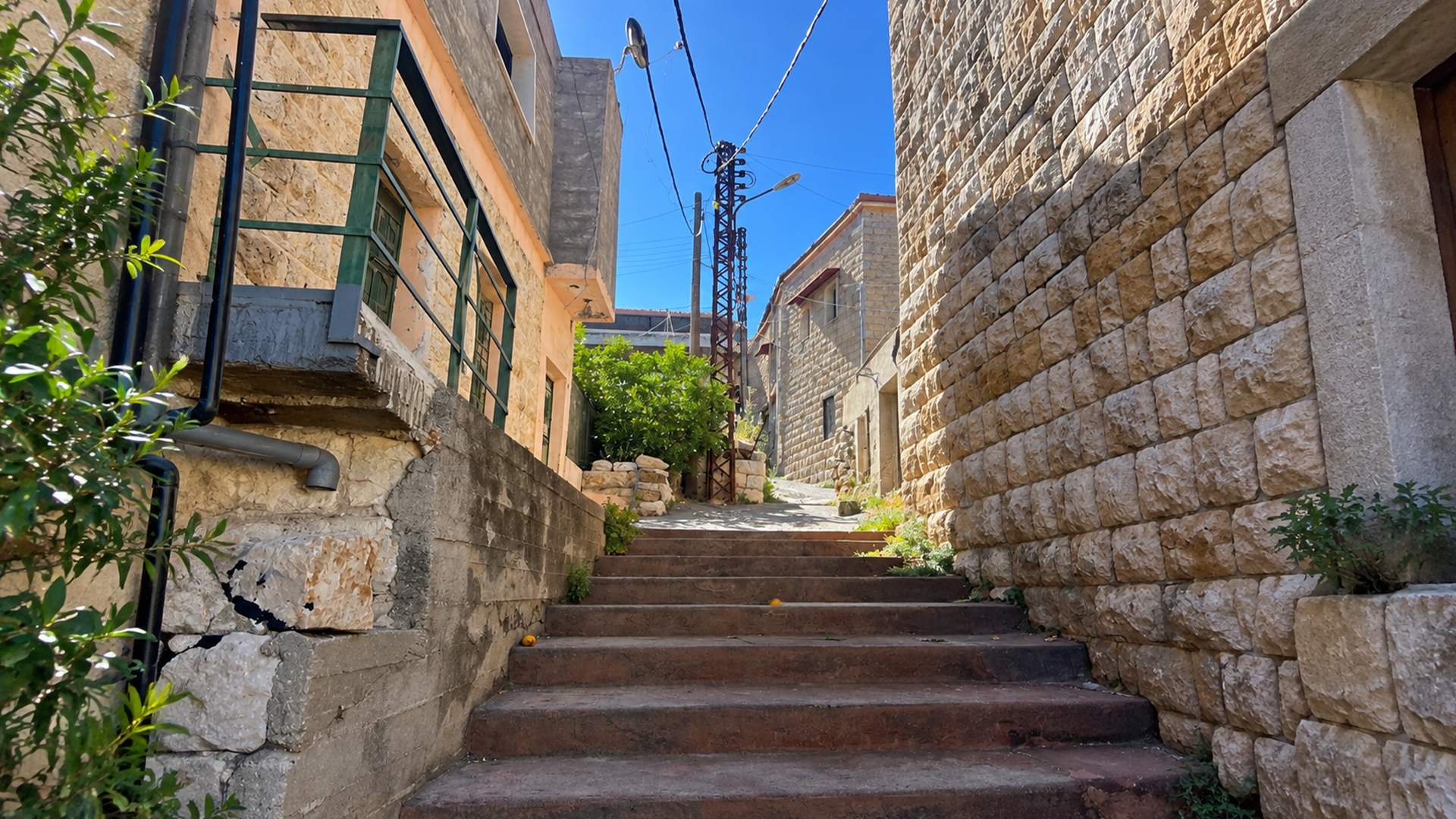
A residential street in Deir Mimas during a visit by The Beiruter in June 2026. Three days on the village’s edge
Geography at the edge of the fighting
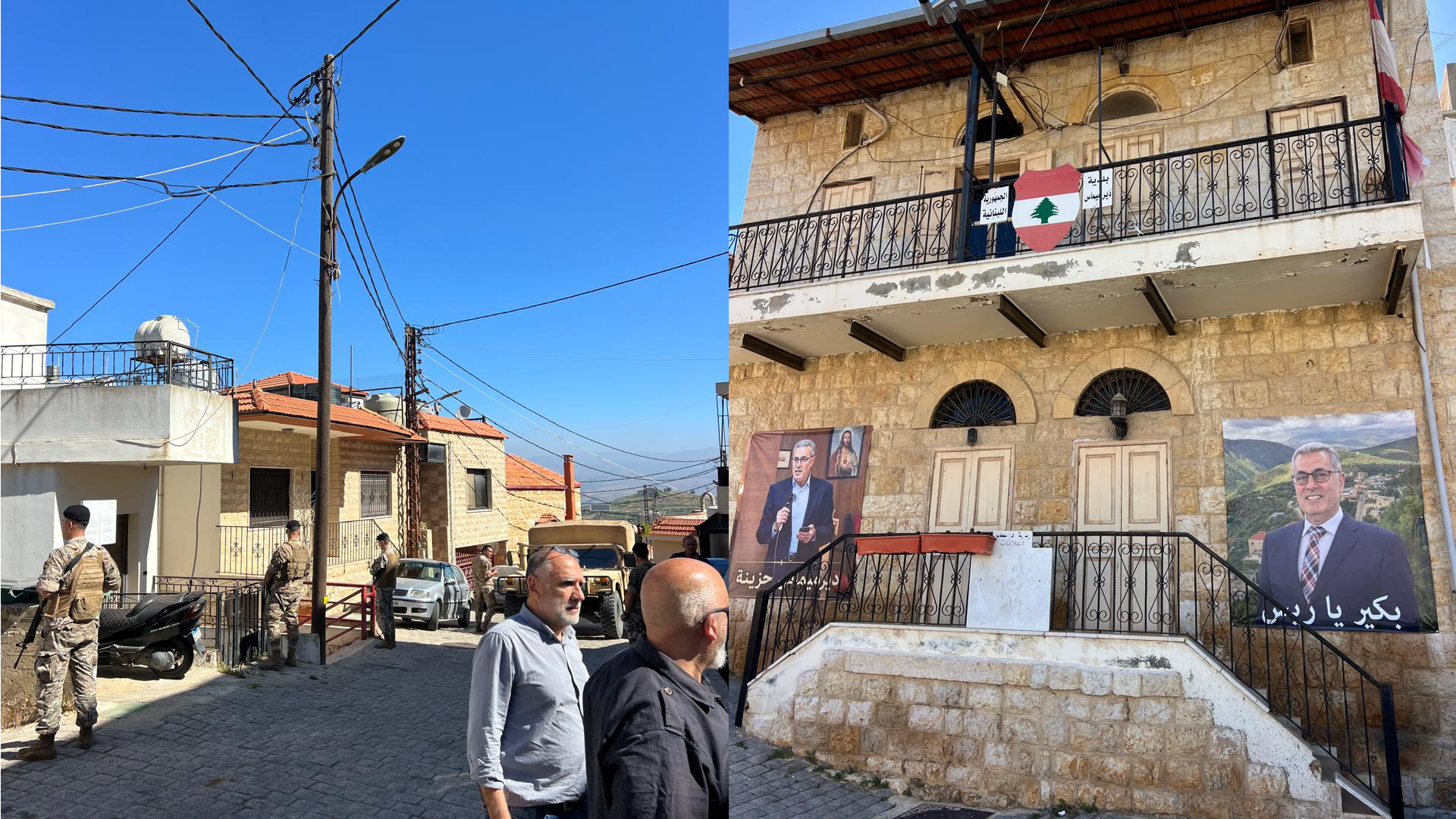 Lebanese soldiers near the Deir Mimas municipal building during a visit by The Beiruter in June 2026.
An olive harvest under pressure
-
-

-
The Beiruter
-
