



Nadim Tabet reflects on his journey through cinema and explores Lebanon’s history, identity and recurring conflicts through his latest film.
The ghosts of history through Nadim Tabet’s lens
The ghosts of history through Nadim Tabet’s lens
By Jenna Geagea | September 28, 2026

Reading time 5 min
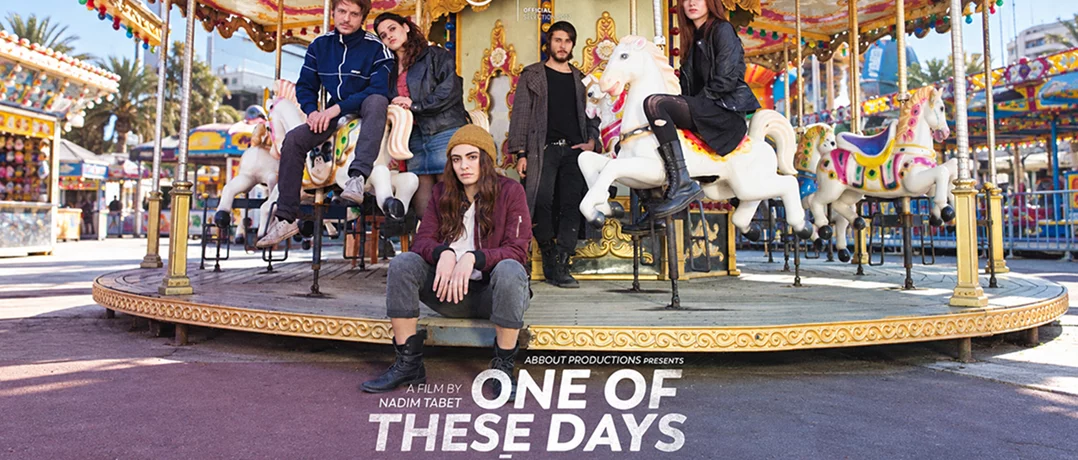
Lebanese director and co-founder of the Lebanese Film Festival, Nadim Tabet began his path to cinema began in front of the screen. The Lebanese director grew up in Beirut just after the civil war, watching everything he could find. "I was a cinéphile," he told The Beiruter, recalling a teenage head full of film knowledge, mostly American, and a habit of ranking the best of everything. Now living in Italy, he is preparing for the world premiere of his second feature, and he spoke about the journey with the same candor that defines his films.
Throughout his life, cinema was always much deeper than entertainment. "It was a good way of knowing the world," he recalled, describing how films opened a young Lebanese viewer to ideas from outside his immediate surroundings. Spielberg was an early favorite. The move from watching to making happened coincidentally. Tabet spent his teenage years playing in a rock band as part of what he called Generation X in Beirut, playing Nirvana-inspired music in an unlikely venue. "We used to play music in the basement of a church in the middle of the centre - ville," he remembered, still amazed the church allowed it. His friends knew he loved cinema, so they asked him to film music videos. "I started filming small music videos for my friends or even for my band," he explained.
The results were rough. But that was the point. "When you start to do something, obviously it's bad, but it gives you the way to make it better," he noted. "It starts to be an obsession." He later studied history and philosophy in France, including at the Sorbonne, before turning to cinema.”
Building a stage for Lebanese cinema
At around twenty, Tabet co-founded the Lebanese Film Festival with his friend Pierre Sarraf. The festival launched in 2001, and its origins were modest. Tabet was making short films while studying and wondered where he could screen them in Lebanon. He also realized how little Lebanese cinema he knew compared with world cinema. "What started as 'I want to show my film, let's include other people' became an event," he explained, adding simply, "There was a demand."
Filmmakers turned out in large numbers, and the following year they were the ones calling. The festival ran for fourteen editions before stopping in 2019, hit by the economic crisis and the loss of bank sponsorship. The event has since grown into a production house, Nabeirut, which Sarraf still runs. What Tabet valued most was the mix. The program included shorts, documentaries, experimental work and features, because, as he put it, Lebanese cinema "cannot be judged just by seeing feature films." Each year it gave the country's directors a shared space, "a moment where all the Lebanese filmmakers could share their thoughts, share their films all together."
The demand has not faded. "People are calling me: 'Please restart the festival,'" he revealed. He is now weighing a revival, possibly in partnership with the organizer of the Lebanese Film Festival of Paris, where his new film will screen twice.
A ghost story for a history that keeps repeating itself
Tabet's first feature, One of These Days, premiered at the Rome Film Fest. It followed Lebanese youth in their late teens and twenties, and critics kept asking why it felt so dark. He now sees it differently. "It's the last trace of the Lebanon that was before 2019," he reflected.
His new film, In This Darkness I See You, centers on strange and potentially fatal incidents at a construction site. It is set for its world premiere at Beyond Fest in Los Angeles, and Tabet co-wrote it with Antoine Waked and Jamal Belmahi. The idea grew from a hike, walking through a forest in a region once under Syrian occupation. That flicker met a wider unease. At the height of the refugee debate in Lebanon, he could not stay neutral. "They left as an army in 2005 after the Hariri assassination, and now they're coming back as refugees," he noted. "I noticed there was a lot of reliving of the same history." The film follows Tarek, a Syrian worker who begins seeing a strange woman in the woods and slowly realizes she is the ghost of someone from the 1990s occupation.
Tabet chose genre deliberately. "When you use the genre, whether horror, ghost, thriller, musical, you can pass a very powerful message, a very gray message, but in a good way, without lecturing people," he explained. The theme is a cycle he believes Lebanon has never escaped. "This film is very based on the idea that history repeats itself," he said of the time-loop structure, then paused. "We are flirting with a lot of history repeating itself." His hope is modest and humane, "despite all the difficulty that we all have, we have to keep our humanity."
Making a ghost film in Lebanon meant working within tight means. Rather than chase a Hollywood scale, he leaned on restraint, on "what you show, what you don't show." He is proud of the result. "It allows me to have my touch," he explained. That search for a personal style guides everything he does. "I want to find my voice," he noted. "I feel uncomfortable copying Hollywood." He believes international audiences agree, since they are not looking for an imitation of American cinema. "What they care about is to hear our stories and our way of telling them," he explained. "The trick is how you keep your voice."
-
-

-
Jenna GeageaReporter/Writer
-
